

The Friday Prayer Nobody Could Hear Properly
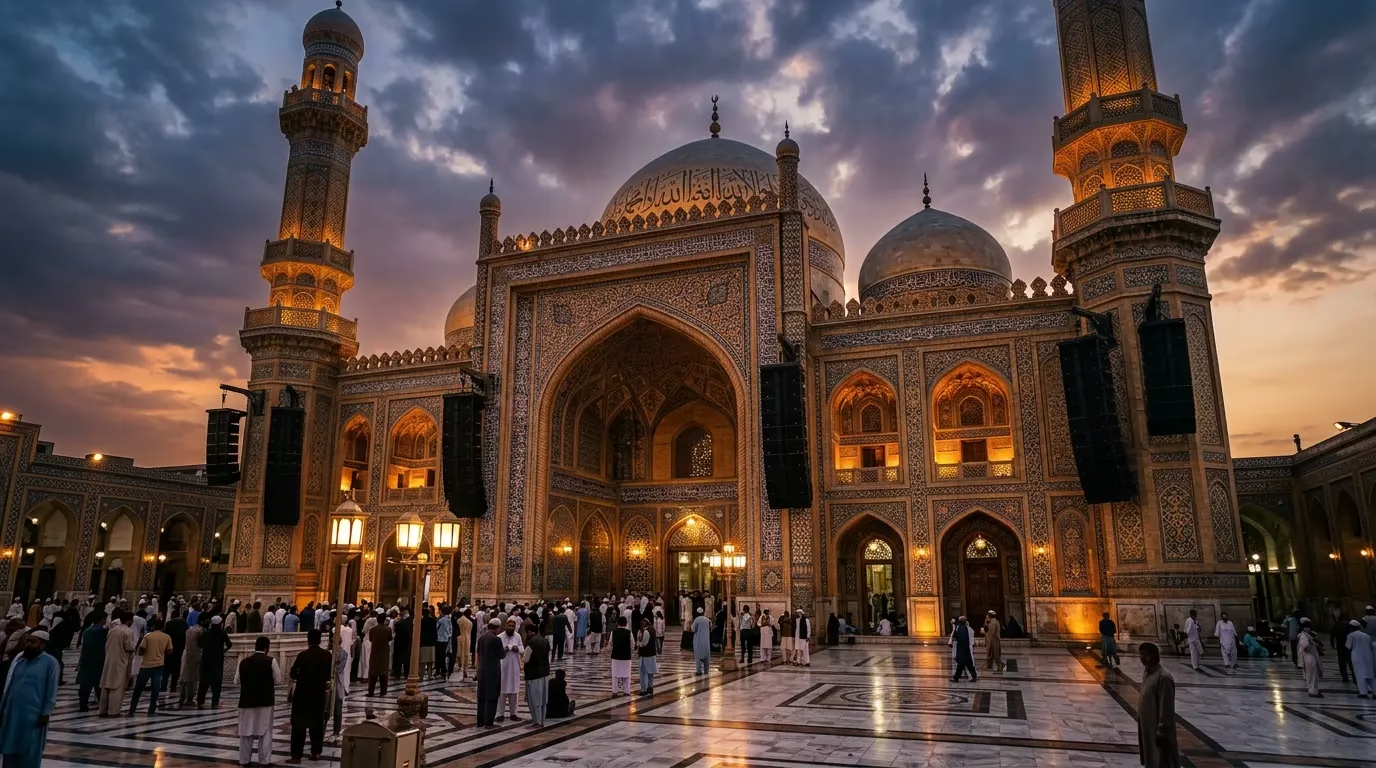
Picture a well-loved neighborhood masjid on a busy Friday. The hall is full and the overflow spills into the courtyard. The imam begins the khutbah, and in the back rows the words dissolve into a wash of echo. Someone near the pillar hears a crackling hiss. Someone in the courtyard hears nothing at all. The committee has the same conversation it has had for years: “We need a new sound system, but where will the money come from?”
Here is what we tell every masjid committee at Alpha Audio: an outdated sound system can often be significantly improved without a complete replacement. In many cases the weak link is one amplifier, a few tired speakers, or the absence of a processor to tame the room. Replace those components with the right equipment, and the whole system changes.
This guide walks through the process in the order we follow on real projects, from assessing what you have to choosing RCF components and planning the upgrade in phases. It also covers the common upgrade paths we see working again and again.
Image alt text suggestion: “Worshippers seated in a large masjid prayer hall listening to a khutbah through an installed sound system”
The Problem: Old Systems, Tired Assumptions
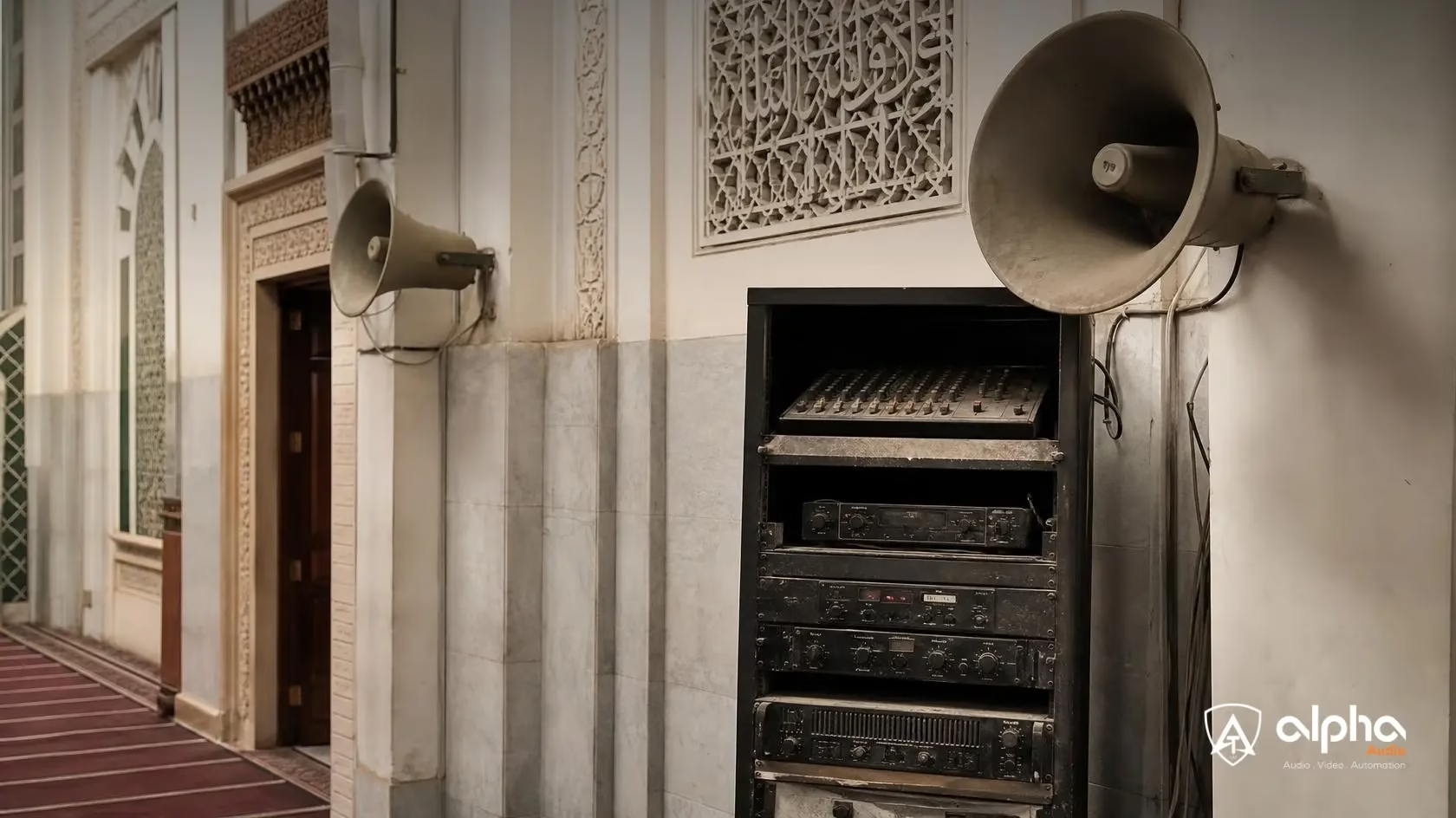
Most masjid sound systems were not designed. They grew over the years. A committee bought a mixer in one decade, a few horn speakers in another, and a wireless microphone after that. Different contractors added cables and speakers as the community expanded or a new wing was built. Twenty years on, the result is a patchwork nobody fully understands.
Three problems keep these systems in use long after they should have been improved.
- The belief that upgrading means starting over.
Many committees assume the only way forward is to rip everything out and pay for a complete new installation. That assumption stops the conversation before it starts, and the masjid lives with poor sound for another five or ten years. - The belief that it is too complicated.
Sound systems feel technical. Wattage, impedance, 70V or 100V lines, DSP, crossovers: it is easy to feel out of your depth. Without a trusted advisor, the safe choice seems to be doing nothing. - Not knowing what is actually wrong.
When a khutbah is unclear, people usually blame “the speakers.” But poor intelligibility can come from a distorting amplifier, badly aimed speakers, missing equalization, a microphone that picks up too much room echo, or aging cables and connectors. Without diagnosis, money is easily spent on the wrong thing.
The costs are real. Worshippers strain to follow the khutbah. Elderly attendees and new Muslims, who most need clear recitation and explanation, are the first to lose out. Volunteers spend every Friday adjusting knobs to fight feedback. Speakers are pushed past their limits, so they fail sooner and repairs pile up.
The good news is that most of these problems are fixable one component at a time.
Why Masjid Sound Is Its Own Challenge
Before discussing solutions, it helps to understand why masjids are demanding places for audio.
Hard, reflective surfaces. Marble floors, tiled walls, glass, and domes bounce sound around. This produces long reverberation, which blurs speech. A word spoken now is still echoing when the next one arrives.
Large, open interiors. Tall ceilings and wide prayer halls mean sound must cover a big volume evenly. Speakers that are too loud near the front and too quiet at the back are a common complaint.
Speech comes first. Unlike a concert venue, the goal is not loudness or bass. The goal is intelligibility: every word of the khutbah, every verse of Qur’an recitation, every announcement heard clearly by everyone from the first row to the back corner.
Multiple zones. A modern masjid often has a main hall, a women’s section, an overflow area, a courtyard, wudu areas, and sometimes a classroom or library, each needing appropriate coverage and often independent volume control.
Different uses through the day. The five daily prayers, Jumu’ah, Taraweeh in Ramadan, Eid gatherings, lectures, and funeral prayers all place different demands on the system.
Volunteer operators. The person running the system on Friday may not be a trained audio engineer. The system must be forgiving and simple to operate.
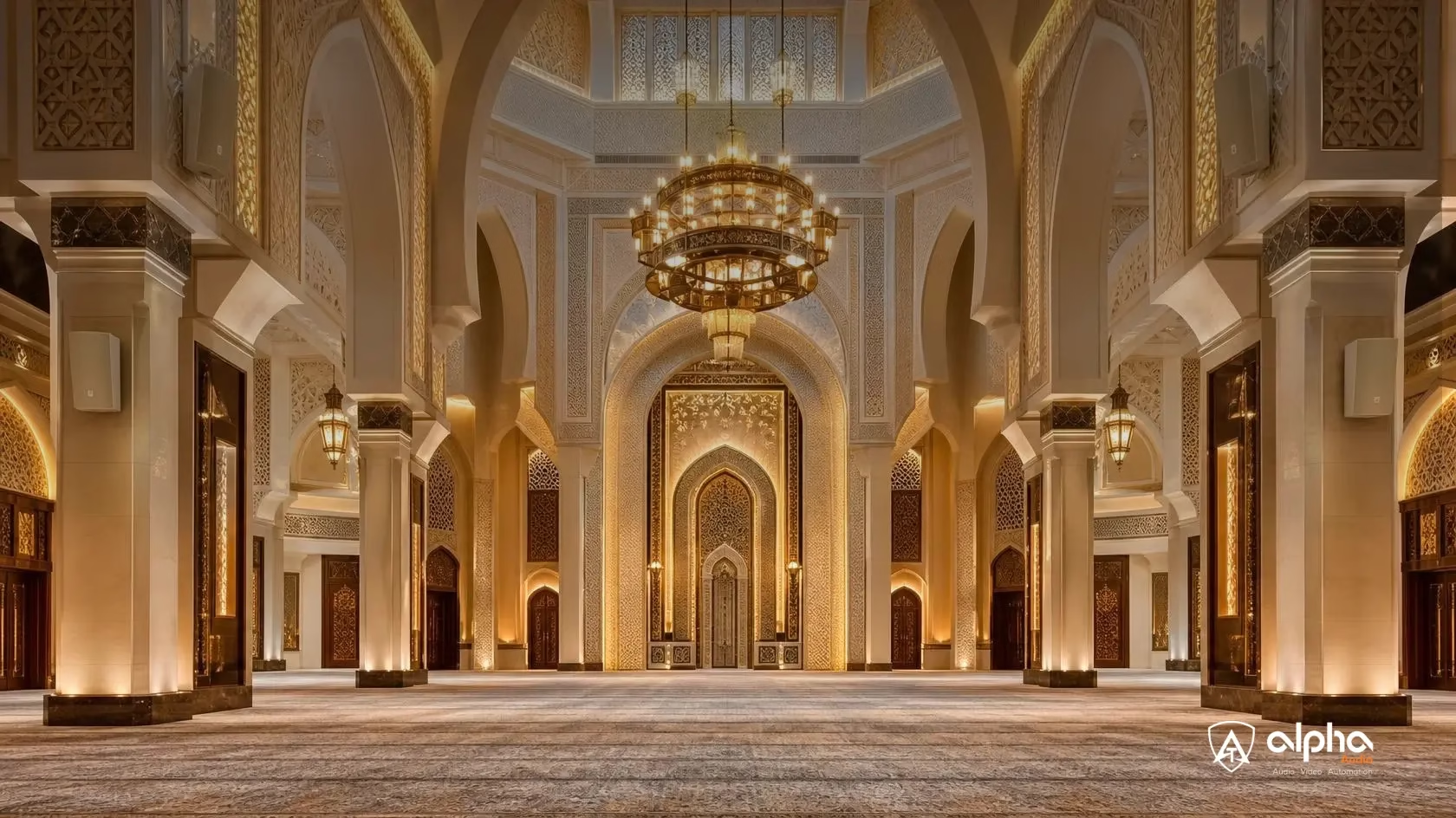
A system built for these realities is very different from a generic PA. This is why quality installation-grade equipment matters, and why RCF is a strong fit.
Why RCF Suits Masjid Installations
RCF is an Italian manufacturer with decades of experience in professional audio, with a wide range of products for installed sound. Several qualities make the brand a practical choice for places of worship:
- Speech-focused design. RCF’s installation loudspeakers, including column speakers and line-array-style columns, are built to deliver clear, well-directed sound rather than just raw volume.
- Directivity control. Column-style speakers can focus sound toward the worshippers and away from reflective ceilings and walls, which reduces echo.
- Range for every zone. RCF offers ceiling speakers, wall speakers, horn speakers for outdoor use, and columns for large halls, so different areas can be covered with matching sound character.
- Amplification and processing options. From installation amplifiers to digital processors and mixers, the ecosystem lets you upgrade in stages while keeping things compatible.
- Reliability. Installed equipment runs for long hours, and a masjid system that works every prayer, every day, is worth more than one that sounds impressive once.
Exact model selection always depends on the room, the existing wiring, and the budget, and that is where a proper assessment begins.
Step 1: Start with an Audit, Not a Shopping List
The most important step happens before any equipment is chosen. At Alpha Audio, every upgrade starts with a site assessment. We look at:
- The hall itself: dimensions, ceiling height, materials, dome or open roof, carpets and curtains.
- Existing speakers: type, placement, aiming, condition, and how they are wired.
- The amplifier: power rating, condition, heat, distortion at normal volume, and whether it matches the speakers.
- Cabling and connectors: age, corrosion, loose joints, hum-prone runs, and whether the system uses low-impedance or 70V/100V distribution.
- Microphones and mixer: what is used for the imam and for recitation, how feedback is handled, and how many people operate it.
- Coverage problems: we walk the room during a test signal and speech to find dead zones, hot spots, and echo pockets.
The outcome is a short list of what is failing, what is still healthy, and what would deliver the biggest improvement for the money. This audit is what makes selective upgrading possible. You cannot upgrade selectively if you do not know what to keep.
Image alt text suggestion: “Audio engineer measuring sound coverage in a masjid prayer hall during a site assessment”
Step 2: The Solution, Upgrading Selectively with RCF Components
Once the audit is done, the system can be improved by targeting the components that hold everything back. There are four main areas.
Amplifiers: The Heart of the System
An amplifier that is underpowered, overheating, or failing can make even good speakers sound harsh. A common story is a system that “sounds fine at low volume but becomes distorted on Fridays.” That usually means the amplifier is running out of headroom.
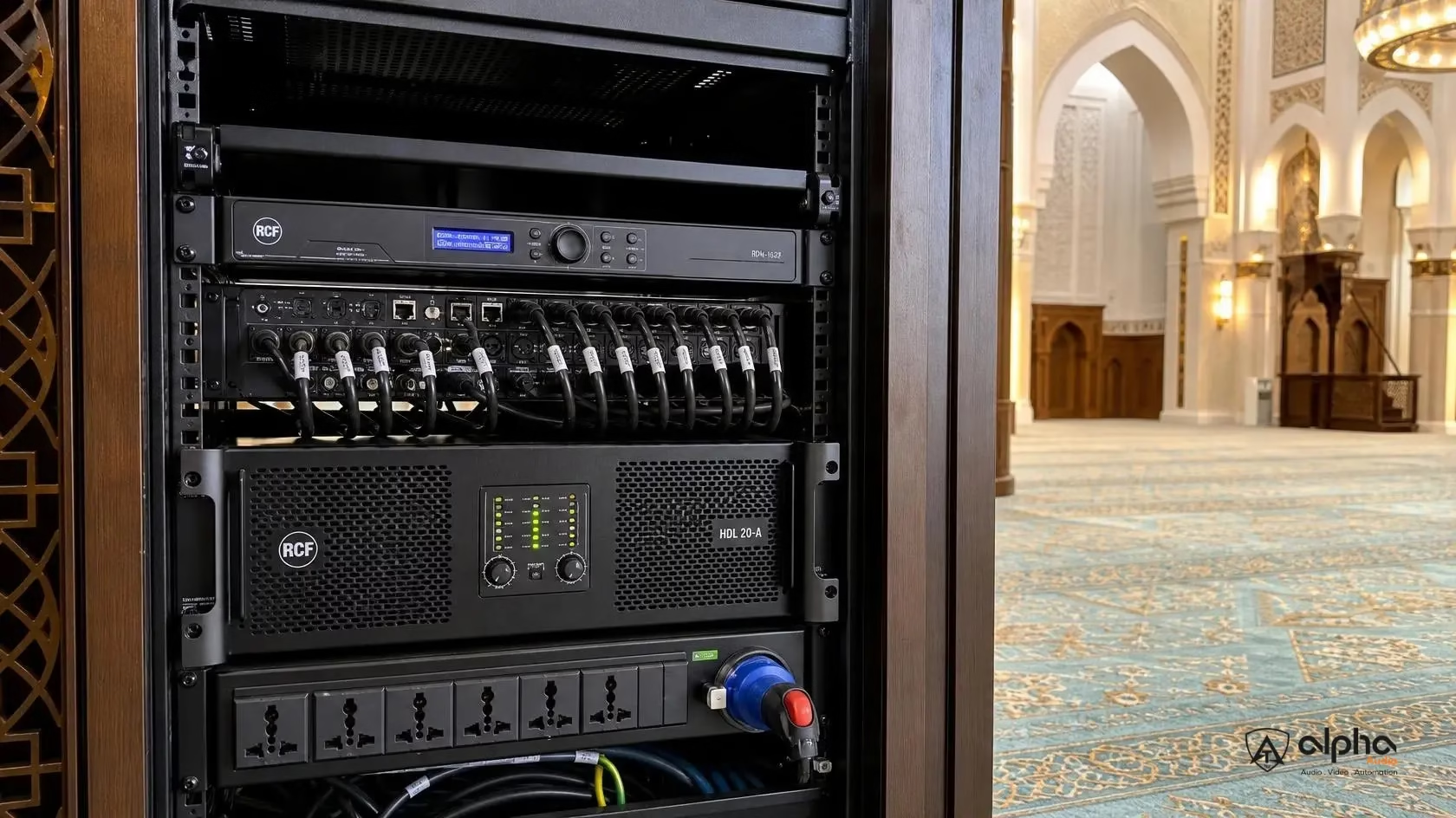
Replacing an old amplifier with a modern installation-grade unit can:
- Remove distortion and harshness at higher levels.
- Provide stable power to existing speakers, extending their life.
- Reduce hum and noise.
- Improve energy efficiency and heat management, which matters for equipment running many hours a day.
- Offer multiple zones from one unit, so the main hall, women’s area, and courtyard can be balanced separately.
If your existing speakers are healthy and correctly matched, a new amplifier is often the most cost-effective first step.
Speakers: Fixing Coverage and Clarity
Speakers do the most audible work. In many older masjids, they are the wrong type for the space. Large boxes hung too high, or a few horns pushing sound everywhere, create echo and uneven coverage.
Upgrading speakers with RCF options can mean:
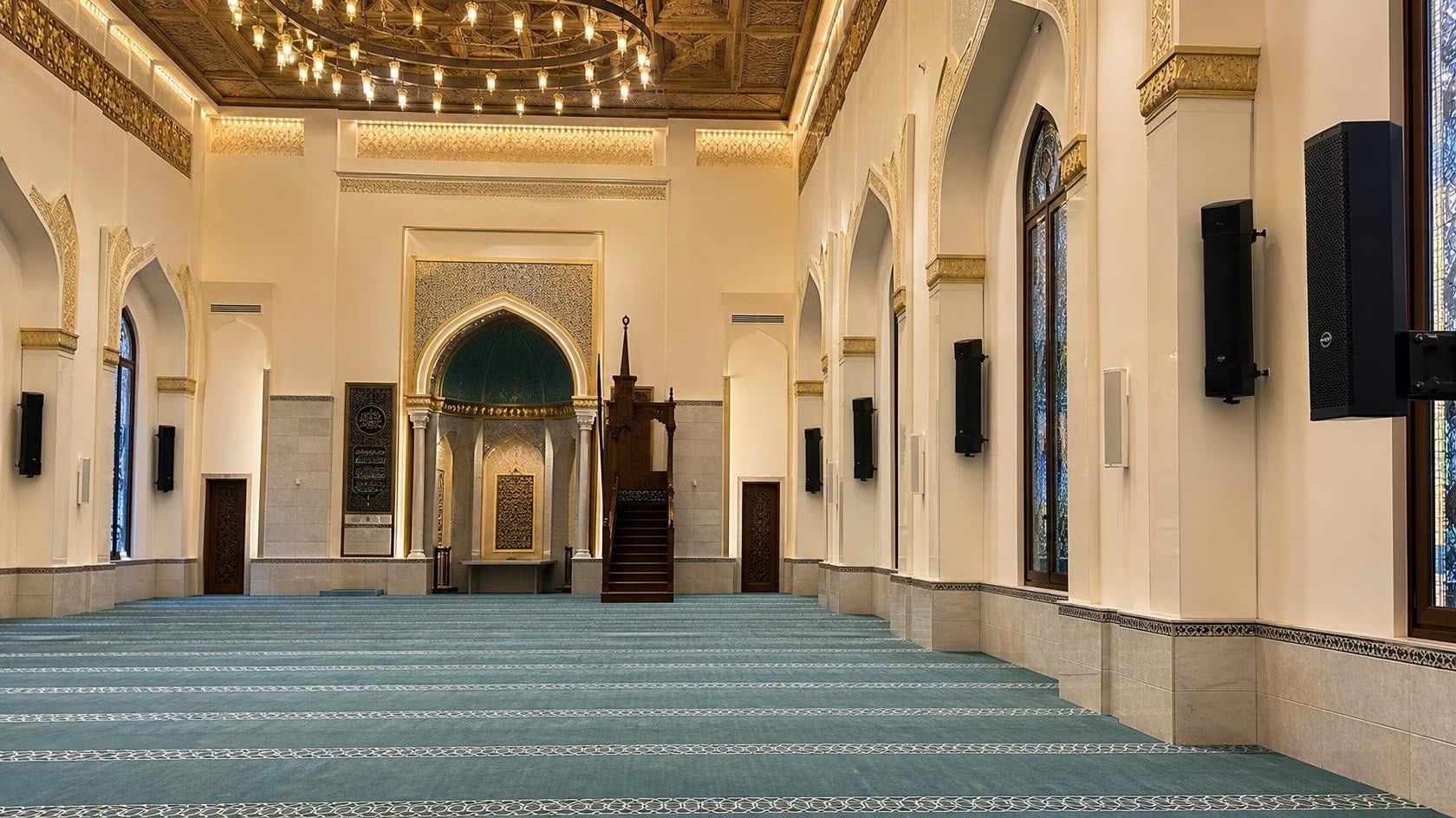
- Column speakers along the sides or at the front of a large hall, aimed at the seated congregation to deliver clear speech with less reflection.
- Ceiling speakers in lower-ceiling areas, such as women’s sections, corridors, and classrooms, for even, discreet coverage.
- Weather-resistant horn speakers for courtyards and minarets where adhan must carry outdoors.
- Additional fill speakers for areas behind pillars or balconies that the main speakers cannot reach.
You do not need to replace every speaker. Often, replacing or repositioning the two or three that cause the most trouble, and keeping healthy ones for secondary zones, achieves a large improvement.
Processors: The Secret Weapon Against Echo
Digital signal processors are the most overlooked upgrade in masjid audio, and often the most transformative. A processor sits between the mixer and the amplifier and shapes the sound electronically. It can:
- Equalize the room by reducing the frequencies that cause boominess or harshness in a reverberant hall.
- Control feedback by taming the frequencies that trigger squeals.
- Apply delay to speakers placed farther from the front, so sound from all speakers arrives together and words are not smeared.
- Limit volume to protect speakers from accidental overload.
- Save presets for different uses, such as “Jumu’ah,” “Taraweeh,” “Lecture,” and “Adhan,” so volunteers can switch with a single button.
The results can be dramatic. A hall that sounded muddy can become clear without changing a single speaker. It is a relatively small investment for a big gain in intelligibility.
Mixers and Microphones: Where the Voice Begins
Clear sound starts at the source. If the imam’s voice enters the system poorly, no speaker can rescue it. An upgrade here might include:
- A modern mixer with simple, labeled controls suited to volunteer operators.
- A quality wireless or gooseneck microphone suited to speech, positioned correctly at the mimbar.
- Separate inputs for the imam, the recitation, and any lecture or recorded audio, so each can be adjusted independently.
RCF’s mixers and audio interfaces let a masjid start simple and expand later, for example adding livestream or recording outputs without rebuilding the system.
Step 3: The Proof, Common Upgrade Paths That Work
Theory is useful, but committees want to know what this looks like in practice. These are the upgrade paths we see most often. Each improves sound quality without a full replacement.
Path 1: Amplifier Swap, Keeping the Speakers
Situation: A masjid has decent speakers spread across the hall, but the sound is harsh and distorts on busy days.
Upgrade: Replace the old amplifier with a properly sized installation amplifier matched to the existing speaker lines.
Result: Cleaner sound, more headroom at Jumu’ah, less strain on the speakers, and a system that runs cooler. Existing wiring and speakers remain in service.
This is often the fastest and most budget-friendly improvement. It is also a good example of why the audit matters. If the speakers were the problem, this upgrade would have been wasted.
Path 2: Adding a Processor to Tame the Echo
Situation: The hall is reverberant, and the imam’s words blur even though volume is adequate.
Upgrade: Add a digital processor and tune it to the room, with equalization, delay for rear speakers, and feedback control.
Result: Noticeably improved speech clarity with the same speakers. Volunteers gain preset scenes so the system is consistent from week to week.
Path 3: Replacing Only the Problem Speakers
Situation: The front of the hall sounds acceptable, but the back rows, the balcony, and the women’s section are unclear.
Upgrade: Install RCF column or ceiling speakers in the weakest zones, with delay in the processor so all areas stay in sync. Retain speakers that still perform well.
Result: Even coverage across the hall. Worshippers in every section hear the same clear khutbah, without turning the front speakers up to uncomfortable levels.
Path 4: Zoning the Building
Situation: The whole building runs from one volume control. When the main hall is loud enough, the courtyard is too quiet, and the women’s section is too loud, or the opposite.
Upgrade: Add a multi-zone amplifier or processor and independent volume control for each area.
Result: Every space gets the right level. Operators can turn off unused zones, saving power and reducing noise in areas with no one present.
Path 5: Modernizing the Source and Control
Situation: The microphone picks up too much room noise, feedback is frequent, and operation is confusing for volunteers.
Upgrade: Replace the mixer and microphones with speech-appropriate equipment, add simple presets, and label everything clearly.
Result: A system that a trained volunteer can run confidently and that behaves the same way every time. Recording or livestreaming outputs can be added when the masjid is ready.
Path 6: The Phased Upgrade
Situation: The masjid has a limited budget this year but wants a long-term plan.
Upgrade: Divide the work into stages. For example: amplifier and processor in phase one, main hall speakers in phase two, courtyard and women’s section in phase three.
Result: Sound improves at every stage, and no equipment is wasted, because each phase is designed to fit the final system. Budgets can follow the community’s fundraising rhythm.
Step 4: Plan the Budget and the Timeline
One of the biggest benefits of selective upgrading is control. Instead of one large, intimidating project, you can plan around what your masjid can afford and what is most urgent.
A practical approach looks like this:
- Rank the problems. Ask the community what bothers them most: echo, dead zones, feedback, distorted volume, or unreliable equipment.
- Fix the root cause first. If the audit points to the amplifier or lack of processing, start there.
- Reuse what still works. Healthy speakers, good cabling, and usable racks can stay in place, and that saves money.
- Schedule work around prayer times. A good installer plans installation and testing so prayers are not disrupted. During Ramadan especially, timing matters.
- Plan for growth. Choose components that can be extended later, so the next phase does not mean starting over.
Every masjid’s situation is different, so we do not promise a single price. What we do promise is a clear scope: what will be replaced, what will be kept, and what improvement to expect.
Mistakes to Avoid When Upgrading
Committees often lose money on well-meant purchases. Here are the most common mistakes:
- Buying louder speakers instead of better-placed ones. Volume is rarely the problem. Directivity and placement matter far more.
- Mismatching amplifier and speakers. Too little power causes distortion. Too much power can damage speakers. Impedance and line voltage must match.
- Ignoring the room. Without processing, even expensive speakers can sound muddy in a reflective hall.
- Skipping the cabling. New equipment on old, corroded wiring can still produce hum and dropouts.
- Mixing many brands without a plan. A coherent set of components is easier to tune, maintain, and expand.
- Forgetting the operator. If the system is confusing, volunteers will avoid it, or use it badly. Simplicity is part of good design.
- Having no after-sales support. Installed audio needs occasional servicing. Choose a partner who will still be there next year.
How Alpha Audio Approaches a Masjid Upgrade
At Alpha Audio, we treat a masjid sound system as an act of service to the community. Our process is simple and transparent:
- Listen. We speak with the imam, the committee, and the volunteers who run the system, because they know its daily problems better than anyone.
- Assess. We inspect the hall and equipment, measure the coverage, and document what is working and what is not.
- Recommend. We propose a targeted RCF upgrade path, with options, phases, and clear reasons for every component.
- Install. Our team installs, wires, and configures the system with minimal disruption to prayers.
- Tune. We calibrate the processor and set levels in the empty hall and again with people present, since a full hall sounds different.
- Train and support. We teach volunteers to operate the system, leave simple presets and labels, and remain available for maintenance.
Our goal is a masjid where every worshipper hears the khutbah, the recitation, and the adhan clearly, without straining and without a huge bill.
Frequently Asked Questions
Can I upgrade just the amplifier and keep my old speakers?
Yes, if the speakers are in good condition and correctly matched. This is one of the most common and affordable upgrade paths. An audit will confirm whether the speakers are worth keeping.
Will a processor really improve clarity?
In reverberant halls, usually yes. Equalization, delay, and feedback control can noticeably improve speech intelligibility, even with existing speakers.
Do I need different speakers for the women's section?
Often the existing speakers cannot cover it well. Ceiling or small column speakers with independent volume control usually provide clearer, more comfortable sound.
Can the system be extended later for livestreaming or recording?
Yes. Choosing a flexible mixer and processor now makes it easy to add recording or streaming outputs later.
Conclusion: Better Sound Is Closer Than You Think
Return to the masjid we began with: the crowded Friday, the echo in the back rows, the silent courtyard. That masjid did not need a brand-new system. It needed someone to listen, measure, and identify the few components holding everything back. With a new amplifier, a tuned processor, and a handful of well-placed speakers, the same hall can carry the imam’s voice clearly to every worshipper.
An outdated system does not have to mean a permanent problem. With a careful assessment and a phased plan built on RCF equipment, your masjid can improve its sound quality step by step, reusing what still works and investing only where it matters.
Ready to hear the difference? Contact Alpha Audio for a masjid sound assessment. We will review your current system, explain your options in plain language, and design an RCF upgrade path that fits your community and your budget.
+92 308 4319219 | info@alphaaudio.com.pk | alphaaudio.com.pk
Visit us: Plaza No. 28, Phase 6 DHA, Lahore, Punjab
Audio Quotation
Video Quotation
Automation Quotation