


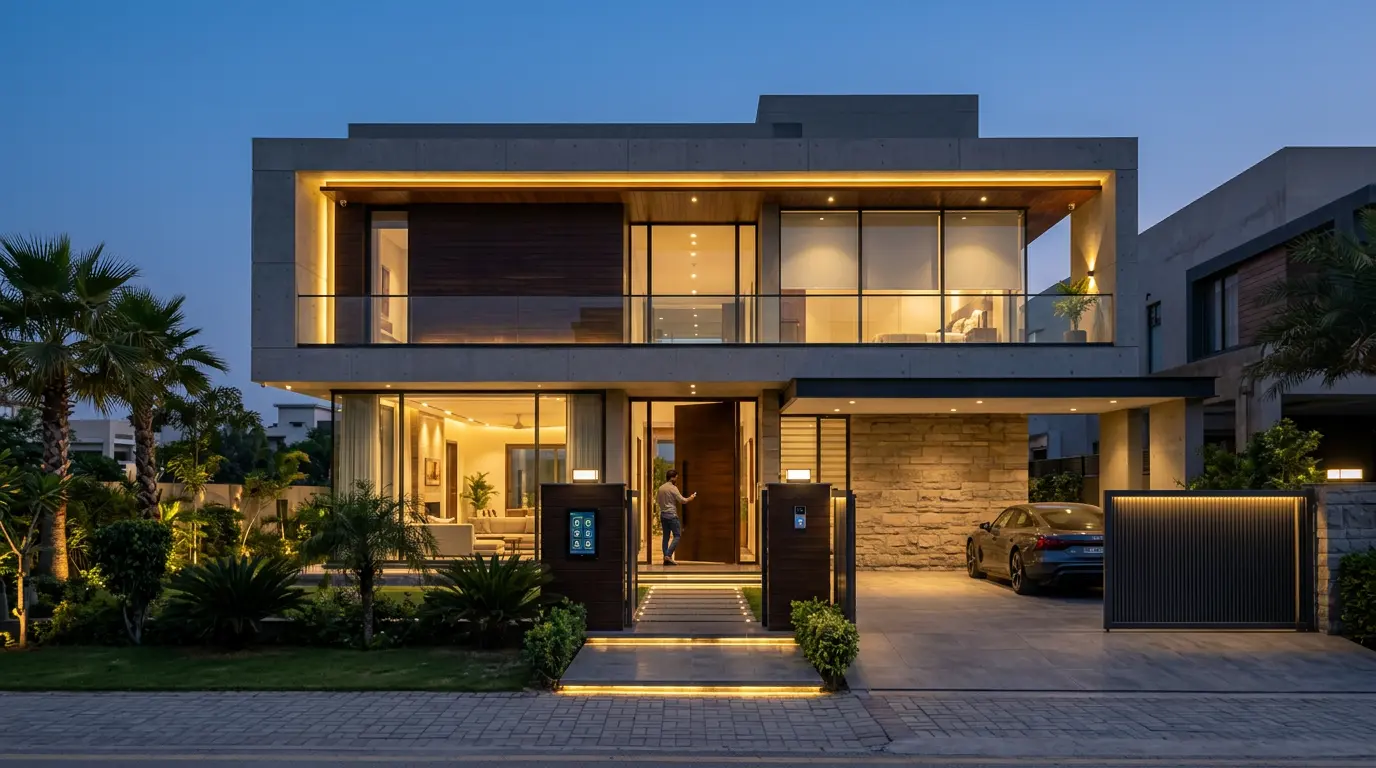
Why AV Should Be Your First Call — Not Your Last
There is a moment every experienced architect in Pakistan knows well. The building is almost done. The walls are sealed, the ceilings are dropped, and the fit-out team is already on-site. Then the client says: “When are they installing the sound system?”
That question asked at the wrong time costs everyone money, time, and compromise. Cables get surface-mounted because the conduit was never planned. Speakers end up in acoustically terrible positions because no one thought about zoning. The amplifier equipment gets crammed into a janitor’s closet because a dedicated room was never allocated on the drawings.
This guide exists to prevent exactly that scenario.
Whether you are designing a corporate headquarters in Lahore’s Gulberg district, a mixed-use development in Karachi, a luxury residential project in Islamabad, or a hospitality property anywhere in between AV planning must begin at the foundation stage, not the finishing stage. Here is the checklist you need.
1. Conduit Routing: The Nervous System of Every AV System
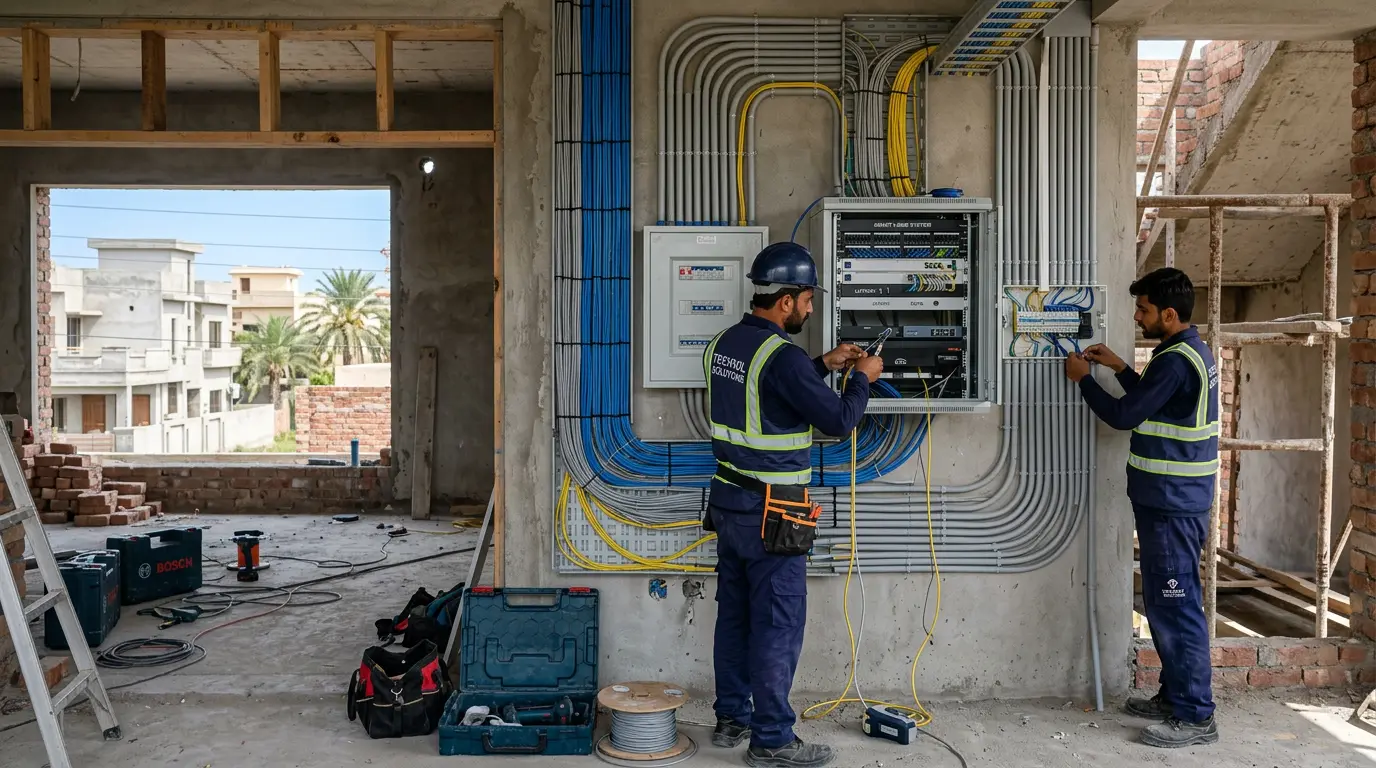
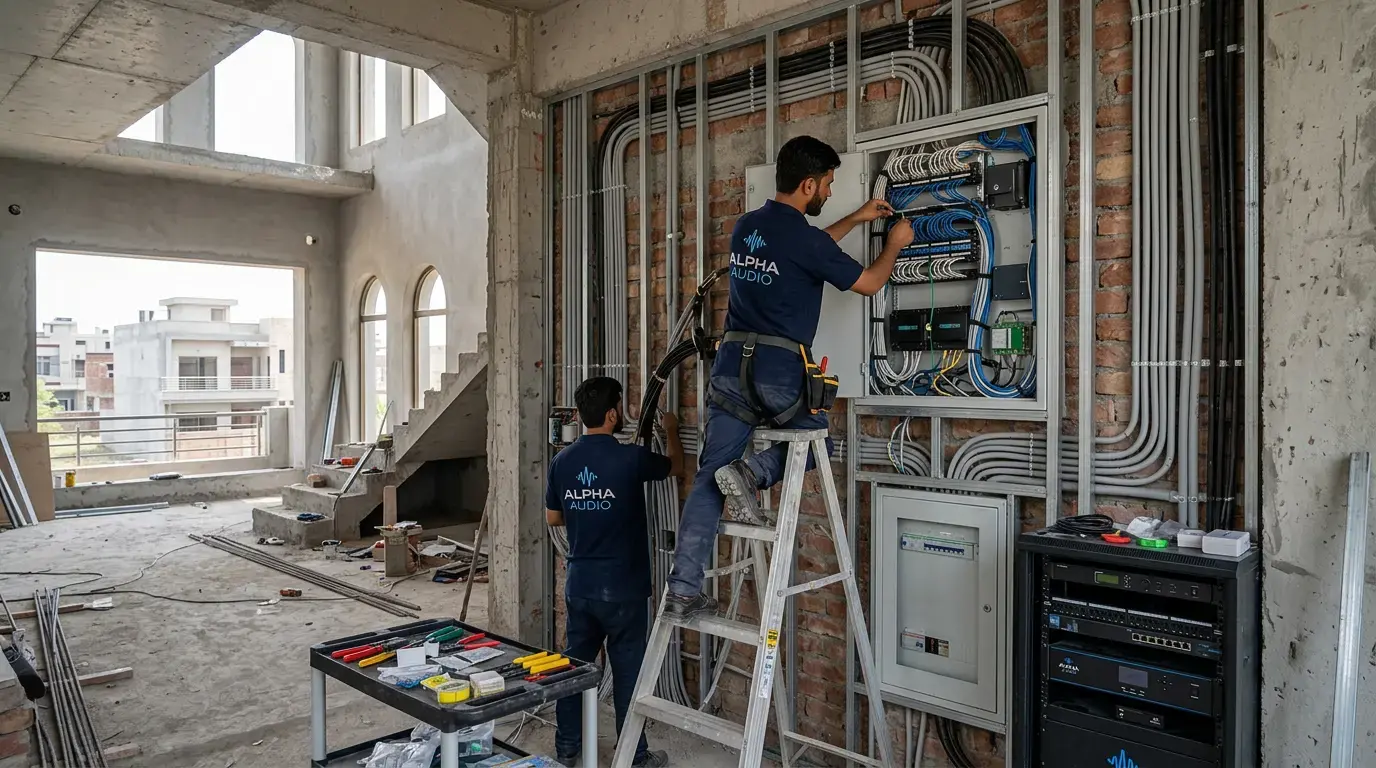
Think of conduit as the nervous system of a building’s AV infrastructure. Once the concrete is poured and the walls are sealed, that nervous system is locked in forever. Get it wrong, and every future AV installation no matter how premium is a workaround.
What to plan at this stage:
- Main AV trunking routes from the amplifier room (or head-end rack) to each floor and zone. These should be separate from electrical conduit runs wherever possible to avoid interference.
- Minimum conduit diameter: For structured AV cabling (speaker wire, HDMI, CAT6, fibre), plan for 32mm to 50mm conduit runs depending on the number of cables anticipated.
- Conduit fill ratio: Never exceed 40% fill on any AV conduit. Future upgrades depend on having breathing room in the pathway.
- Draw wire: Always pull a draw wire through every conduit at the construction stage so future cable pulls are possible without breaking walls.
- Junction boxes and pull points: Every change of direction greater than 90 degrees needs a pull box. Mark these clearly on structural drawings.
- Floor boxes and wall boxes: Identify where AV termination points — HDMI plates, audio input panels, network media plates — will be located in every room. These need to be roughed in before screeding and tiling.
Alpha Audio’s advice: Share your floor plans with an AV consultant before the MEP (Mechanical, Electrical, Plumbing) drawings are finalised. A one-hour consultation at this stage saves weeks of remedial work after handover.
2. Acoustic Planning: Silence Is a Design Material
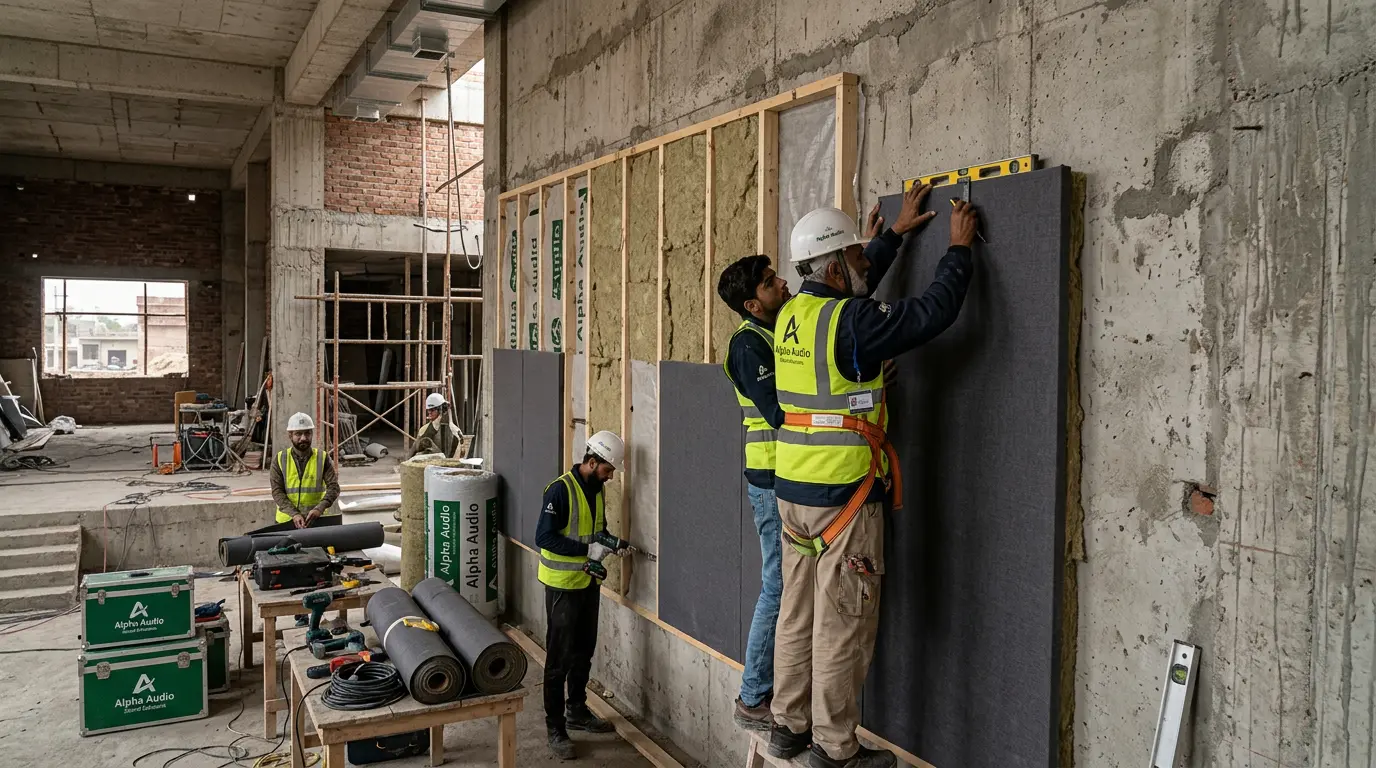
A world-class speaker system in a room with bad acoustics will always sound mediocre. Conversely, a mid-range system in a well-treated room can sound exceptional. Acoustic planning is not a luxury add-on — it is a structural decision.
What architects and developers need to consider:
Room geometry and shape: Parallel walls are the enemy of good acoustics. They create standing waves — frequencies that build up and cancel out in predictable, unpleasant patterns. Where possible, introduce slight angles on side walls (even 5–7 degrees) in rooms intended for critical listening, conference presentations, or home cinema.
Material choices:
- Hard surfaces (marble, glass, concrete) reflect sound aggressively. They are beautiful but acoustically live. In lobbies and atriums, this creates echo and intelligibility problems for PA systems.
- Specify acoustic absorption early — either integrated into the architectural finish (fabric-wrapped panels, acoustic ceilings) or as a consultant-guided retrofit allowance in the budget.
Floor-to-ceiling heights: Ceiling height directly affects speaker selection, throw distance, and dispersion angle. A 3-metre ceiling needs different speaker placement and technology than a 5-metre atrium ceiling. Share your reflected ceiling plans with your AV consultant before finalising.
Acoustic separation between zones: In multi-use buildings — hotels, corporate campuses, mixed-use developments — different zones will operate at different volumes and for different purposes. Boardrooms should not bleed into open offices. Restaurant music should not enter guest rooms. Structural acoustic separation (dense walls, acoustic door seals, isolated slab penetrations) must be designed in — not retrofitted.
Noise floor: The mechanical noise of HVAC systems defines the noise floor of every room. AV systems must overcome this. Share your HVAC layouts with your AV consultant. High-velocity air handlers near boardrooms or cinema rooms are a common and avoidable mistake.
3. The Amplifier Room: Give AV a Proper Home
Every professional AV installation needs a dedicated equipment space. Yet in most building projects in Pakistan, this room is either never planned, or it is assigned whatever space is left over — a corner of the building services room, a section of the IT server room, or (worst of all) the back of a storage cupboard.
What a proper amplifier room requires:
Size: For a medium commercial building, plan for a minimum of 6–10 square metres dedicated to AV rack space. Larger projects (hotels, hospitals, convention centres) need significantly more. Your AV consultant can provide exact dimensions based on the system scope.
Access: The room must be accessible to technicians carrying equipment. This means standard door width (minimum 900mm), no steps, and no obstructions to the rack positions.
Cooling: AV amplifiers, processors, and network equipment generate significant heat. The room needs dedicated mechanical cooling — either a split AC unit or connection to the building’s precision cooling system. Do not rely on passive ventilation.
Power: Dedicated clean power circuits, separate from lighting and general power, are essential. Plan for:
- Adequate load capacity (consult your AV designer for wattage requirements)
- Surge protection at the distribution board level
- UPS provision for critical systems (background music, PA, control systems)
Cable management: Raised flooring or underfloor cable management to the racks is ideal. If not possible, plan overhead cable trays from the conduit entry point to the rack positions.
Security: AV equipment is valuable. The amplifier room should be lockable and access-controlled.
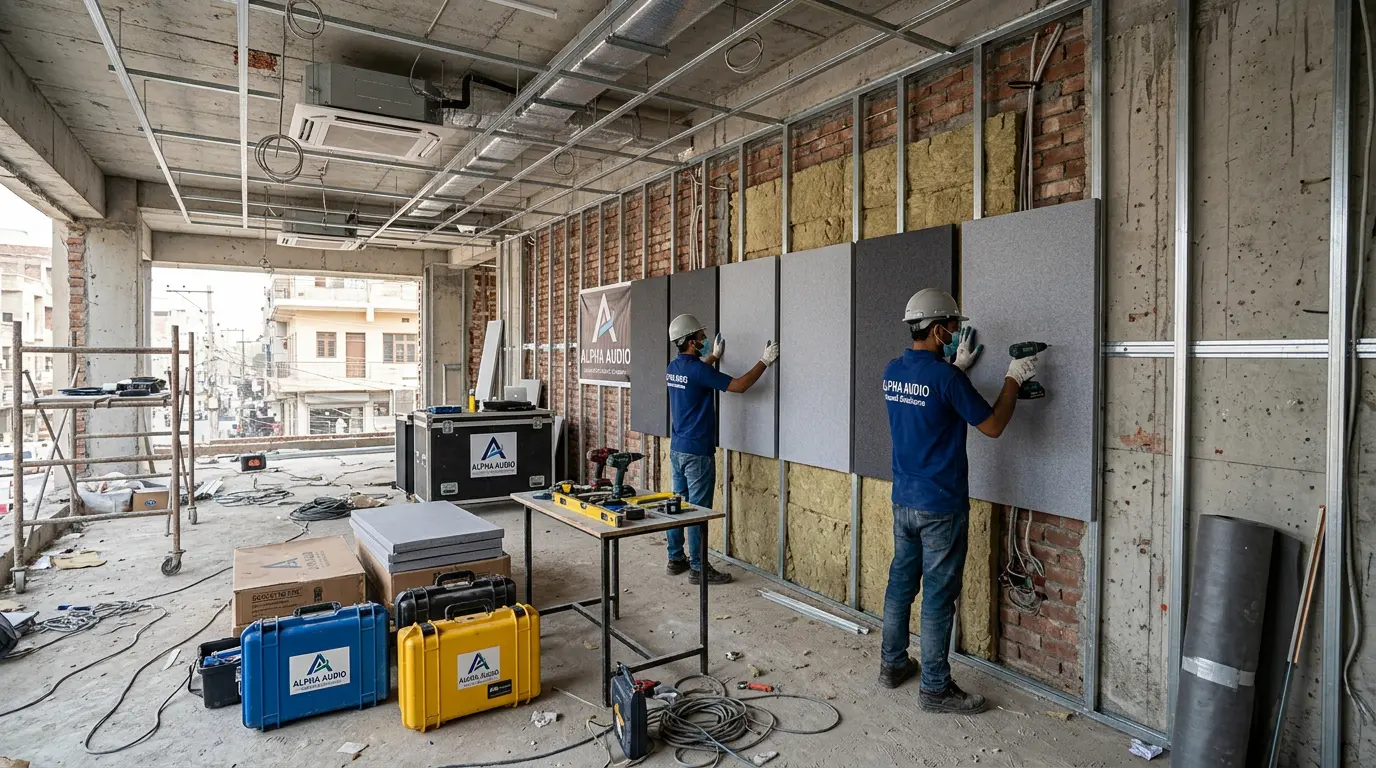
4. Speaker Zoning: Designing for How People Actually Use the Building
Speaker zoning is the architectural logic of where sound goes, how loud it is, and who controls it. Done well, it is invisible — you simply hear the right audio in the right place at the right volume. Done poorly, it means one switch controls an entire floor, the lobby music blares into meeting rooms, and the MD cannot turn off the background music in his private office.
Zone planning principles:
Map zones to usage, not to floor plans: One floor may contain multiple distinct AV zones — open office, boardroom, reception, break room, and prayer room. Each has different volume requirements, different content sources, and potentially different control access levels.
Plan for independent volume control per zone: Every distinct space should have the ability to be independently controlled — either through wall-mounted volume controls, a centralised control panel, or a building management system (BMS) integration.
Design for future expansion: Install more speaker cable homerun routes than you think you need. Adding a zone later is expensive if conduit is not already in place. Adding a zone later when conduit is present costs almost nothing.
Zoning for hospitality projects (hotels, clubs, restaurants) is more complex and must account for local regulations, noise ordinances, and the operational reality that different zones will be managed by different staff members.
5. The Integration Conversation: AV, IT, and BMS Must Speak the Same Language
Modern AV systems do not operate in isolation. They connect to the building’s IT network, integrate with the BMS, and increasingly interface with smart building platforms. This integration must be designed before construction — not discovered after.
At planning stage, confirm:
- Is the AV system IP-based (networked audio, Dante, AVoIP)? If so, network infrastructure must support AV traffic requirements.
- Will the AV system integrate with the BMS for automated control (lights + AV scenes, occupancy-based control)?
- Who is responsible for network switch provision for AV? (This is a common gap between the IT contractor and AV contractor.)
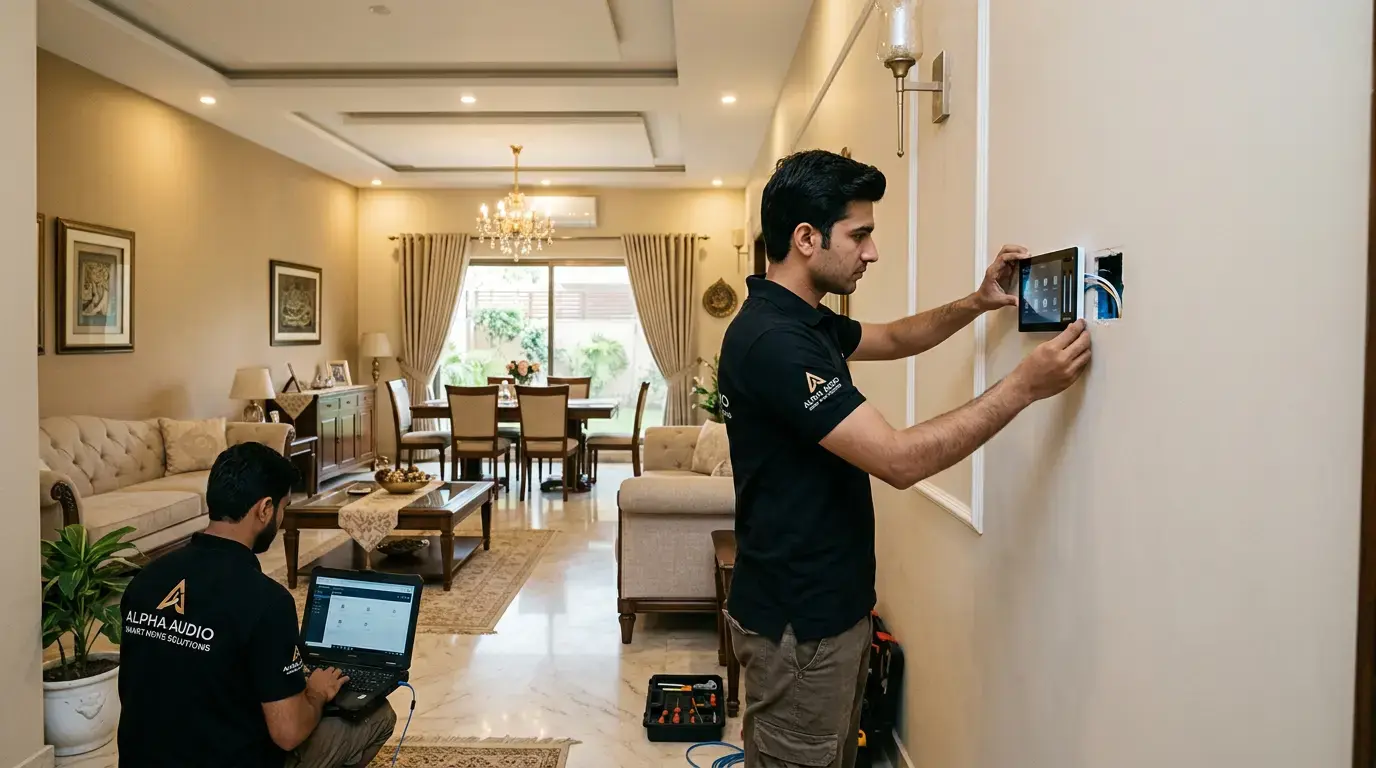
- Is there a centralised control system (Crestron, Extron, Control4, Savant)? Its touchpanel locations must be roughed in during construction.
Why Alpha Audio Belongs in the Work Before the Work Exists
Alpha Audio is not a box supplier. We are Pakistan’s specialist AV consultancy — the team that architects, developers, and project managers bring in at the planning stage to ensure that every AV decision made during construction is the right one.
We work directly with your MEP engineers, interior designers, and project managers to:
- Produce AV conduit and cabling schematics for inclusion in construction drawings
- Specify amplifier room sizes and services requirements
- Create speaker zoning plans aligned with your architectural intent
- Advise on acoustic treatment strategies without disrupting your design vision
- Provide equipment specifications and budgets at every project milestone
The cost of an AV consultation at foundation stage is a fraction of the cost of remedial work at fit-out stage.
If your project is in design or pre-construction phase right now — in Lahore, Karachi, Islamabad, or anywhere across Pakistan — this is the right time to talk.
Contact Alpha Audio today
+92 308 4319219 | info@alphaaudio.com.pk | alphaaudio.com.pk
Visit us: Plaza No. 28, Phase 6 DHA, Lahore, Punjab
Audio Quotation
Video Quotation
Automation Quotation