



In the evolving landscape of public administration, real transformation is not always visible on highways or in large infrastructure projects. Sometimes, it happens quietly—inside the rooms where policies are shaped, strategies are discussed, and decisions that impact millions are made. Across Punjab, a significant shift is underway as government offices, particularly secretariat meeting rooms, are being upgraded with modern technologies to improve efficiency, transparency, and collaboration.
The Government of Punjab is actively investing in its internal infrastructure, recognizing that better decision-making environments lead to better governance outcomes. By integrating smart automation systems and high-performance audio solutions, these meeting spaces are being transformed into intelligent hubs that support fast, effective, and inclusive governance.
From Conventional Rooms to Smart Environments
Traditionally, secretariat meeting rooms were functional but limited. Meetings often began with logistical delays—adjusting lighting, fixing projectors, ensuring microphones worked properly, or distributing printed documents. Communication gaps were common, especially during large or hybrid meetings involving participants from different districts.
These challenges, though seemingly minor, often led to inefficiencies:
- Delayed meeting start times
- Miscommunication due to poor audio quality
- Heavy reliance on paper-based workflows
- Limited participation from remote officials
As governance demands increased and the need for real-time collaboration grew, it became clear that these conventional setups were no longer sufficient.
The Vision: Digitally Empowered Governance
To address these issues, the government initiated a strategic upgrade of meeting rooms by incorporating two key technologies:
- KNX Automation for smart control systems
- RCF Audio Units for professional-grade communication
This combination is redefining how meetings are conducted within government offices.
KNX Automation: Intelligence at the Core
KNX is a globally recognized standard for building automation, and its implementation in secretariat meeting rooms is a game changer.
Key Features of KNX Integration:
Centralized Control System
All essential room functions—lighting, air conditioning, blinds, and audiovisual equipment—are controlled through a single interface. This eliminates the need for manual adjustments and ensures consistency across meetings.
Scene-Based Automation
Different meeting scenarios can be activated instantly. For example:
- Presentation Mode: Optimized lighting and display settings
- Discussion Mode: Balanced lighting and audio for interaction
- Video Conference Mode: Adjusted acoustics and visuals for remote communication
Energy Efficiency
KNX systems monitor occupancy and automatically adjust energy usage. Lights and air conditioning turn off when rooms are not in use, reducing electricity consumption and supporting sustainability goals.
Remote Monitoring and Management
IT teams can oversee and manage multiple meeting rooms across departments from a central dashboard, ensuring smooth operations and quick troubleshooting.
RCF Audio Units: Ensuring Clear Communication
While automation enhances control, effective communication remains the backbone of any meeting. This is where RCF audio systems play a crucial role.
Advantages of RCF Audio Solutions:
Crystal Clear Sound Quality
High-definition audio ensures that every participant is heard clearly, regardless of their position in the room.
Uniform Sound Distribution
Advanced speaker design eliminates dead zones, providing consistent audio coverage throughout the space.
Noise Reduction and Echo Control
Built-in technologies minimize background noise and echo, making discussions more focused and productive.
Seamless Integration with Conferencing Systems
RCF systems integrate effortlessly with video conferencing platforms, enabling smooth hybrid meetings.
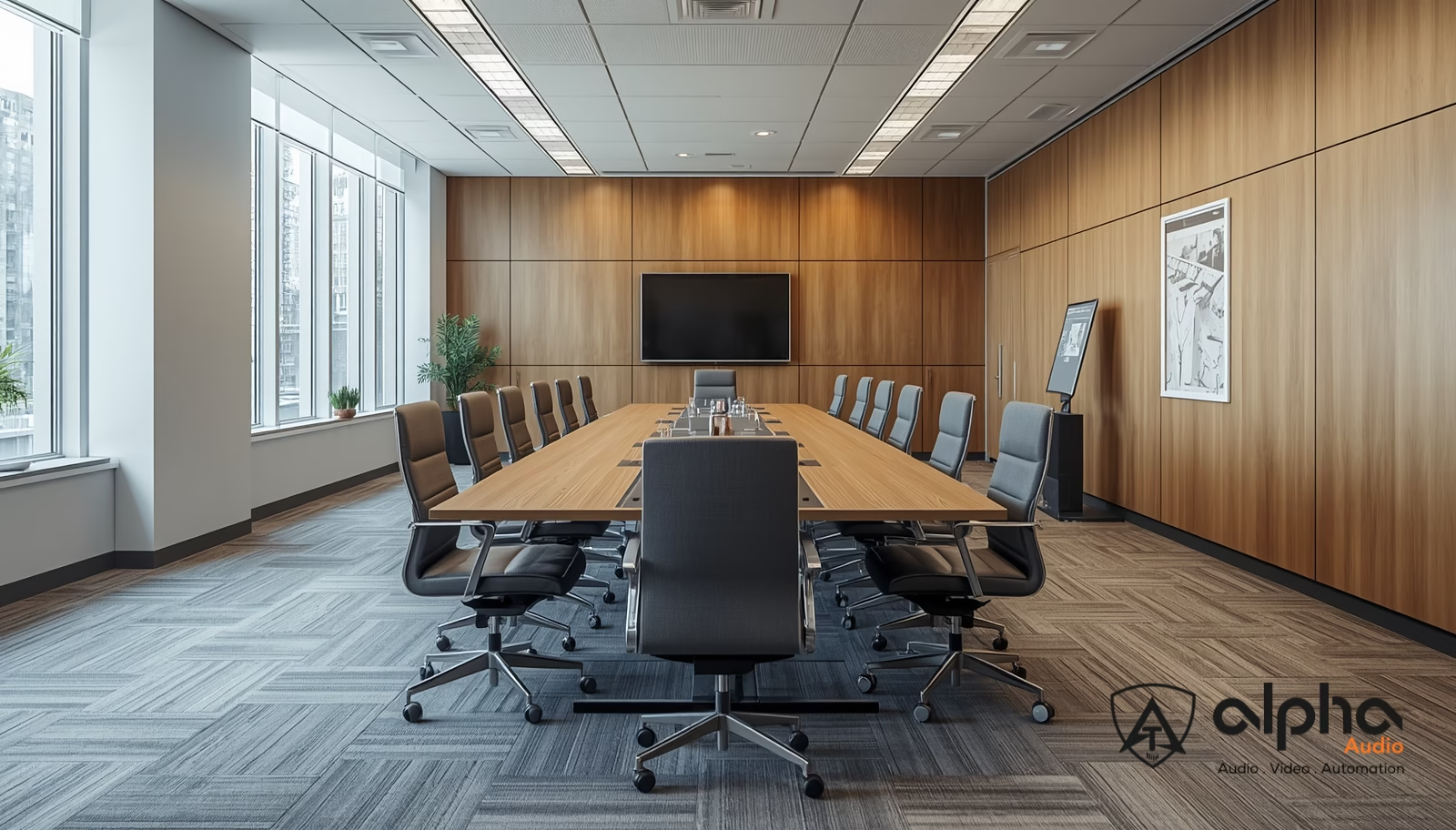
A Realistic Scenario: Before and After
Consider a high-level meeting involving officials from multiple districts.
Before the Upgrade:
- Participants arrive and wait while technical issues are resolved
- Audio is unclear, requiring repetition
- Remote participants face connectivity and communication challenges
- Documents are shared manually, slowing down discussions
After the Upgrade:
- The room automatically prepares itself using KNX automation
- Lighting, temperature, and displays are optimized instantly
- Remote participants join seamlessly with clear audio via RCF systems
- Documents are shared digitally in real time
- The meeting starts on time and progresses efficiently
This transformation significantly reduces delays and enhances productivity.
Key Benefits of Upgraded Meeting Rooms
1. Faster Decision-Making
With real-time collaboration tools and seamless communication, decisions can be made quickly, reducing administrative delays.
2. Enhanced Productivity
Automation eliminates setup time, allowing officials to focus entirely on discussions and outcomes.
3. Cost Efficiency
Reduced reliance on paper, minimized travel for meetings, and optimized energy usage contribute to long-term cost savings.
4. Improved Transparency
Digital documentation and recorded sessions create a clear record of discussions and decisions, enhancing accountability.
5. Inclusive Governance
Officials from remote areas can actively participate without traveling, ensuring broader representation in decision-making.
6. Sustainability
Energy-efficient systems support environmentally responsible practices within government operations.
7. Future-Ready Infrastructure
The scalable nature of KNX and integrated systems ensures compatibility with future technological advancements.
Supporting Punjab’s Digital Transformation
The modernization of secretariat meeting rooms is part of a larger vision to digitize governance across Punjab. By investing in smart infrastructure, the Government of Punjab is setting a benchmark for how technology can enhance public administration.
These upgraded meeting spaces are more than just rooms—they are:
- Strategic decision-making centers
- Collaboration hubs for inter-departmental coordination
- Platforms for innovation in governance
Long-Term Impact on Public Service
While citizens may not directly see these changes, they will experience the benefits through:
- Faster project approvals
- Improved service delivery
- More responsive governance
When internal systems become efficient, the overall performance of government improves, leading to better outcomes for the public.
Conclusion
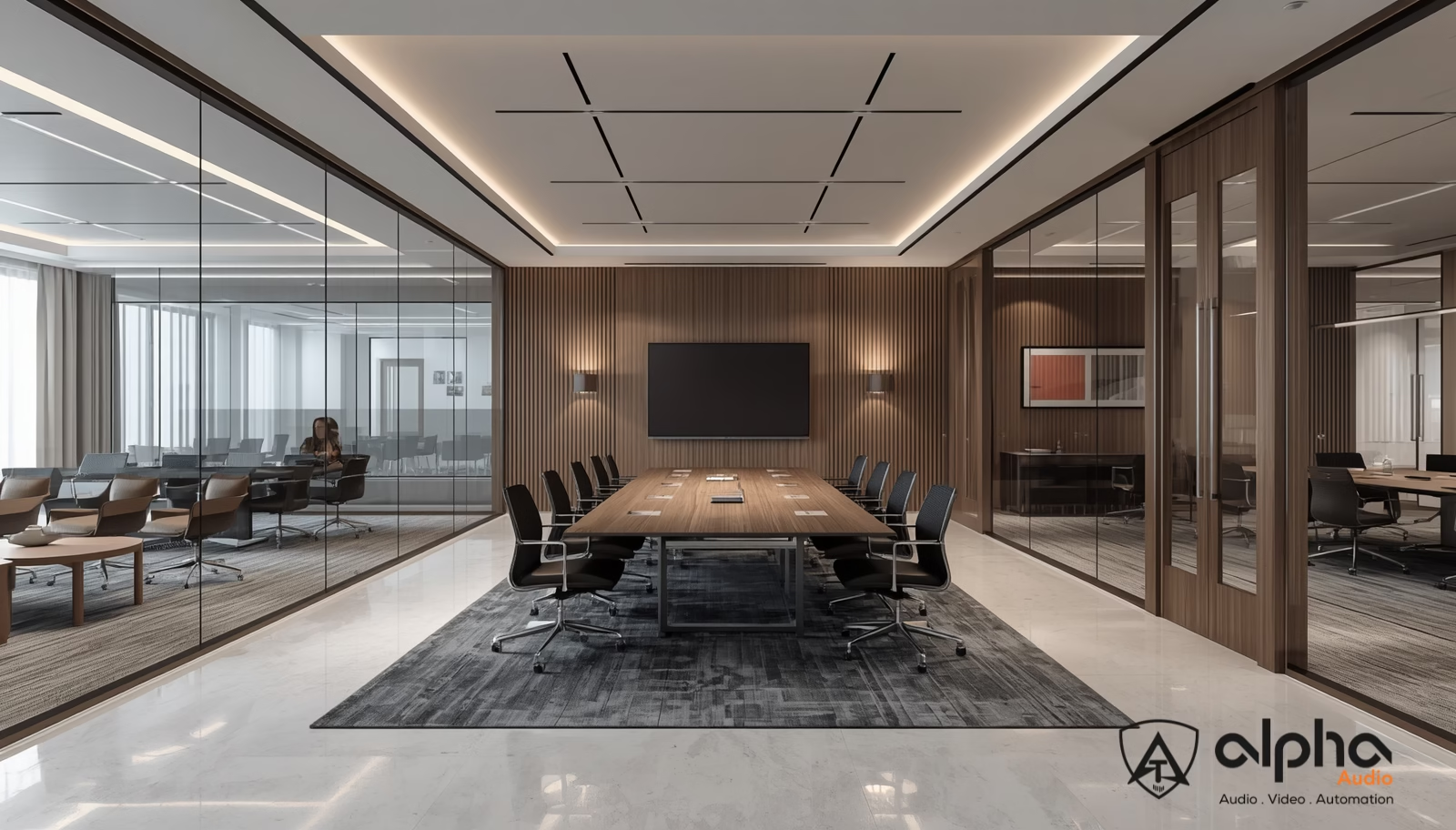
The upgrade of secretariat meeting rooms in Punjab represents a forward-thinking approach to governance. By integrating KNX automation and RCF audio systems, the Government of Punjab is creating environments that support efficiency, clarity, and collaboration.
This initiative highlights an important truth: meaningful development is not only about external infrastructure but also about strengthening the systems where decisions are made. In these upgraded meeting rooms, technology is not just enhancing spaces—it is empowering governance itself.
As Punjab continues its journey toward digital transformation, these smart meeting environments will play a critical role in shaping a more efficient, transparent, and future-ready government.