
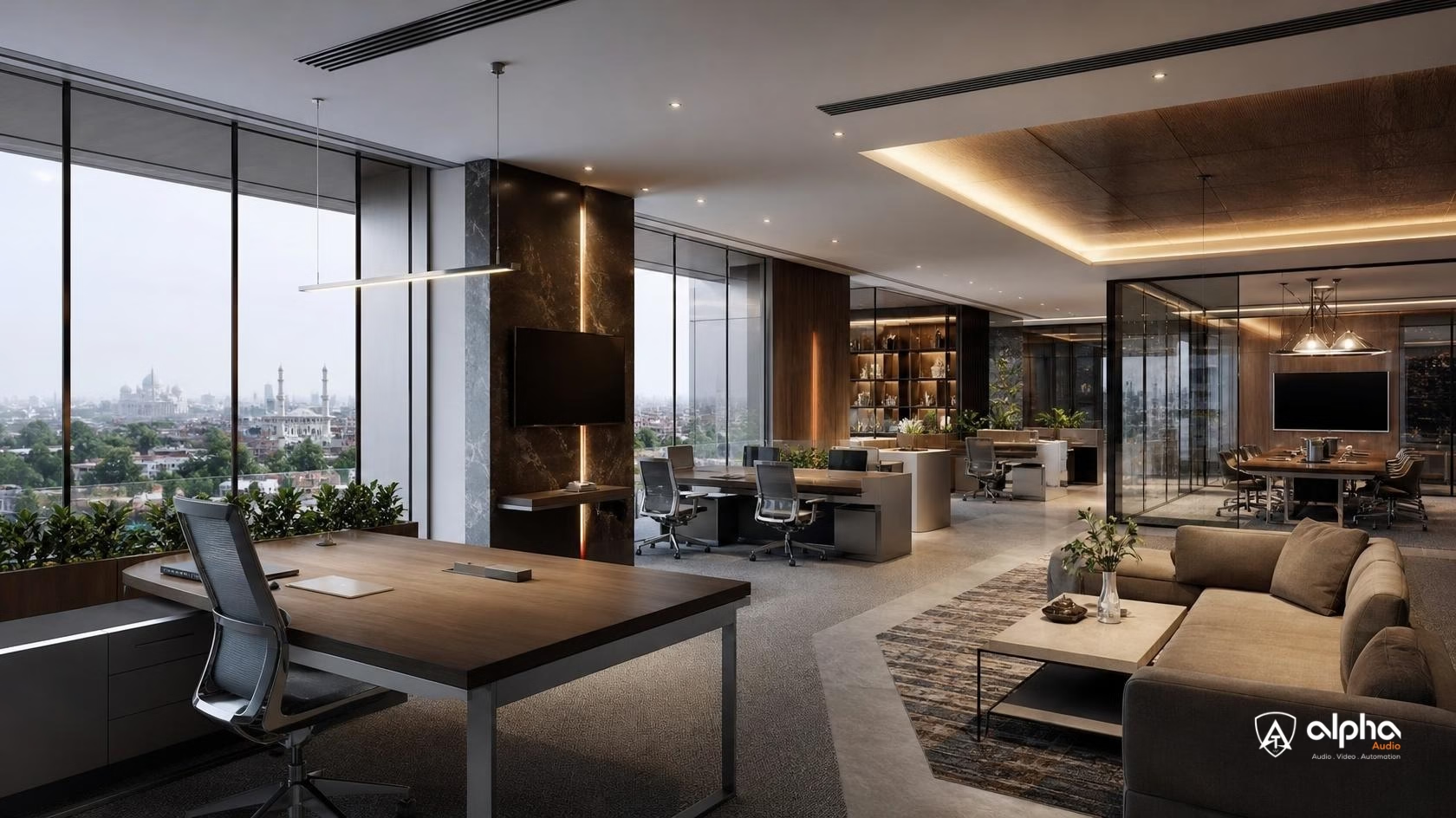
Walk into any technology expo and you’ll hear the same pitch: connect everything, automate everything, transform everything. Walk into the average office the next morning and you’ll find lights burning in empty meeting rooms, an air conditioner cooling a floor nobody is using, a projector that needs three remotes, and a front door controlled by a key that nobody can account for.
That gap between the promise and the reality is exactly why this guide exists. We’ve ranked the top 10 smart office technologies that genuinely matter for a modern workplace, ordered by return on investment (ROI) and ease of implementation, so you can decide what to do first, what to plan for next, and what is worth saving for when the budget is right.
The Problem: Trends vs. Technologies That Actually Pay Off
Most businesses don’t struggle with a lack of smart office options. They struggle with too many. Every vendor has a “smart” label, and it’s hard to tell which products reduce your electricity bill, which improve how your people work, and which are simply impressive demos.
This confusion leads to three expensive mistakes:
- Buying devices instead of systems. A dozen gadgets that don’t talk to each other create more work, not less.
- Starting with the flashiest project. Without the basics in place (sensing, lighting, climate), the showpiece can’t deliver its full value.
- Ignoring the integrator. Smart office technology is only as good as its design, programming and commissioning. Poor integration is the number one reason projects disappoint.
The solution is a simple filter: does this technology save money, save time, improve security or improve the experience of the people in the building, and how hard is it to deploy? Apply that filter, and a clear priority list emerges.
How We Ranked These Technologies
Each technology below is scored on two practical measures:
- ROI potential: how quickly and reliably it reduces costs or creates measurable value (energy savings, time saved, risk avoided, productivity gained).
- Ease of implementation: how disruptive and complex it is to install, particularly in an existing, occupied office rather than a new build.
Technologies that score well on both sit at the top. Technologies that carry higher cost or complexity, but deliver a strong strategic or experiential payoff, sit lower, and that is not a criticism. It simply means they work best when the foundations are already in place. A summary table appears further down if you’d like the short version.
1. Occupancy and Presence Sensors
ROI: Very high | Ease: Very easy
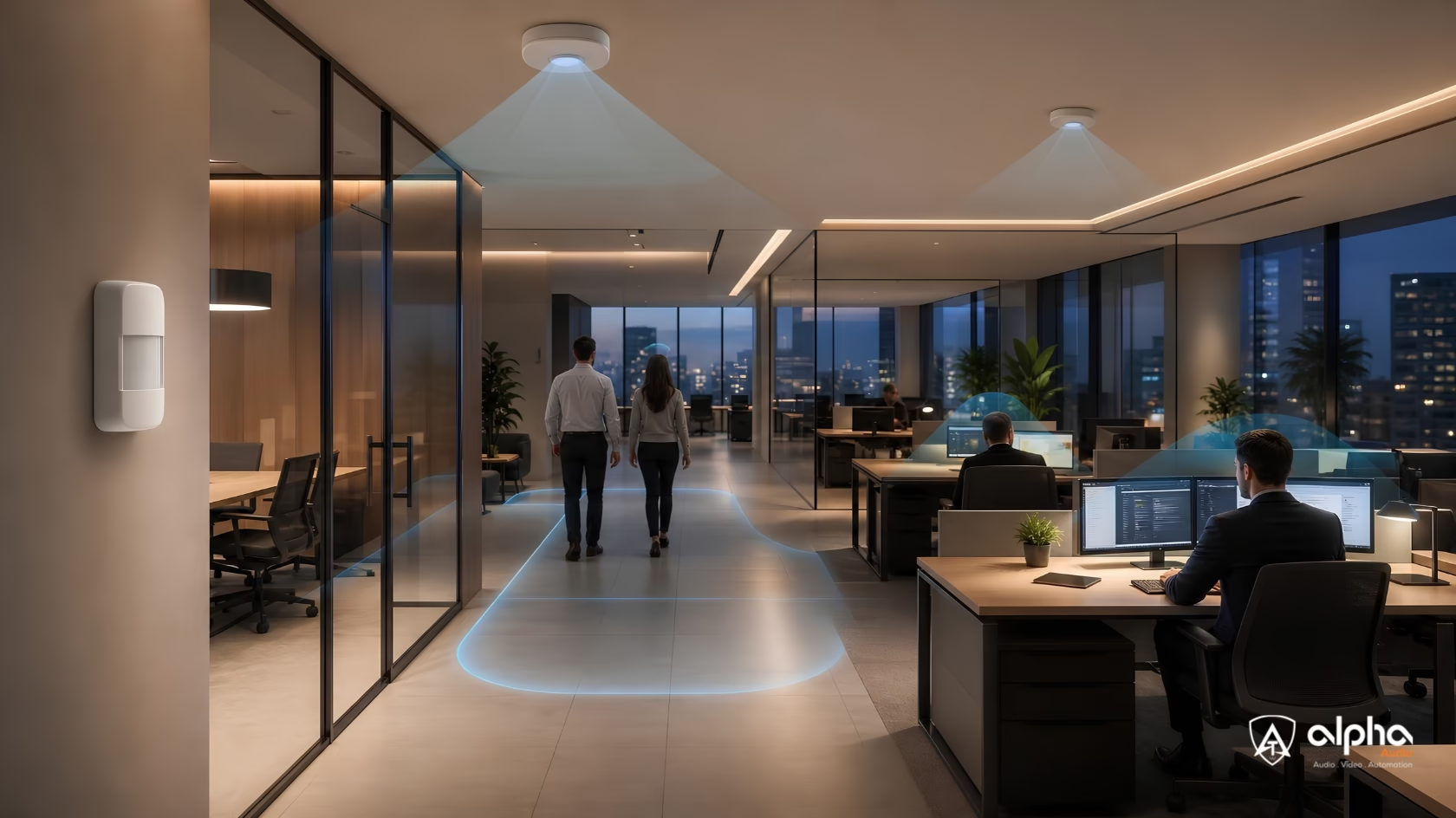
If you’re going to start anywhere, start here. Occupancy and presence sensors detect whether a room or zone is actually in use, and that single piece of information is the trigger for almost every other saving in your building.
When a meeting room empties, the lights dim, the air conditioning relaxes and the display switches off, with no one needing to remember. Presence detectors also differ from basic motion sensors: they pick up small movements, so the lights won’t switch off on someone typing quietly at a desk.
Sensors are inexpensive compared with the savings they unlock, they are available in ceiling and wall formats, and they can be wired into a KNX system or a standalone controller. They also produce useful utilisation data, showing which rooms are consistently empty and which are overbooked, which helps with space planning and lease decisions.
Best for: meeting rooms, open-plan areas, washrooms, corridors and storage.
2. Smart Lighting Control
ROI: Very high | Ease: Easy to moderate
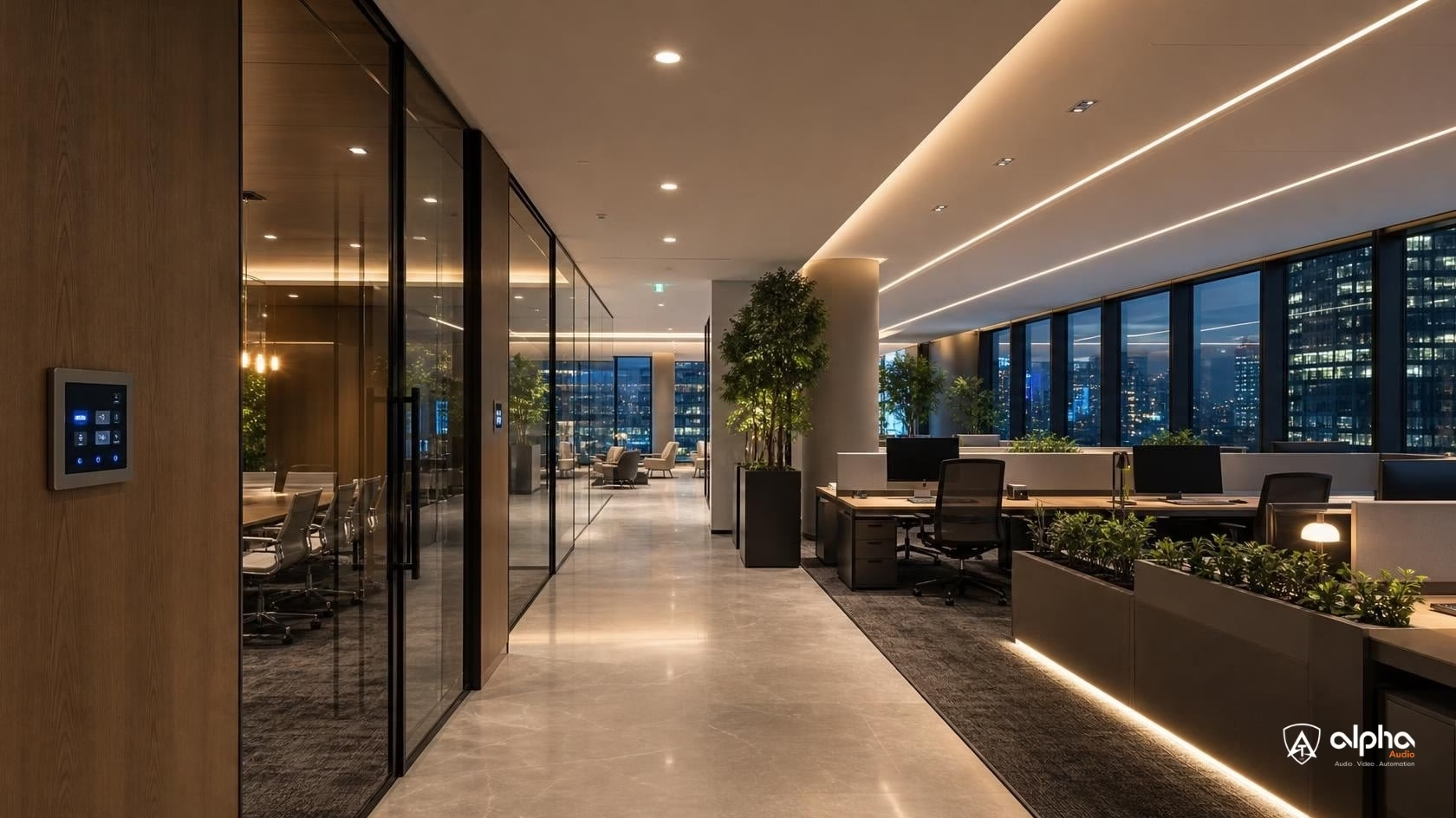
Lighting is one of the largest and most controllable energy loads in an office. Smart lighting control goes beyond LED bulbs: it combines dimming, scheduling, presence detection and daylight sensing so that lights deliver the right amount of light only where and when it’s needed.
Daylight harvesting is a good example. Fixtures near windows automatically dim as natural light increases, while fixtures deeper in the room hold steady. Scene control lets one button set a room for presentation, video call, focused work or cleaning. Well-tuned lighting also improves comfort and reduces eye strain, which matters more than most managers realise.
Because lighting is so visible, it’s also an easy win to demonstrate to leadership: staff notice immediately, and the energy impact shows up on the next utility bill. If you want to understand how lighting fits into a broader control platform, explore Alpha Audio’s KNX automation solutions.
3. Smart HVAC and Climate Control
ROI: Very high | Ease: Moderate
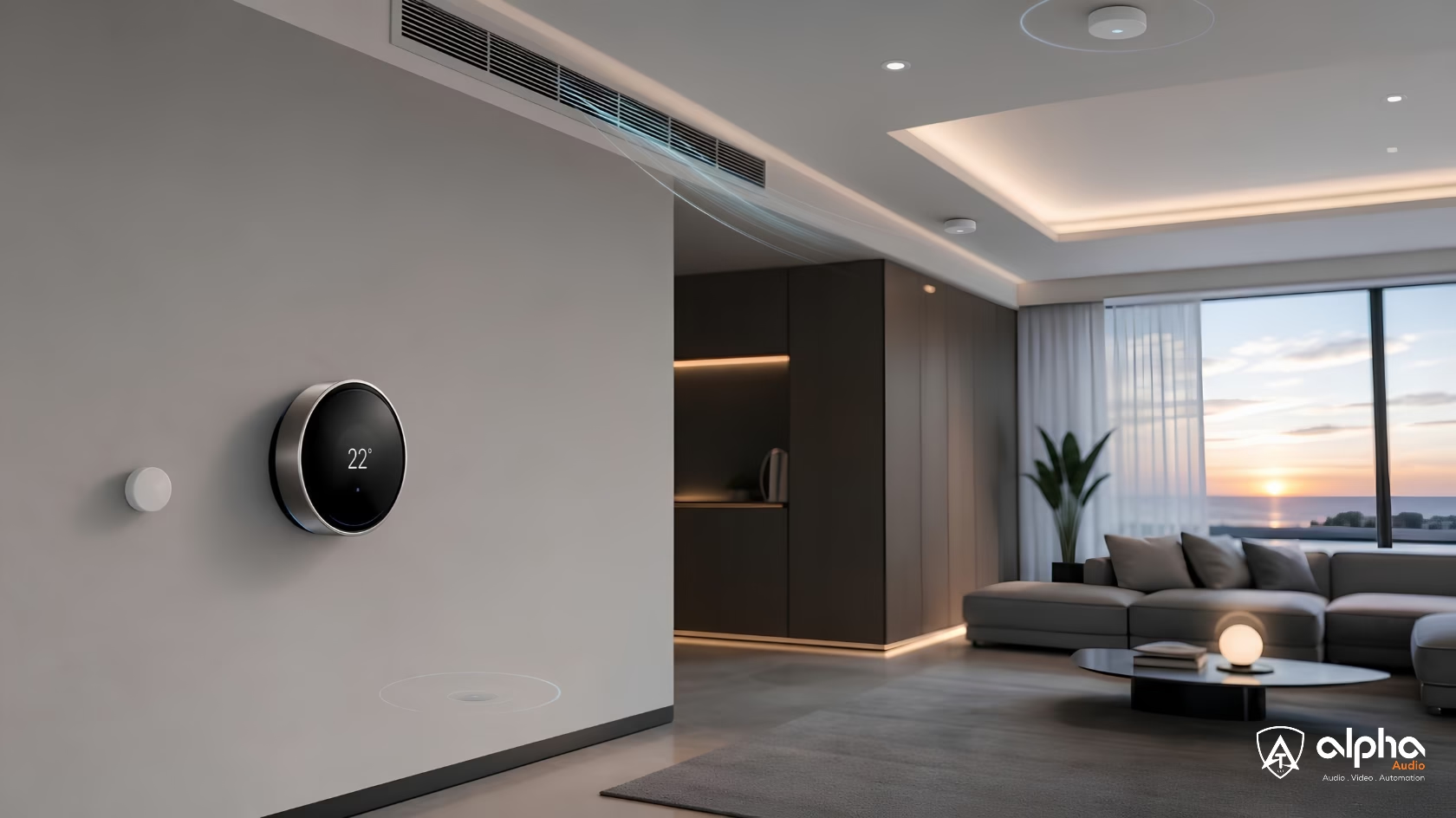
In a hot climate, cooling is typically the biggest line item in an office’s energy use. Smart HVAC control links temperature sensors, occupancy data, schedules and, where possible, window contacts to manage cooling and ventilation by zone rather than by building.
That means pre-cooling the boardroom just before a meeting, relaxing the setpoint in an empty area, and shutting the system off when a window is left open. Room controllers and touch panels allow staff to make small adjustments within limits you define, which avoids the constant tug-of-war over the thermostat.
The payback is strong, but implementation is a little more involved than lighting because it depends on the existing HVAC equipment and how it can be controlled. A short site survey will tell you quickly what is possible. Alpha Audio’s room controllers and touch screen controllers are a typical example of the user-facing layer for this kind of system.
4. Energy Monitoring and Metering
ROI: High | Ease: Easy
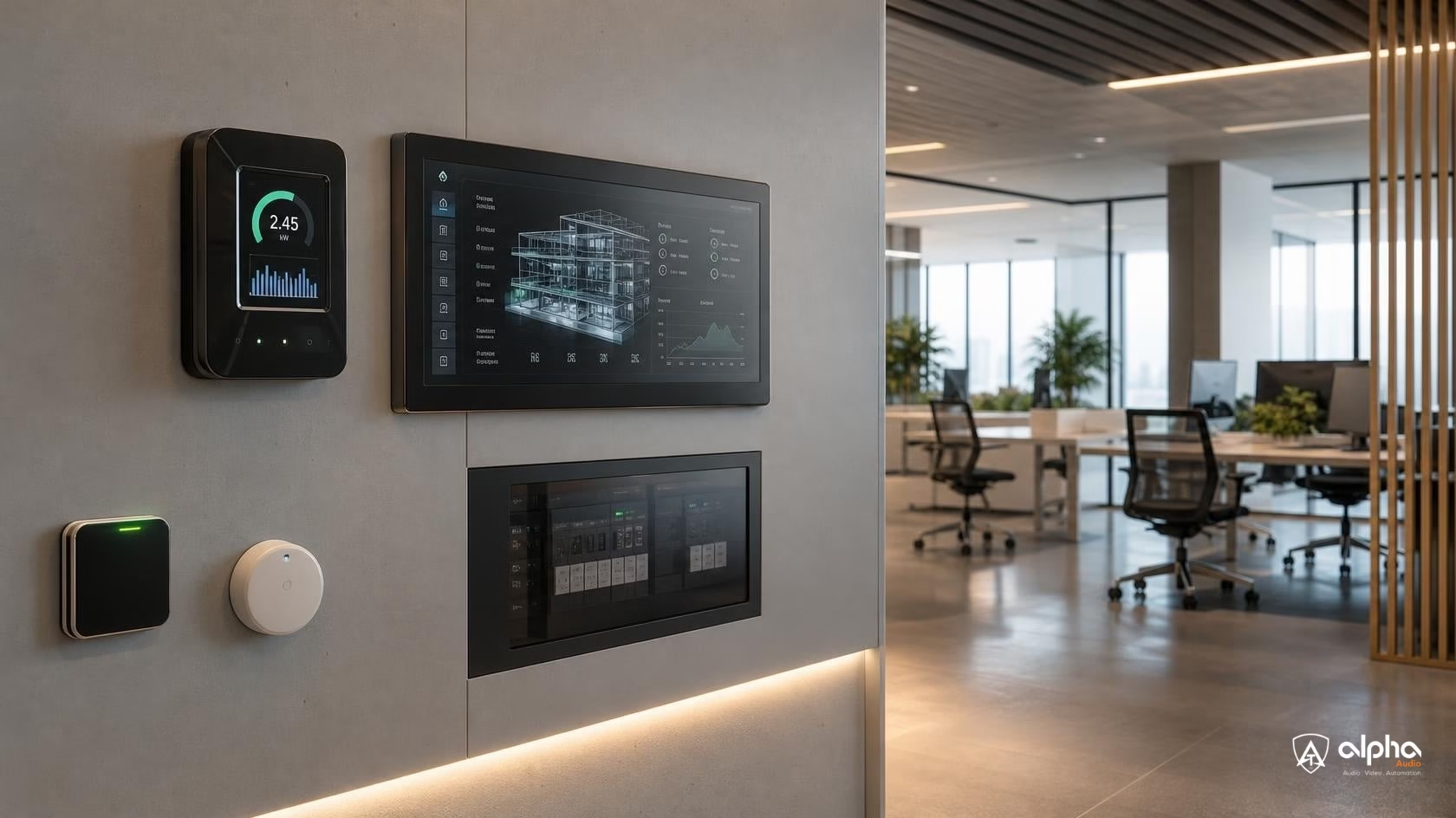
You can’t manage what you can’t see. Sub-metering and energy monitoring show where electricity is actually going: lighting, HVAC, server rooms, kitchens, lifts and so on. Many organisations discover that a surprising share of consumption happens out of hours.
The value is twofold. First, you find waste you can fix quickly, such as equipment running overnight. Second, you get the data to prove that your other smart office investments are working, which makes the business case for the next phase much easier to approve.
Monitoring is low-disruption, often clip-on or DIN-rail meters feeding a dashboard, and it pairs naturally with sensors and automation. If your sustainability or ESG reporting requirements are growing, this technology moves from “nice to have” to essential.
5. Access Control and Security Integration
ROI: High | Ease: Moderate
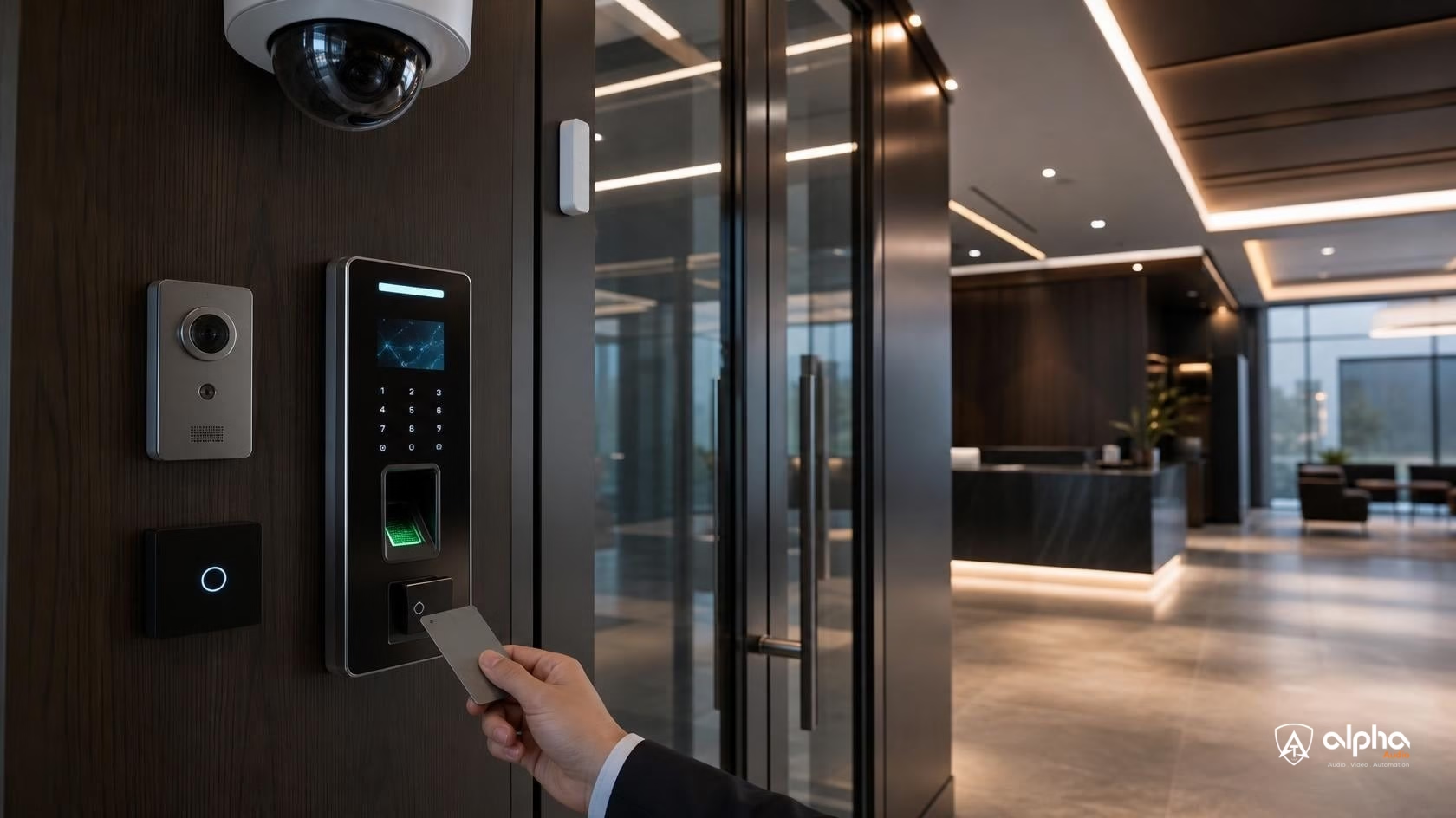
Keys get lost, copied and shared. Modern access control replaces them with cards, mobile credentials or biometrics, with permissions that can be changed instantly and a full record of who entered where and when.
The benefits go beyond security. Access control can integrate with lighting and HVAC (the building wakes up when the first authorised person arrives), with visitor management, and with attendance records. When employees leave, access is revoked in seconds rather than after a key-recovery exercise.
Plan this one carefully: door hardware, fire-safety requirements and cabling all influence cost. But for any organisation handling sensitive documents, valuable equipment or regulated data, it’s a core requirement of a modern workplace rather than an optional extra.
6. Meeting Room AV Integration
ROI: High | Ease: Moderate
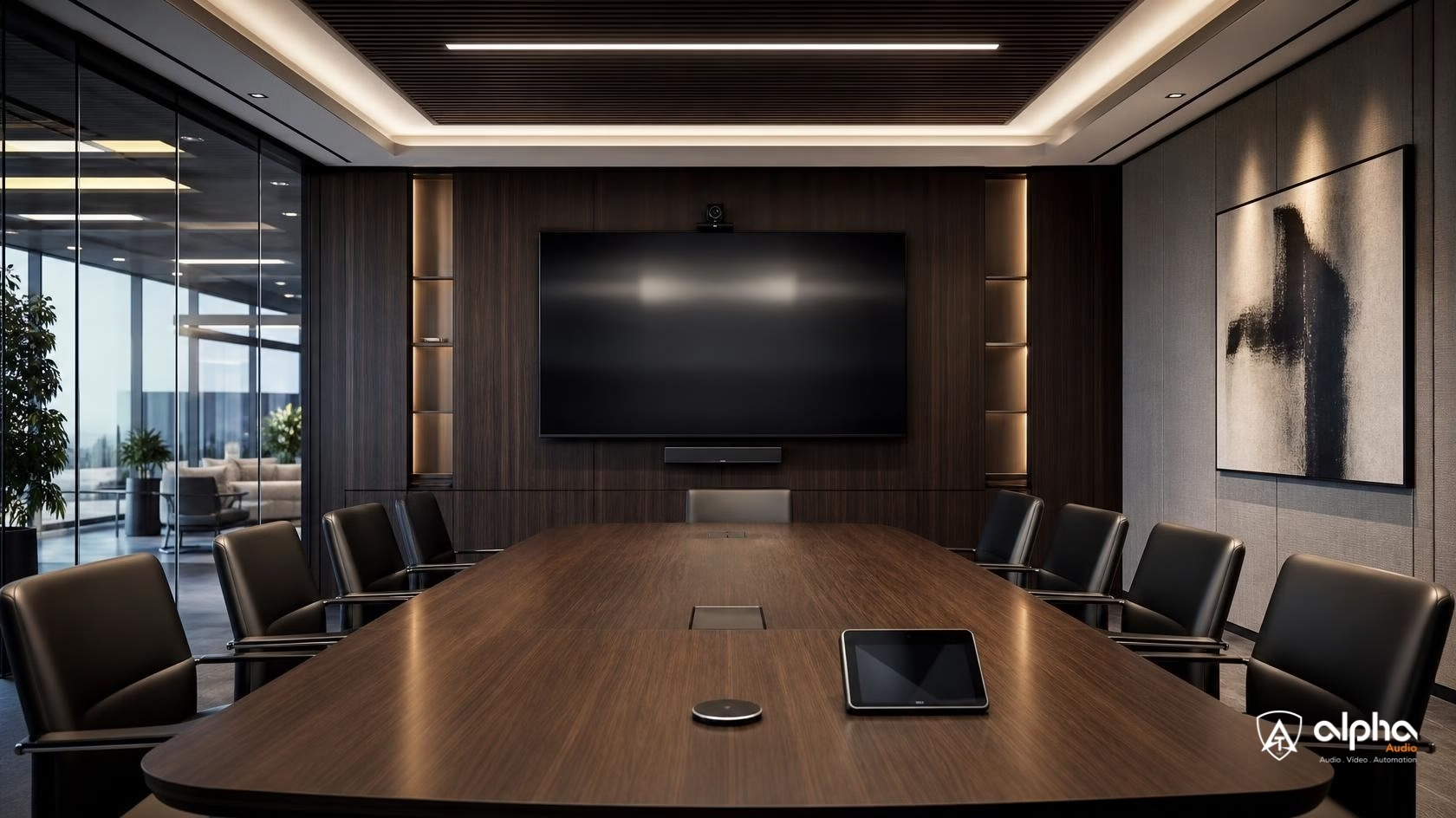
Every office has the meeting room where the first ten minutes are spent finding the right cable, switching the right input and asking someone to fix the sound. Multiply that by every meeting, every day, across every employee, and the cost of poor AV is far larger than the cost of fixing it.
Professional AV integration brings the display, audio, microphones, cameras, lighting and control into one simple interface. Walk in, touch one button, and the room is ready. Good integration also solves the unglamorous problems: echo, uneven speech pick-up, distracting reverberation and unreliable wireless sharing.
Sound quality deserves special attention. Research on remote communication consistently finds that poor audio is more tiring and less credible than poor video, so investing in well-designed speakers, microphones and acoustics pays off in clearer decisions and shorter meetings. See how this works in practice in Alpha Audio’s board room solution and audio conference system projects.
7. Video Conferencing and Collaboration Platforms
ROI: High | Ease: Moderate
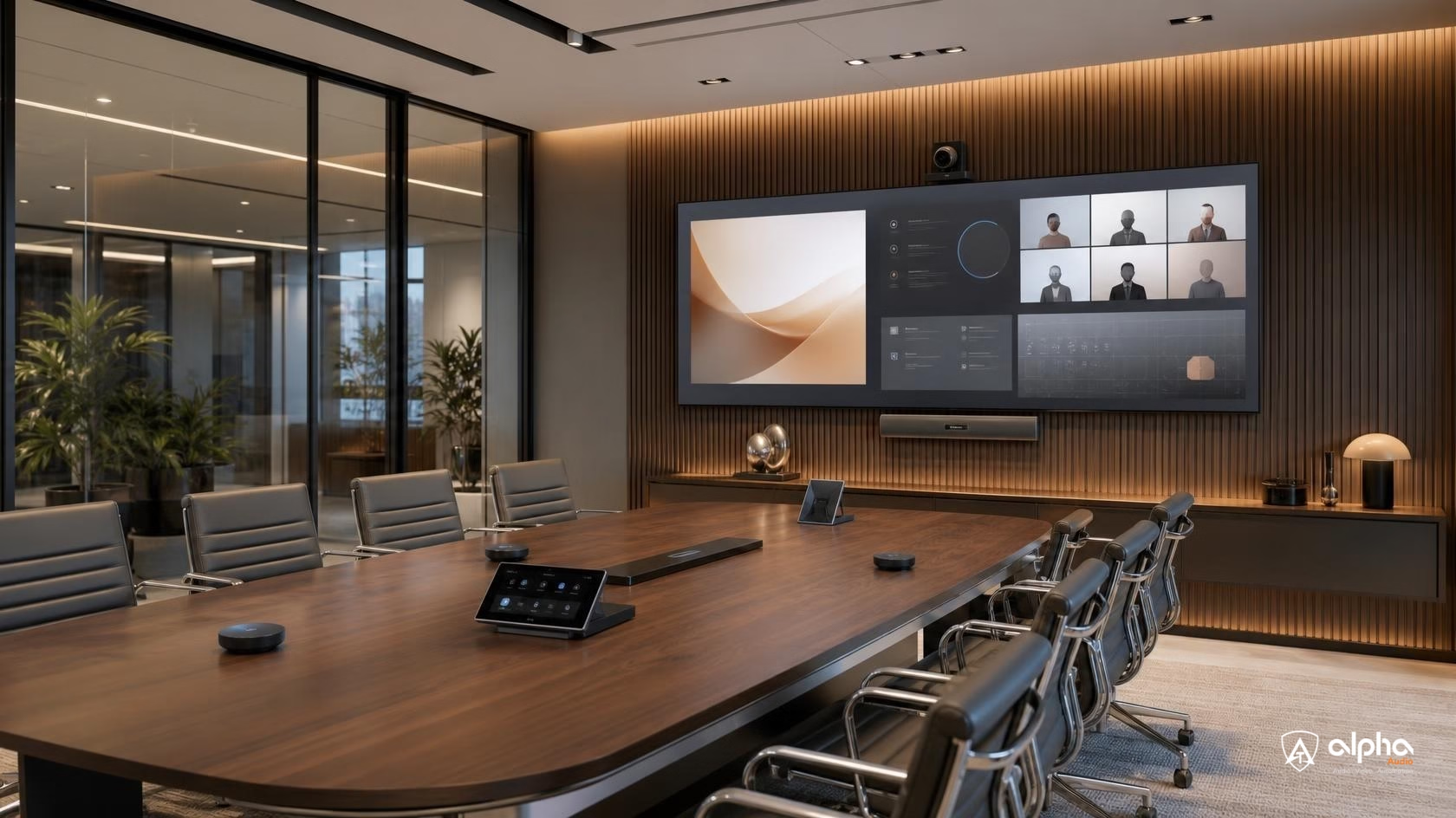
Hybrid work is now a permanent feature of many organisations, and the video conferencing room is the bridge between the people in the office and everyone else. The goal is to make a remote participant feel present: clear audio in both directions, cameras that frame the speaker automatically, and a platform that works the same way every time.
The technology to prioritise includes camera systems that follow active speakers, ceiling or table microphones that cover the whole room, and simple one-touch joining for the platforms your teams already use. Avoid over-complex setups: the best rooms are the ones people use without training.
The return shows up in reduced travel, faster decisions across branches and easier collaboration with clients and partners. Alpha Audio’s video conferencing system project is a good reference point.
8. KNX Building Automation
ROI: High over the long term | Ease: Moderate to complex
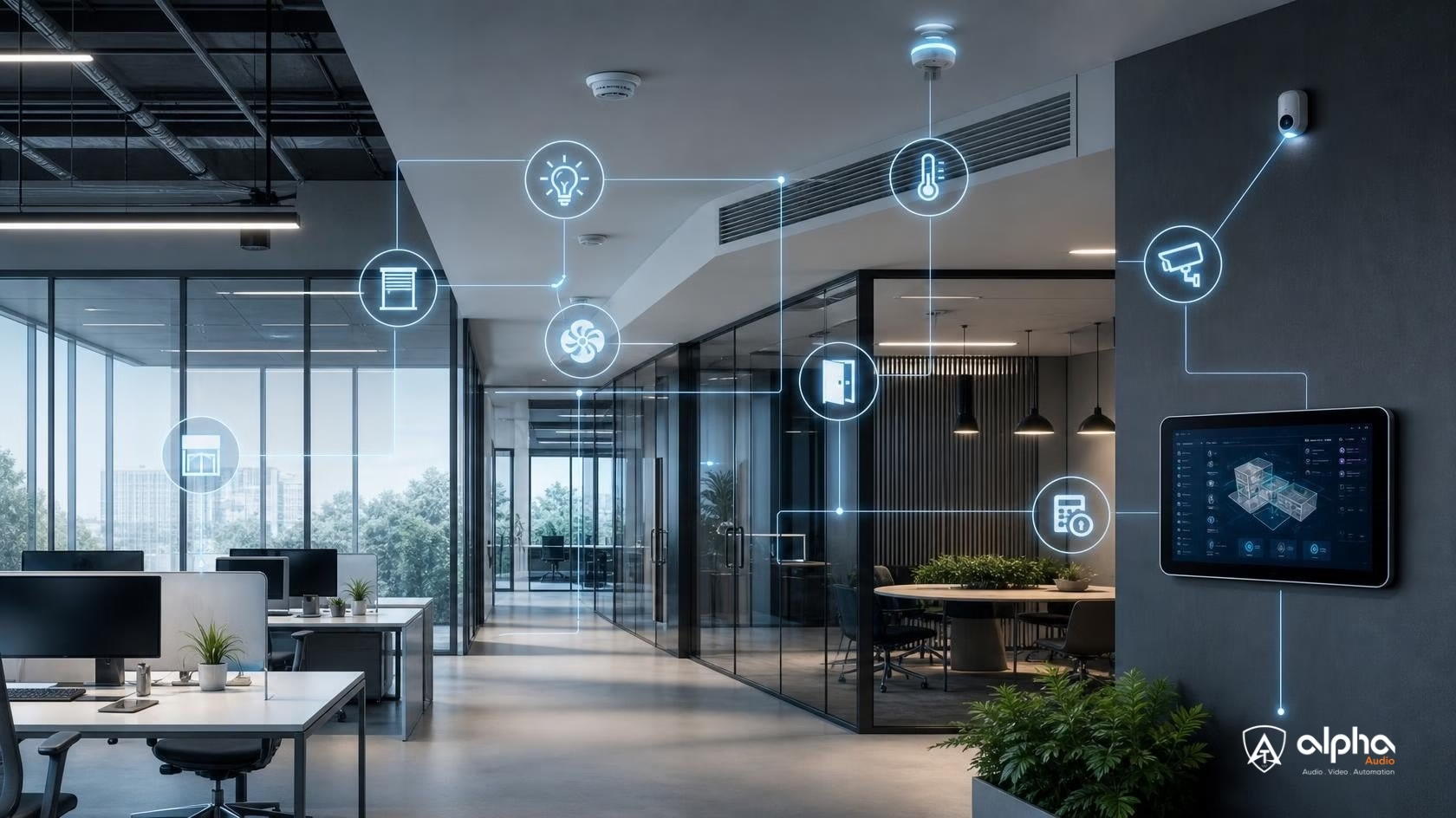
If sensors, lighting and HVAC are the muscles, KNX is the nervous system. KNX is an open, internationally standardised protocol for building automation, which means devices from many manufacturers can work together on a single network, and your system isn’t locked to one vendor.
With KNX, lighting, blinds, climate, energy metering and even AV can be coordinated through a single logic. A single “meeting mode” scene can dim the lights, lower the blinds, set the temperature and wake the display. A single “end of day” command can shut everything down.
Because KNX is a wired, standards-based, long-life platform, it suits offices that want a system that can be expanded and maintained for decades. It does require careful design and certified programming, which is why choosing an experienced KNX integrator matters. Read more about Alpha Audio’s KNX automation offering, or see it applied in a KNX-based home automation project that shows the same principles on a smaller scale.
9. Intelligent Audio: PA, Background Music and Voice Alarm
ROI: Medium | Ease: Moderate
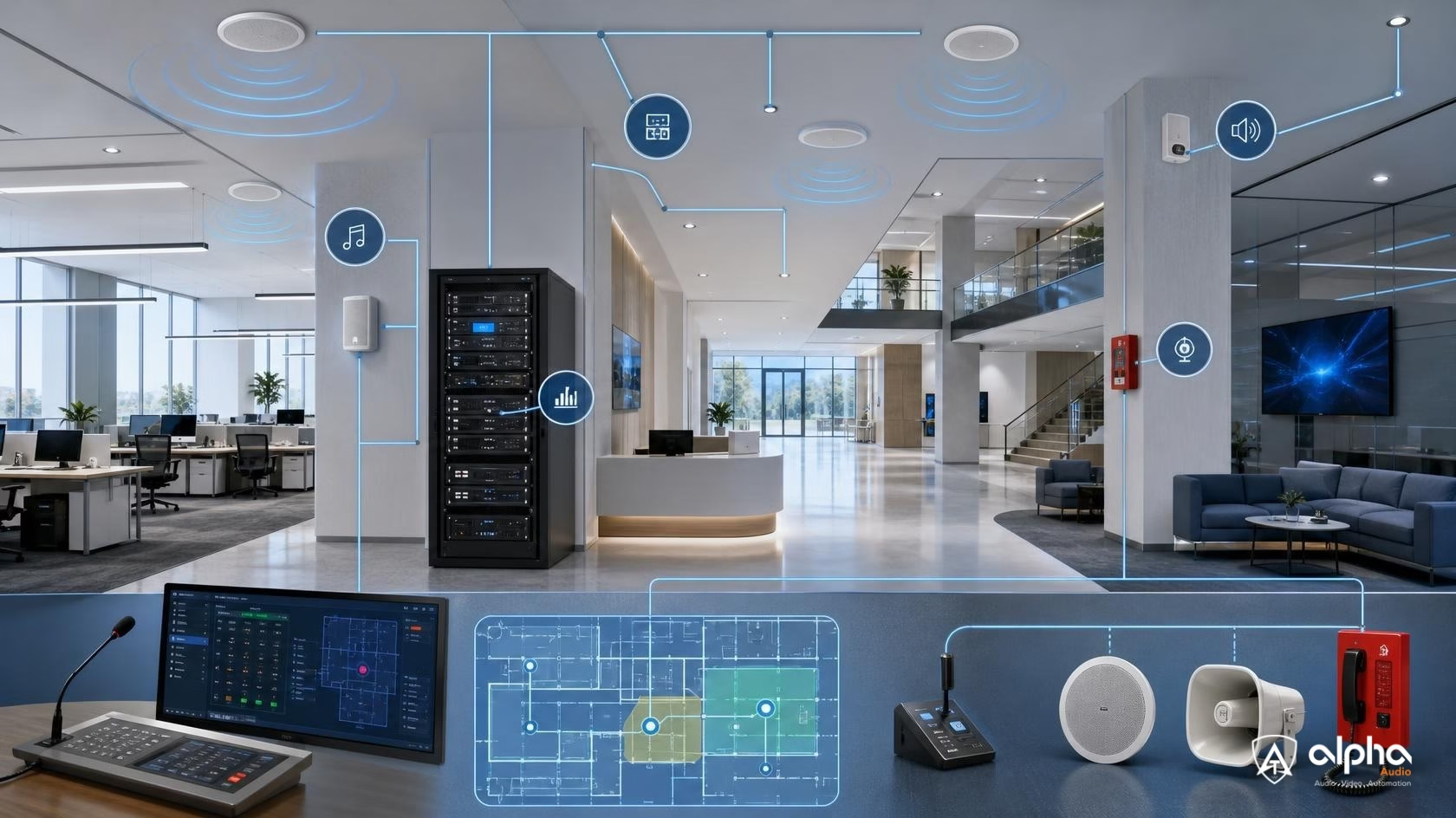
It’s easy to overlook, but the sound in a building shapes how it feels. Zoned public address and background music systems keep corridors, reception areas, cafeterias and open-plan floors comfortable. Announcements are clear instead of distorted, and volume adapts to each space.
Where regulations or risk assessments require it, voice alarm integration ensures that emergency messages are intelligible, which is a safety matter, not a luxury. The same speaker infrastructure can also support paging, scheduled announcements and, in some offices, subtle sound masking to improve speech privacy in open areas.
The return here is less about cost reduction and more about experience, safety compliance and professionalism, particularly for corporate campuses, banks and hospitality-style offices. Explore the options within Alpha Audio’s corporate office buildings venue solutions.
10. The Office Cinema and Immersive Auditorium
ROI: Strategic | Ease: Complex (needs expert design)
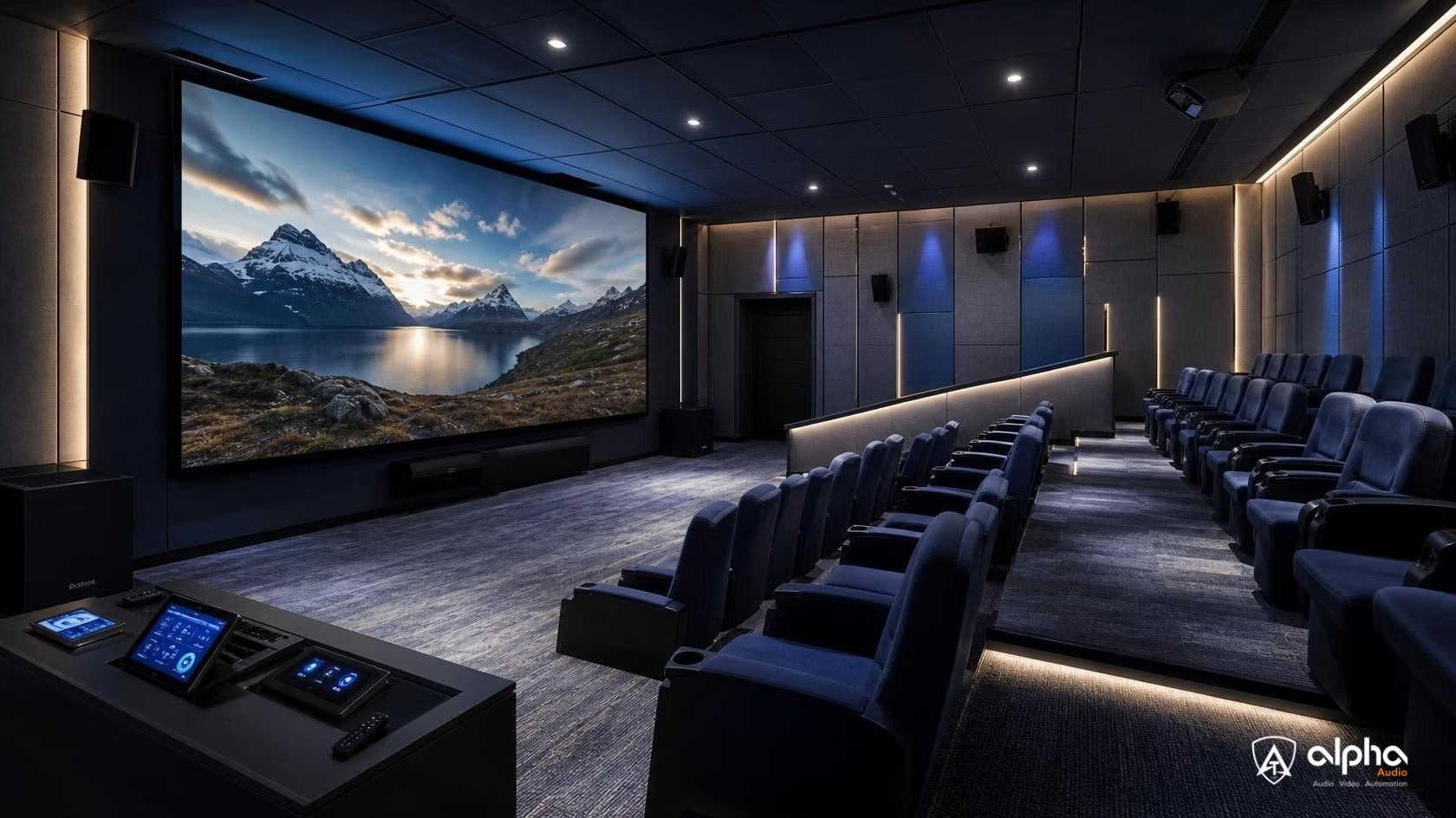
This is the technology that’s generating the most conversation right now, and it deserves its own section below. In short: the office cinema is a purpose-designed, immersive-audio room inside a corporate or institutional building, used for screenings, presentations, product launches, training, town halls and hospitality. We’ve placed it at number ten on the ROI-and-ease ranking, not because it’s unimportant, but because it works best once the basics are in place and it needs specialist acoustic and system design.
Deep Dive: Why the Office Cinema Is the Trend to Watch
For years, a corporate presentation room meant a projector, a screen and a pair of ceiling speakers. That model is changing. Organisations are discovering that how people experience content, whether it’s a brand film, a training module, a safety briefing or a quarterly review, affects how well they remember it and how seriously they take it.
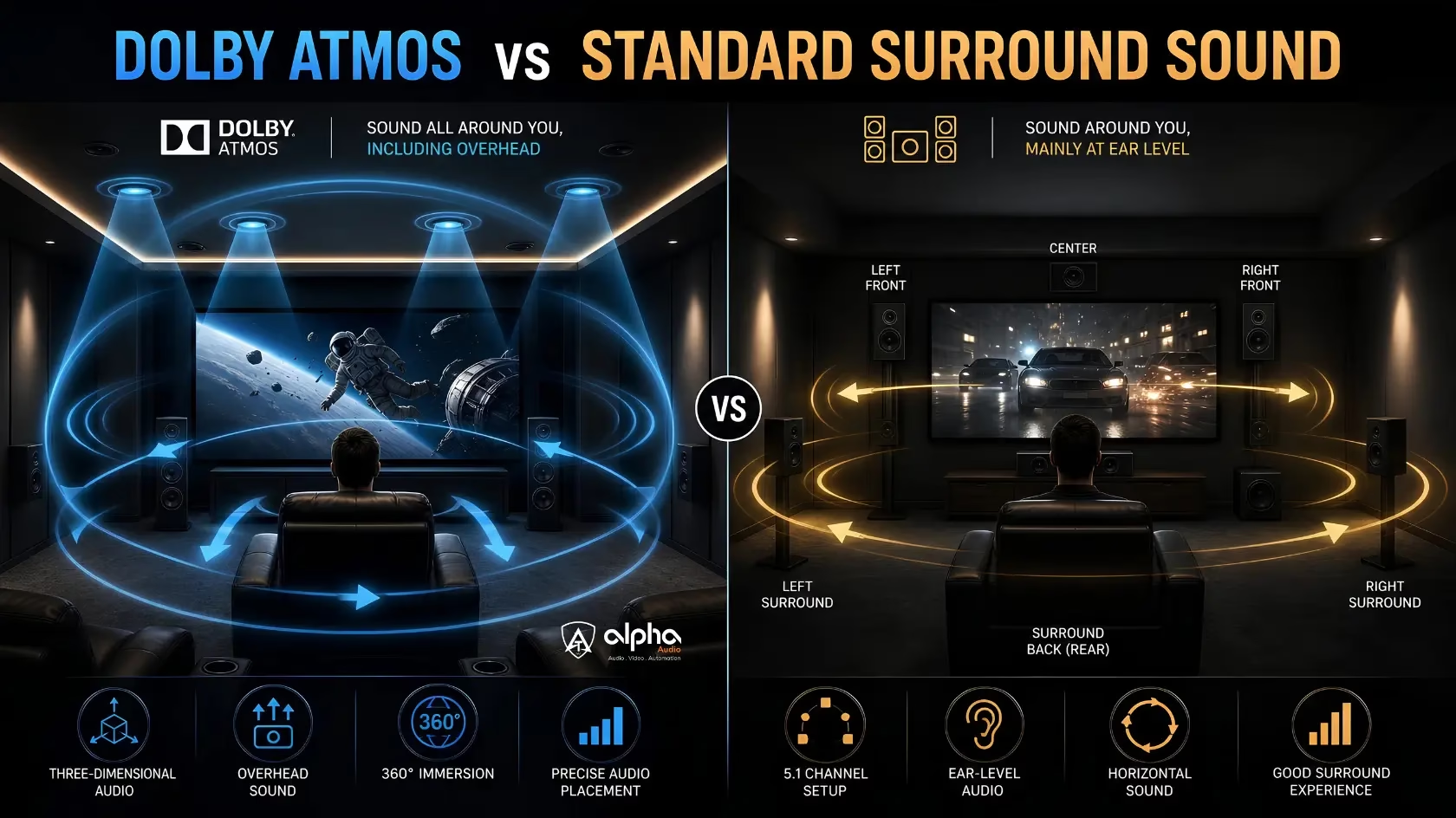
An office cinema delivers that experience. Using immersive audio formats such as Dolby Atmos, sound is placed around and above the audience instead of only in front, which makes speech clearer, effects more realistic and presentations far more engaging. For a company that hosts clients, regulators, diplomats or the media, it also sends a message about standards and attention to detail.
What makes an office cinema different from a regular meeting room?
- Acoustic design. Room treatment, isolation and speaker placement are planned as a system, rather than added after the fact.
- Immersive speaker layout. Channels at ear level, overhead and dedicated low-frequency channels create a three-dimensional sound field.
- Multi-purpose flexibility. The same room can run a film screening in the evening, a product launch in the morning and a training session in the afternoon.
- Automation integration. Lighting, blinds, climate and playback can be controlled together, so one command sets the room for the occasion.
Why it’s trending
- Experience matters. Brand and corporate events increasingly compete with the quality people expect from commercial cinemas and streaming at home.
- Multi-use rooms justify the investment. Because one space replaces several (auditorium, training room, screening room), the cost is spread across many uses.
- Integration is easier than before. Standards such as KNX and mature control platforms make it possible to treat the cinema as part of the building’s system rather than an isolated installation.
- Prestige and hospitality. For banks, media houses, sports and manufacturing groups, a showpiece room is a statement of ambition.
Real Office Cinema Projects in Pakistan
Three recent installations by Alpha Audio show how this trend plays out in practice, across very different organisations.
1. Semi-Commercial Cinema at Forward Sports, Sialkot
Forward Sports Group, one of Pakistan’s leading football manufacturers and a major supplier to FIFA, wanted its multipurpose auditorium to work as both a presentation space and a genuine cinema. Alpha Audio transformed the room into a 7.2.4 semi-commercial cinema with an immersive surround system, designed to support cinema playback, corporate presentations, conferences, product presentations and internal training.
The project is a good illustration of the multi-use principle: a single investment serving entertainment, communication and education across the company. Read the full project: 7.2.4 semi commercial cinema at Forward Sports, Sialkot.
2. ABHI Bank Head Office, D-12 Markaz, Islamabad
This installation shows what is possible when cinema-grade audio and building automation are designed together. The ABHI Bank head office features a 15.4.6 Dolby Atmos cinema system powered by RCF active speaker systems, with a substantial low-frequency array built from six 18-inch active subwoofers and two flying twin 8-inch subwoofers, so the bass is deep and controlled without compromising dialogue clarity.
Crucially, the room is integrated with KNX-certified automation, allowing lighting, environmental controls and system functions to work in harmony with the cinema experience. It’s a clear example of the smart-building approach this article recommends: audio, lighting and climate working as one. Read the full project: ABHI Bank Head Office, D-12 Markaz, Islamabad.
3. Pakistan Television, Islamabad
At Pakistan Television Corporation headquarters, Alpha Audio delivered a Dolby Atmos cinema system designed as a reference-grade space for official screenings and presentations. The project involved acoustic analysis and optimised speaker placement, and the facility is intended to host high-level screenings for government officials, diplomats and media professionals.
For a national institution, where audio accuracy and professionalism carry real weight, it demonstrates how an office cinema can serve as a formal, high-stakes environment, not just an entertainment room. Read the full project: Pakistan Television Islamabad.
Is an office cinema right for your organisation?
It’s a good fit if you regularly host clients, partners or the media; if you run frequent training, town halls or product launches; or if you already have an underused auditorium that could do more. It’s probably premature if your basic building controls (lighting, HVAC, sensors) aren’t yet in place, or if you don’t have a clear plan for how often the room will be used.
If you’re considering one, explore Alpha Audio’s cinema solutions to understand the options, and ask any integrator for a site-specific acoustic assessment before committing to a design.
Frequently Asked Questions
What are smart office technologies?
Smart office technologies are connected systems that automate and optimise how a workplace operates, covering lighting, climate, security, audio-visual, energy and communication. They work best when integrated, so that one event (for example, someone entering a meeting room) can trigger several coordinated responses.
Which smart office technology gives the fastest return?
Occupancy sensors and smart lighting typically deliver the fastest and most visible returns because they reduce energy use immediately and are relatively easy to install, even in an occupied office.
Is KNX suitable for an office building?
Yes. KNX is an open, internationally standardised protocol widely used in commercial buildings. It suits offices that want a durable, expandable system that isn’t tied to a single manufacturer.
What is an office cinema?
An office cinema is a purpose-designed, immersive-audio and video room within a workplace, used for screenings, presentations, training, product launches and hospitality. It typically uses an immersive audio format such as Dolby Atmos and may be integrated with lighting and building automation.
How much does a smart office upgrade cost?
It depends on building size, existing infrastructure and the scope you choose. The best way to control cost is to phase the project, start with high-ROI basics and request a site survey and itemised proposal from an experienced integrator.
Final Thoughts
The smartest offices aren’t the ones with the most technology. They’re the ones where the right technology has been chosen in the right order, designed as a system and supported by people who know how to commission it properly.
Start with sensing, lighting and energy. Build the core with climate, access and AV. Tie it together with open standards like KNX. And when you’re ready to create something memorable, an office cinema can turn an ordinary room into the most talked-about space in your building.
Ready to plan your own smart office? Visit Alpha Audio or contact the team to discuss a site survey and a phased roadmap tailored to your workplace.
+92 308 4319219 | info@alphaaudio.com.pk | alphaaudio.com.pk
Visit us: Plaza No. 28, Phase 6 DHA, Lahore, Punjab
Audio Quotation
Video Quotation
Automation Quotation