

A good masjid audio system makes every word of the Quran, every dua and every khutbah understandable in every row, not just near the Imam. To get there before Ramadan 2027, a masjid needs three things: the right speakers in the right places, a tuned processor that controls echo and feedback, and a microphone setup that suits the Imam’s voice. Ramadan 2027 is expected to begin around 8 to 9 February 2027, depending on moon sighting, so the best time to plan an upgrade is now.
The night the back rows went silent
Picture the first night of Taraweeh in a busy neighbourhood masjid. The hall is full. Families have arrived early. Children are in the ladies’ section upstairs, and the courtyard is packed with late arrivals laying out their mats.
The Imam begins. His recitation is beautiful, slow and measured. In the front rows, people are moved. But a few metres back, something has gone wrong. The sound rolls into the dome, bounces off the marble, and comes back a moment later. Words collide with their own echo. An elderly man in the fifth row leans forward, cupping his ear. A young father at the back stops trying to follow the ayat and simply waits for the ruku.
This story repeats itself in thousands of masjids every Ramadan. The Imam is not the problem. The congregation is not the problem. The problem is the masjid audio system, or more precisely, the design behind it.
In this guide, we explain why clear Quran recitation matters so much during Ramadan, how Taraweeh puts unusual demands on a prayer hall, and what proper speaker placement and acoustic design actually involve. Along the way, we share how Alpha Audio has approached real masjid projects across Pakistan, including a masjid at Suigas Society Phase 1, and what other committees can learn from them.
Why clear Quran recitation matters more in Ramadan
The Quran describes itself as a book to be recited, heard and reflected upon. In Ramadan, that connection is at its strongest. Muslims believe the Quran was revealed in this month, and the nightly Taraweeh prayer is where many people hear a large portion of it, or even the whole Quran, in a single month.
That changes what a masjid audio system must do. On an ordinary day, the sound system carries the iqamah, a short khutbah or a few announcements. During Taraweeh, it carries sustained recitation for one to two hours, night after night, for around thirty nights. A weak system that is merely “acceptable” for announcements becomes exhausting over that length of time.
There are three reasons clarity matters so much.
- Understanding and khushu. When worshippers can hear every word, they can follow the recitation, and their focus deepens. When the sound is muddy, attention drifts. People strain, and straining is the opposite of calm devotion.
- Following the prayer itself. Congregants rely on the Imam’s voice to know where he is in the prayer. If the takbir is unclear at the back, rows fall out of sync. A clear system keeps the whole jamaat moving together.
- Inclusion. Elderly worshippers, people with mild hearing loss, women upstairs and latecomers in the courtyard all deserve the same experience as the front row. A masjid is for everyone, and its audio should be too.
For a masjid committee, this is not a luxury item. It is part of looking after the guests of Allah during the most important month of the year.
Why a prayer hall is one of the hardest rooms to get right
Most people assume that louder means clearer. In a masjid, louder usually means worse.
A prayer hall is built from hard, reflective materials: marble floors, plastered walls, glass, tile and a high dome. These surfaces bounce sound around for a long time before it fades. Acousticians call this reverberation, and they measure it as RT60, the time it takes sound to drop by 60 decibels. In large, hard-surfaced masjids, the reverberation time can stretch to several seconds when the hall is empty.
That is wonderful for a cappella recitation in a quiet moment, but it is harsh for amplified speech. Each syllable lingers while the next one arrives. The listener’s brain has to sort through overlapping sound, and consonants, the parts of a word that carry meaning, get buried. This is why a hall can be very loud and still be impossible to understand.
Sound engineers use a measure called speech intelligibility, often expressed as STI (Speech Transmission Index), to describe how understandable speech is in a room. The goal for any masjid audio system is high intelligibility in every seating area. A louder amplifier does not fix this. Better design does.
The usual suspects behind poor masjid sound
- A few large speakers at the front. They push sound toward the dome and walls instead of the people, so the back rows hear mostly echo.
- Speakers aimed too high or too wide. Sound spills onto the ceiling and floods the hall with reflections.
- Old amplifiers and mixers. Aging equipment adds hiss, hum and distortion, which tire the ears.
- Microphones used too far from the mouth. To compensate, the volume is raised, and the system starts to squeal.
- No zoning. The main hall, the upper floor, the ladies’ section and the courtyard all get the same signal at the same level, even though each space behaves differently.
- Systems that grew in pieces. One speaker added in 2015, another in 2019, a new amplifier last year. Nothing was designed to work together.
If several of these sound familiar, an upgrade will make a big difference.
Taraweeh puts a special load on your masjid audio system
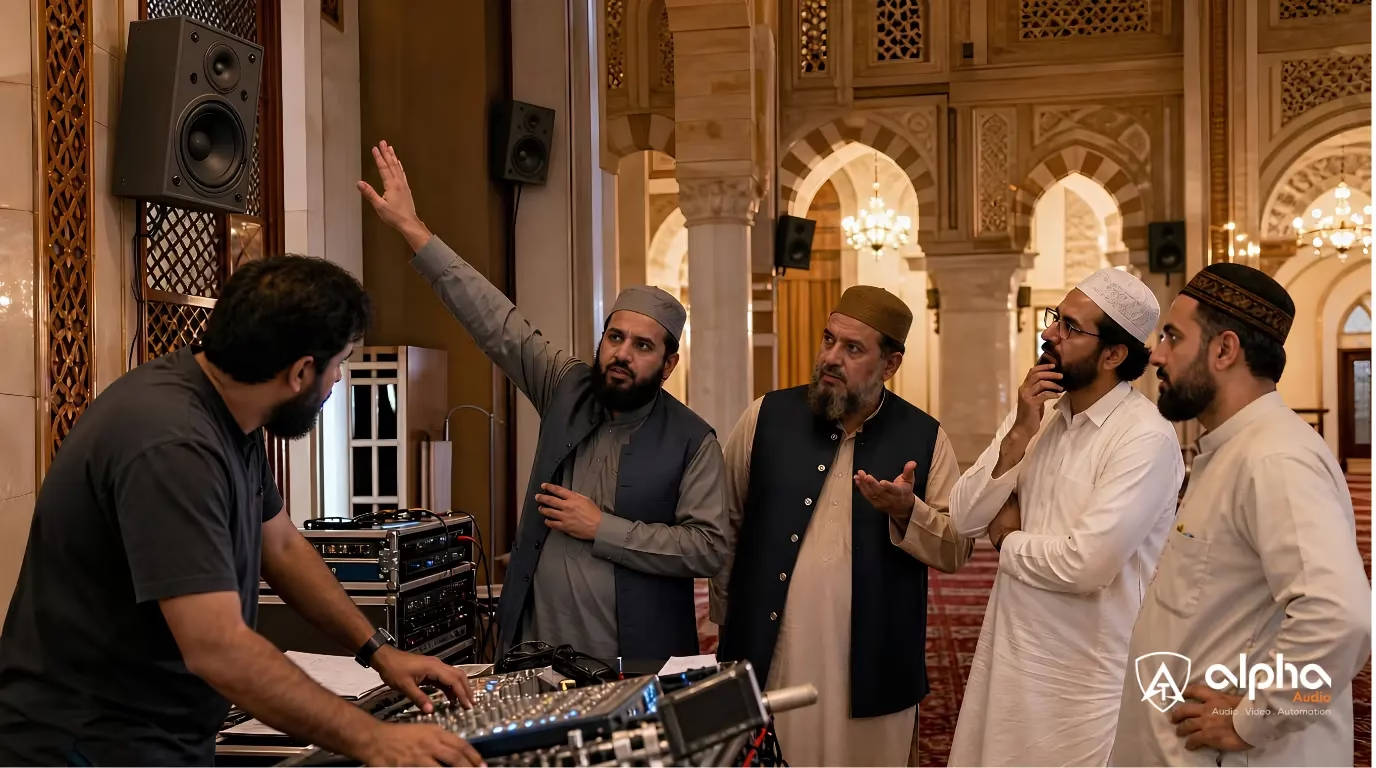
Taraweeh is unlike any other prayer when it comes to audio. Here is what sets it apart.
Long recitation, long listening. The Imam may recite for an hour or more without a break. Distortion, harshness or a boomy low end that you can ignore for five minutes becomes fatiguing across twenty rakats.
A changing crowd. Attendance builds through the month, with the first night, the middle nights and the last ten nights often being the busiest. The system needs to perform in a half-empty hall and a packed one. People absorb sound, so the acoustics change as the hall fills, and a system tuned only for an empty room can become too quiet or too dull once the congregation arrives.
Soft and loud passages. A skilled qari moves from whispered phrases to strong, rising passages. The system needs enough headroom to carry both without clipping or pumping the volume up and down.
Multiple spaces at once. During Taraweeh, the courtyard, rooftop and upper floors often fill with worshippers who cannot fit inside. They need to hear the Imam on time, not a fraction of a second late.
Different reciters through the month. Many masjids host a visiting hafiz or rotate Imams. Each has a different voice, a different microphone technique and a different pace. A good system is forgiving of that variety, and it keeps saved settings so the caretaker does not have to start from scratch every night.
Imam voice clarity: the first link in the chain
The quality of the Imam’s amplified voice depends on the whole chain: microphone, mixer, processing, amplifier and speakers. The microphone is where it starts, and mistakes there cannot be fixed later.
Choose the microphone for the voice and the room
A gooseneck microphone fixed at the mihrab gives the Imam freedom to focus on the prayer without holding anything. It also keeps the mouth-to-microphone distance consistent, which means consistent volume and tone. A wireless headset or lavalier microphone suits an Imam who moves, or a khateeb who delivers the khutbah from the minbar. The right choice depends on the person and the hall, and a site survey is the best way to decide.
Keep feedback under control
Feedback, the squeal you hear when a microphone picks up its own sound from the speakers, is the most common reason Imams are asked to “keep the mic away.” It also forces committees to run the system quietly, which hurts the back rows. A properly tuned system uses speaker placement to keep sound away from the microphone, plus digital processing to detect and tame problem frequencies. The result is a system that can run at a healthy level without squealing.
Shape the tone for the Arabic language
Quranic recitation has long vowels, subtle articulation points (makharij) and careful pauses. A system that boosts bass too much makes the voice boomy and hides consonants. Gentle equalisation, a high-pass filter to remove rumble, and light compression to even out volume help every letter come through naturally. The goal is not to change the Imam’s voice. The goal is to carry it faithfully.
Speaker placement: where the real magic happens
If there is one lesson to take from this guide, it is this: where you put the speakers matters more than how many you buy or how much they cost.
Aim sound at people, not at the dome
A person’s body absorbs sound. A marble wall reflects it. Good masjid design aims the speaker’s sound directly at the seated worshippers and keeps it away from the walls and the dome as much as possible. This is the reason many modern masjids use column speakers or line array speakers. These have a tall, narrow shape that controls the vertical spread of sound. The sound goes out in a focused band at ear level, rather than spraying upward into the ceiling.
Distributed coverage beats one big stack
Instead of placing a single large speaker pair at the front, it often works better to spread several smaller speakers along the hall. Each one covers a smaller area at a lower volume. Because every listener is close to a speaker, the system can run quietly, and the direct sound dominates over the echo. This is the principle of distributed sound.
In a long, wide or multi-bay hall, this approach usually delivers more even coverage and clearer speech than a loud central system.
Use delay so the sound arrives together
Sound travels at about 343 metres per second, which means roughly three milliseconds for every metre. In a hall 30 metres deep, that is almost 90 milliseconds from front to back. If speakers further back play the Imam’s voice at the same instant as the front speakers, the back-row listener hears the nearby speaker first and the front speakers a moment later, which smears the words.
The fix is digital delay. The processor holds back the signal to each rear zone by exactly the right number of milliseconds, so the sound from every speaker arrives in step. A small extra delay also helps the ear feel that the voice is still coming from the Imam in front, rather than from the speaker overhead.
Plan every zone separately
A masjid is rarely one room. A well-designed system treats each of these as its own zone, with its own level, delay and tone setting:
- the main prayer hall
- the mezzanine or upper floors
- the ladies’ section, which must be treated with the same care as the men’s hall
- the courtyard and covered verandahs
- the wudu (ablution) area, so latecomers can follow
- the minaret and outdoor azan speakers
Protect the Azan
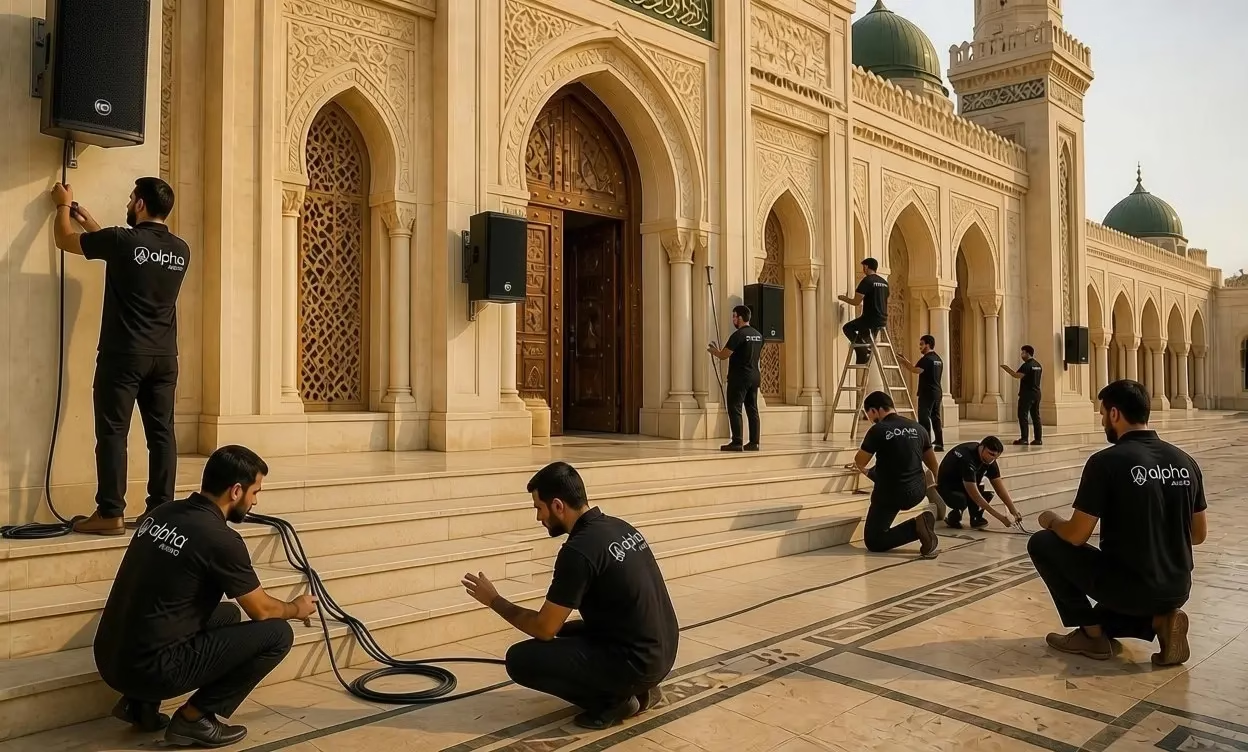
The azan is the masjid’s voice to the neighbourhood. Outdoor and minaret speakers should be weather-resistant, horn or directional types, aimed toward the community and away from nearby walls that would create echo. They should also be installed with proper protection against Pakistan’s heat, dust, humidity and monsoon rain.
Acoustic design: the quiet partner of your sound system
Speakers can only do so much if the room itself fights back. This is where acoustic design comes in.
Acoustic design does not mean turning a beautiful masjid into a recording studio. It means making smart, respectful choices that reduce the worst reflections while preserving the architecture.
Add absorption where it counts. Carpets, prayer mats and curtains absorb sound, and thankfully a masjid already has plenty of carpet. Additional treatments might include decorative acoustic panels, perforated or fabric-wrapped wall panels that blend with the calligraphy and design, or treatment on the back wall to stop reflections returning to the front.
Diffuse the rest. Carved screens, niches and textured surfaces scatter sound instead of letting it bounce straight back. Many traditional design elements already help here.
Mind the dome. Domes can focus sound into hot spots and dead spots. Placing speakers and tilting them so that they do not feed the dome directly reduces this effect.
Think about the building’s own noise. Ceiling fans, air-conditioning units and traffic noise from outside raise the background level. The system must overcome this noise without becoming painfully loud. In a quiet hall, clear speech needs far less volume.
The best results come when the audio designer and the masjid committee, and where possible the architect, talk early. Even a few small acoustic changes can improve how any speaker system sounds.
Your Ramadan 2027 masjid audio upgrade checklist
With Ramadan 2027 expected in early February, the practical window is shorter than it looks. Equipment must be surveyed, designed, ordered, installed and tested before the first Taraweeh. Here is a simple checklist for committees.
- Walk the hall during a prayer. Stand in the back row, the corner, the upper floor and the courtyard. Note where you struggle to understand.
- Ask worshippers. Elderly members, women and regular latecomers will tell you the truth about clarity.
- Request a professional site survey. A good installer will measure the hall and mark the dome, ceiling height and materials.
- Define the zones. List every area that needs sound, including the ladies’ section, courtyard and minaret.
- Check the microphones. Decide whether the Imam needs a gooseneck, a wireless headset or both, and plan a backup.
- Review the amplifiers and mixer. Old, noisy or overheating equipment should be replaced before a month of nightly use.
- Plan a backup. A spare microphone and a simple fallback path keep the prayer running if a unit fails.
- Agree on saved presets. Ask for ready-made settings for daily prayers, Taraweeh, Jumu’ah and Eid, so a caretaker can switch with one button.
- Schedule a test with people in the hall. An empty room sounds different from a full one, and a final tuning session with real worshippers is valuable.
- Set up support. Know who to call during Ramadan if something goes wrong at 8 pm.
Starting this process in November or December leaves comfortable time. Starting in January leaves very little.
How Alpha Audio approaches a masjid audio system
Alpha Audio, based in Phase 6 DHA, Lahore, has spent more than three decades in Pakistan’s professional audio and video market. For masjids, the company designs and installs systems built around RCF professional audio, covering the Imam’s microphone, processing, prayer hall speakers, ladies’ section coverage and outdoor azan speakers. You can see the full range on the masjid sound system in Pakistan page.
Their process follows five steps, and they mirror everything this guide has covered:
- Survey the hall. Engineers measure the space and note the dome, ceiling height, floor and wall materials, prayer rows, upper floors and outdoor areas.
- Design coverage by zone. The main hall, ladies’ section, courtyard and minaret are planned as separate zones, with delays so sound arrives together.
- Install cleanly. Speakers and cables are fitted to suit the building, with attention to the mihrab, the Imam’s position and wiring routes.
- Tune by listening and measuring. Equalisation, limiters and feedback control are set in the finished space, and the sound is tested from the front row to the back wall.
- Hand over and support. The Imam and caretakers receive simple instructions and saved presets, and the team stays available for service.
The goal, in their words, is a system the congregation never has to think about. That is exactly right. The best masjid audio system is the one nobody notices, because they are too busy listening to the Quran.
Real projects, real masjids
Theory is useful, but masjid committees want to know whether something works in actual halls with actual congregations. Here are stories from Alpha Audio’s masjid portfolio.
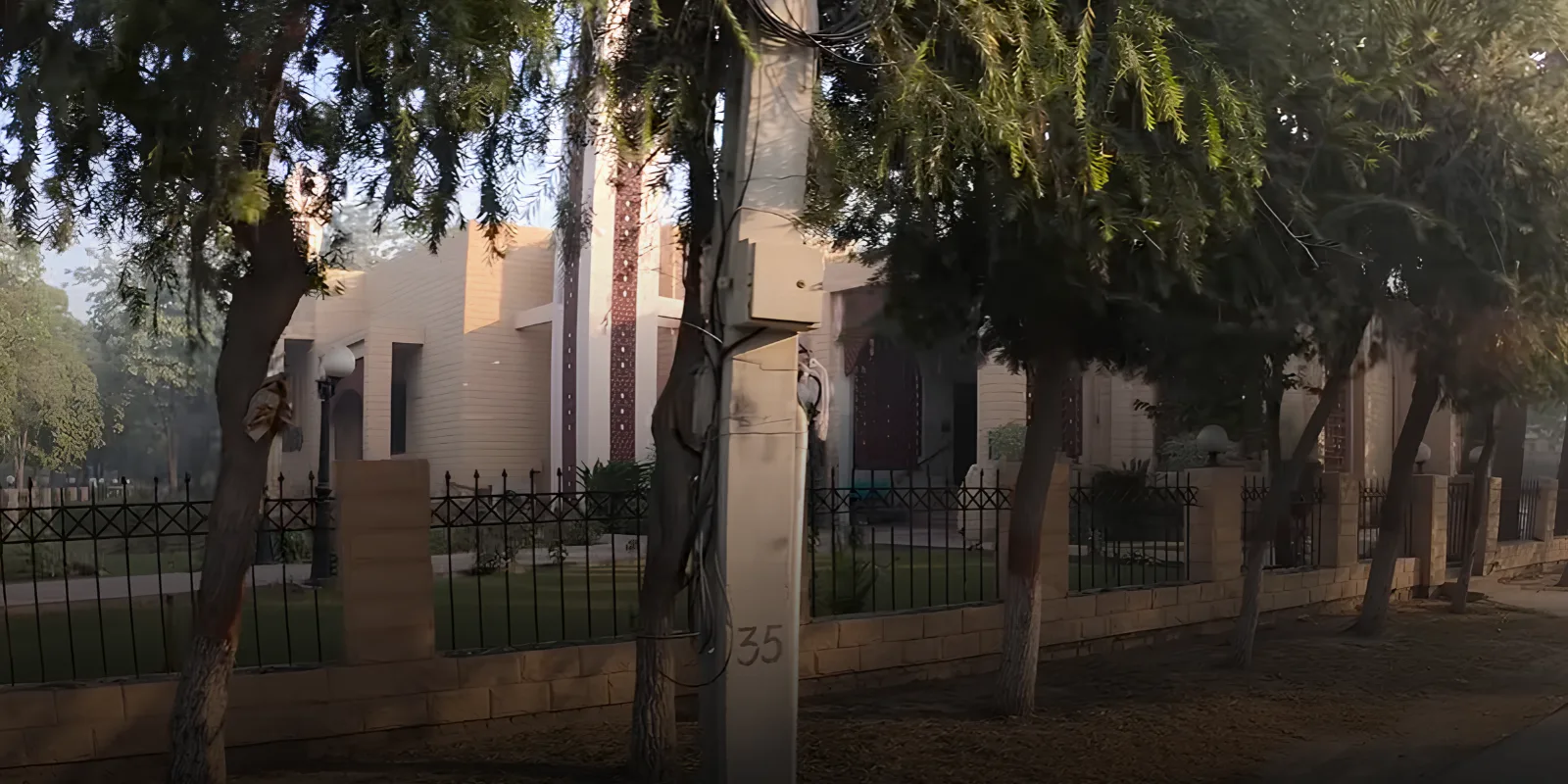
Suigas Society Phase 1: a neighbourhood masjid made clear
Neighbourhood masjids are the heart of Pakistani community life. They serve families who walk in for Fajr, Maghrib and Isha every day, and in Ramadan they fill to the edges. The masjid at Suigas Society Phase 1 is exactly this kind of place: a community prayer hall that needed its audio to match the dedication of the people who use it.
The approach here followed the same principles described above. Rather than simply adding louder speakers, the team looked at how the hall behaves, planned coverage so that each section of worshippers is reached directly, and tuned the system in the finished space. The result for a masjid like this is what every committee wants: the Imam’s recitation and khutbah heard clearly from the front row to the back wall, at a comfortable volume, without echo or squeal.
A grand hall: Jamia Al Kauthar
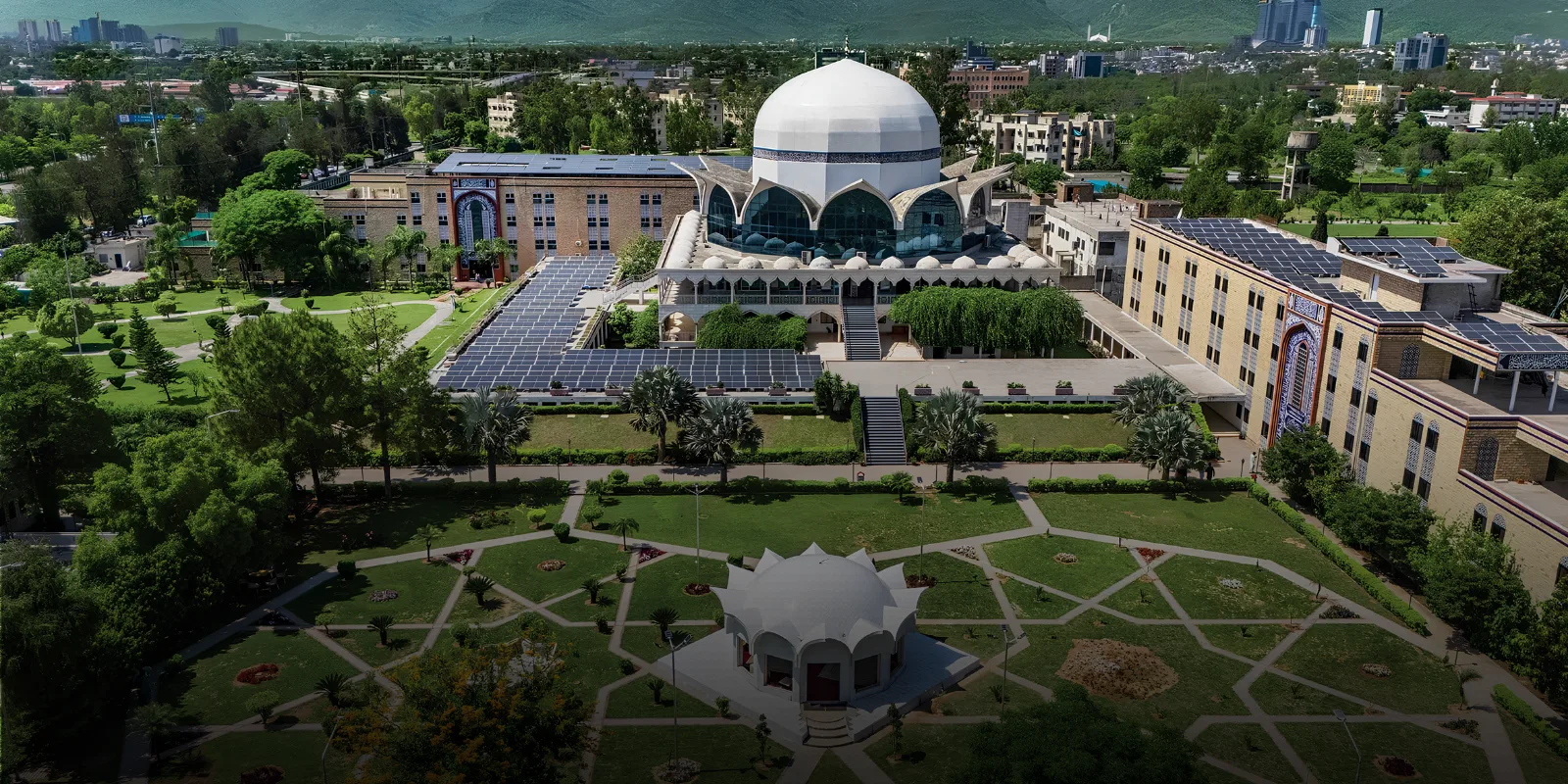
At the other end of the scale is the mosque at Jamia Al Kauthar, which Alpha Audio lists as a premium project. The mosque holds around 2,500 worshippers, and its iconic dome rises about 100 feet from the ground, with a diameter of about 50 feet, making it one of the largest domes in the country.
A dome of that scale is a beautiful piece of architecture, and an acoustic challenge. Large volumes and hard surfaces create long reverberation, which is exactly the condition where poorly planned speakers turn recitation into a blur. Here, controlled coverage, zoned design and careful tuning are not optional. They are the whole job.
Projects across Pakistan
Alpha Audio’s masjid portfolio spans different regions and building types. It includes the Jamia Mosque at the Jamaat-e-Islami main campus in Mansoora, the Tablighi Markaz in Islamabad, Masjid Abulqasim, the mosque at Risalpur, the ASF headquarters, and the Jamaat-ud-Dawa Markaz in Sialkot. Every one of these is a different building, with a different dome, floor plan and congregation, which is exactly why the company insists that exact equipment is chosen only after a site survey. You can browse the full list on the Alpha Audio projects page.
What these stories have in common
Whether the hall holds a few hundred or a few thousand, the pattern is the same:
- The problem is almost always design, not volume.
- Each space, from the main hall to the minaret, is treated as its own zone.
- Tuning happens in the finished room, not just on paper.
- The caretaker gets simple controls, so the system works every day, not just on the day it was installed.
Common mistakes to avoid when upgrading
Buying on price alone. Cheap speakers in the wrong places will always sound worse than good speakers in the right places. Compare designs, not just quotations.
Skipping the survey. Equipment chosen from a catalogue, without measuring the hall, is a gamble.
Forgetting the ladies’ section. It should receive the same clarity and the same planning as the main hall.
Ignoring weather. Outdoor equipment in Pakistan faces extreme heat, dust and monsoon rain. Use weather-rated units and proper cabling.
Leaving it too late. Installers get busy as Ramadan approaches. Early planning gives you time to fix surprises.
No training. A system with too many knobs and no presets will be left at the wrong settings. Ask for simple, saved configurations.
Maintenance after the upgrade
A masjid audio system works hard. It runs five times a day, every day, and then runs overtime in Ramadan. A simple maintenance routine helps it last:
- Check microphones and batteries before every Jumu’ah and every night of Ramadan.
- Keep dust off equipment and ventilate the amplifier rack.
- Protect against voltage spikes with stabilisers or surge protection.
- Keep spare cables and a spare microphone ready.
- Arrange a yearly inspection and re-tuning, especially before Ramadan.
Alpha Audio offers maintenance and after-sales support, including inspections, calibration and troubleshooting, which is valuable for committees without an in-house technician.
Frequently asked questions
What is a masjid audio system?
A masjid audio system is a sound reinforcement setup designed for a prayer hall. It includes microphones for the Imam and khateeb, a mixer and processor, amplifiers, speakers inside the hall, ladies’ section and courtyard, and outdoor speakers for the azan.
Why is there so much echo in my masjid?
Echo comes from hard surfaces such as marble, plaster, glass and domes that reflect sound for a long time. Speakers that point at the walls or ceiling make it worse. Directional speakers, better placement, acoustic treatment and digital processing reduce it.
Which speakers are best for a masjid?
Column and line array speakers are widely used because they control vertical coverage and aim sound at worshippers rather than at the dome. Ceiling or wall speakers suit upper floors, corridors and the ladies’ section. Alpha Audio installs RCF speakers, with models chosen after a site survey.
How many speakers does a masjid need?
There is no fixed number. It depends on hall size, ceiling height, layout, building materials and the number of zones. A professional survey is the only reliable way to decide.
How do I make the Imam's voice clearer during Taraweeh?
Use a suitable microphone at the right distance, tune the equalisation for speech, control feedback with processing, and make sure speakers cover every row evenly. Add delay to rear zones so sound arrives together.
When should we upgrade before Ramadan 2027?
Ramadan 2027 is expected to begin around 8 to 9 February 2027, subject to moon sighting. Start surveys and design at least two to three months earlier, which means now.
Can an old masjid sound system be upgraded without stopping prayers?
Yes. Upgrades can usually be done in stages, so daily prayers continue. Alpha Audio states that it upgrades older analog systems to modern digital audio without disrupting daily prayer operations.
Does Alpha Audio support masjids outside Lahore?
Yes. Alpha Audio is based in Lahore and has completed masjid projects in places including Islamabad, Sialkot, Mansoora and Risalpur, with support available across Pakistan.
Final thoughts: a clear voice is an act of care
Go back to the man in the fifth row, leaning forward, cupping his ear. He did not come to the masjid for sound engineering. He came to hear the words of Allah, recited in the quiet of a Ramadan night.
A well-designed masjid audio system gives him that, without drama and without fuss. It lets the Imam’s voice carry gently to the last row, up the stairs to the ladies’ section and out to the courtyard, with every letter intact.
Ramadan 2027 is closer than it feels. If your masjid committee is thinking about an upgrade, the best time to start is today, with a simple walk through your own hall and an honest question: can everyone hear?
Plan your masjid audio upgrade with Alpha Audio
Ready to make this Ramadan clearer than the last? Alpha Audio offers a site visit and system assessment, followed by a customised quotation based on your hall size, layout and requirements.
+92 308 4319219 | info@alphaaudio.com.pk | alphaaudio.com.pk
Visit us: Plaza No. 28, Phase 6 DHA, Lahore, Punjab
Audio Quotation
Video Quotation
Automation Quotation