


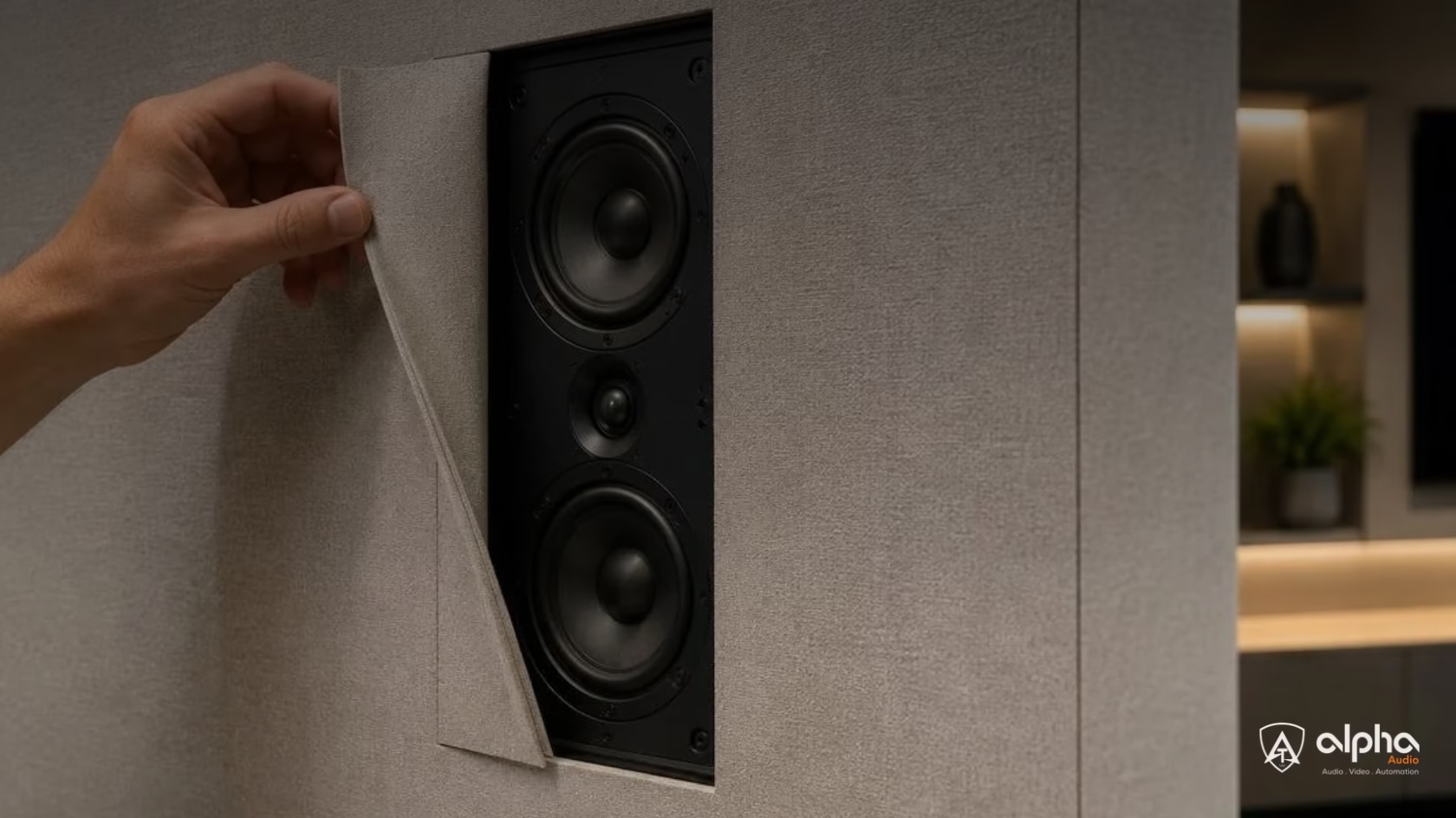
The party where nobody could find the speakers
Imagine a designer we’ll call Ayesha, standing in the doorway of a newly completed 1 Kanal residence in Lahore.
Every surface has been considered. Veined marble cools the floors, walnut glows like polished amber, and the light falls so softly that everyone beneath it looks their best.
On opening night, the family invites sixty guests. Somewhere between the starters and the main course, music begins. Not loud. Not showy. It simply arrives, filling the lounge, spilling into the dining room, drifting down the corridor, equally warm everywhere.
Then one guest stops mid-sentence and turns in a slow circle.
“Wait. Where are the speakers?”
She checks the walls. She peers under the console. She even lifts a curtain. Nothing. No black boxes. No stands. No tangle of wires.
Ayesha just smiles. That question is the best compliment a sound system can ever receive.
So where was the music coming from? The answer is hiding in plain sight, and it is quietly changing how the most beautiful homes in Pakistan are built. Welcome to invisible audio.
Hold on to this line, because the rest of this guide proves it: the best sound system is the one nobody can see.
Can you have great sound without visible speakers?
Yes. In-wall, in-ceiling and architectural speakers can deliver excellent sound when they are planned together with the interior design from the very start. The secret is not the speaker itself. It is when you plan it.
Sounds almost too simple, right? There is a catch. One small mistake can turn a beautiful hidden system into a disappointing one, and most people make it before the first wall is even built. We’ll get to it. First, let’s understand why this idea has taken over luxury homes.
Why luxury homes are quietly hiding their speakers
Ten years ago, a tall speaker in the corner said, “This person loves music.” Today, in many luxury homes, it says, “Nobody thought about the sound until the end.”
What changed? Four things.
- Homes look cleaner now. Smooth ceilings, plain walls and hidden services are the new luxury. One black grille in the wrong place can ruin a perfect ceiling the way a stain ruins a white shirt.
- The technology got smaller and smarter. Today’s architectural speakers are compact, yet they can sound big. Clever processing and powerful amplifiers do the heavy lifting out of sight.
- Every room wants music. Families want sound in the lounge, kitchen, bedroom, terrace and cinema. Put a floor-standing speaker in every room and your home starts to look like a showroom.
- Smart homes want one simple experience. When lights, curtains, climate and music all answer to a single touch panel, the equipment should vanish. Only the feeling should stay.
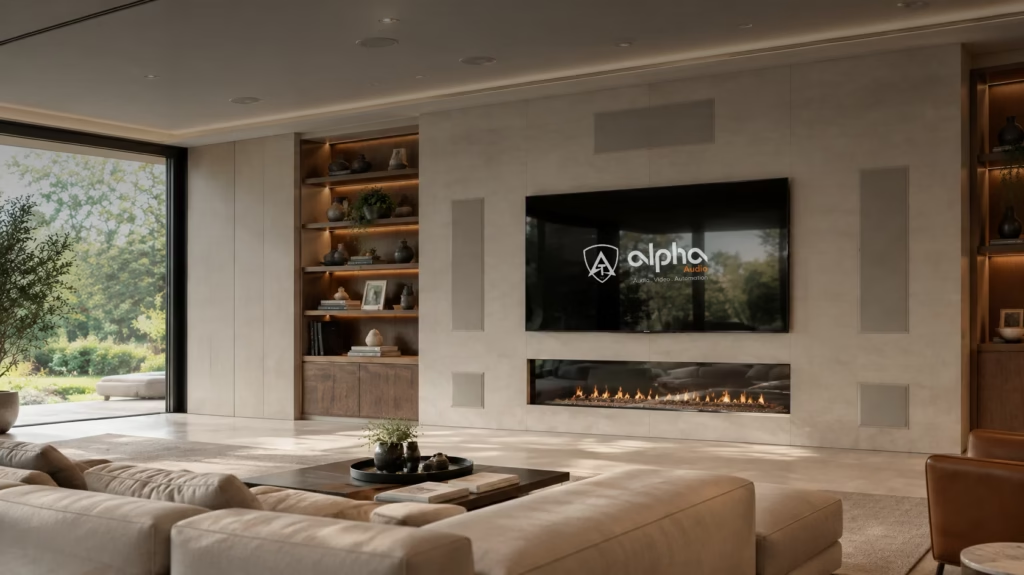
Meet the hidden speakers: 6 types you should know
Here’s a surprise. “Hidden speaker” is not one product. It is a family of six, and each member has its own job.
1. In-ceiling speakers
These sit flush inside the ceiling. They are the favourite for kitchens, lounges, corridors and bathrooms because they spread sound evenly, so the music follows you from room to room without changing character. They also matter hugely for home cinema: Dolby Atmos needs speakers overhead so that a helicopter in the film really does fly above your head.
2. In-wall speakers
Built into the wall, these often sound fuller and more focused than ceiling speakers. They suit living rooms, media rooms and bedrooms, especially where you want music to feel like it comes from the front of the room, like a live stage.
3. Trimless (invisible) speakers
The designer’s darling. The speaker is covered with plaster and painted over, so the wall looks perfectly smooth. Yes, you can paint over a speaker and it still plays. The catch is that it needs careful teamwork with the plaster and paint crew, so the decision must be made early.
4. Speakers behind the screen
In a home cinema, the front speakers can sit behind an acoustically transparent screen or a stretched fabric wall. Sound passes through like light through a sheer curtain. The speakers never show, and the picture stays clean.
5. Hidden subwoofers
Bass is the deep, chest-thumping part of sound, the rumble of an explosion or the heartbeat of a drum. Big bass speakers can hide inside cabinets, under seating or behind panels. But bass is the moodiest part of any room, so the space must be planned for it.
6. Garden and terrace speakers
These blend into planters, rockery and landscaping. Imagine an iftar on the lawn, soft recitation in the air, and not one speaker in sight.
5 sneaky tricks designers use to hide speakers
Want to know how the pros do it? Here are five tricks you can spot (or rather, not spot) in the best homes.
Trick 1: Treat speakers like lights. On the ceiling plan, speakers are placed alongside downlights, AC grilles and sensors, in neat, matching lines. The ceiling looks composed, not cluttered.
Trick 2: Go trimless. In feature rooms, the speaker is plastered over and painted. The wall looks like a wall, and only you know the secret.
Trick 3: Paint the grille. Many architectural speakers have paintable grilles. Match the colour to the ceiling and the speaker almost vanishes.
Trick 4: Hide speakers in the furniture. Walnut panels, shelves, bed headboards and TV walls can all hold speakers behind fine perforations or soft acoustic fabric.
Trick 5: Use a fabric wall. In a cinema, stretched fabric hides the front speakers. It also tames echo, so the room sounds cleaner and more intimate.
Notice the pattern? Every trick starts with a plan. And that brings us to the part that matters most.
Home cinema: where hidden speakers really shine
A home cinema is the ultimate test for invisible audio, because it needs the most speakers in the least visible space.
A typical immersive cinema uses speakers at the front, sides and rear, plus overhead speakers for Dolby Atmos. Done the old way, that means a forest of boxes. Done the invisible way, you get a black, quiet room with a big screen, and sound that seems to come from the air itself.
Here is how it is usually done:
- Front speakers sit behind an acoustically transparent screen or fabric wall.
- Side and rear speakers go in-wall, or trimless for a seamless finish.
- Overhead speakers go in the ceiling, placed to match the seating layout.
- Subwoofers hide in joinery or under seating, positioned by measurement, not guesswork.
The real magic is the room itself. Dark colours, soft fabrics and controlled echo make a cinema feel like a private theatre. Invisible speakers are not a luxury add-on here. They are what makes the room feel complete.
One home, every room: multi-room audio and smart control
Luxury today is not just great sound in one room. It is great sound everywhere, controlled effortlessly.
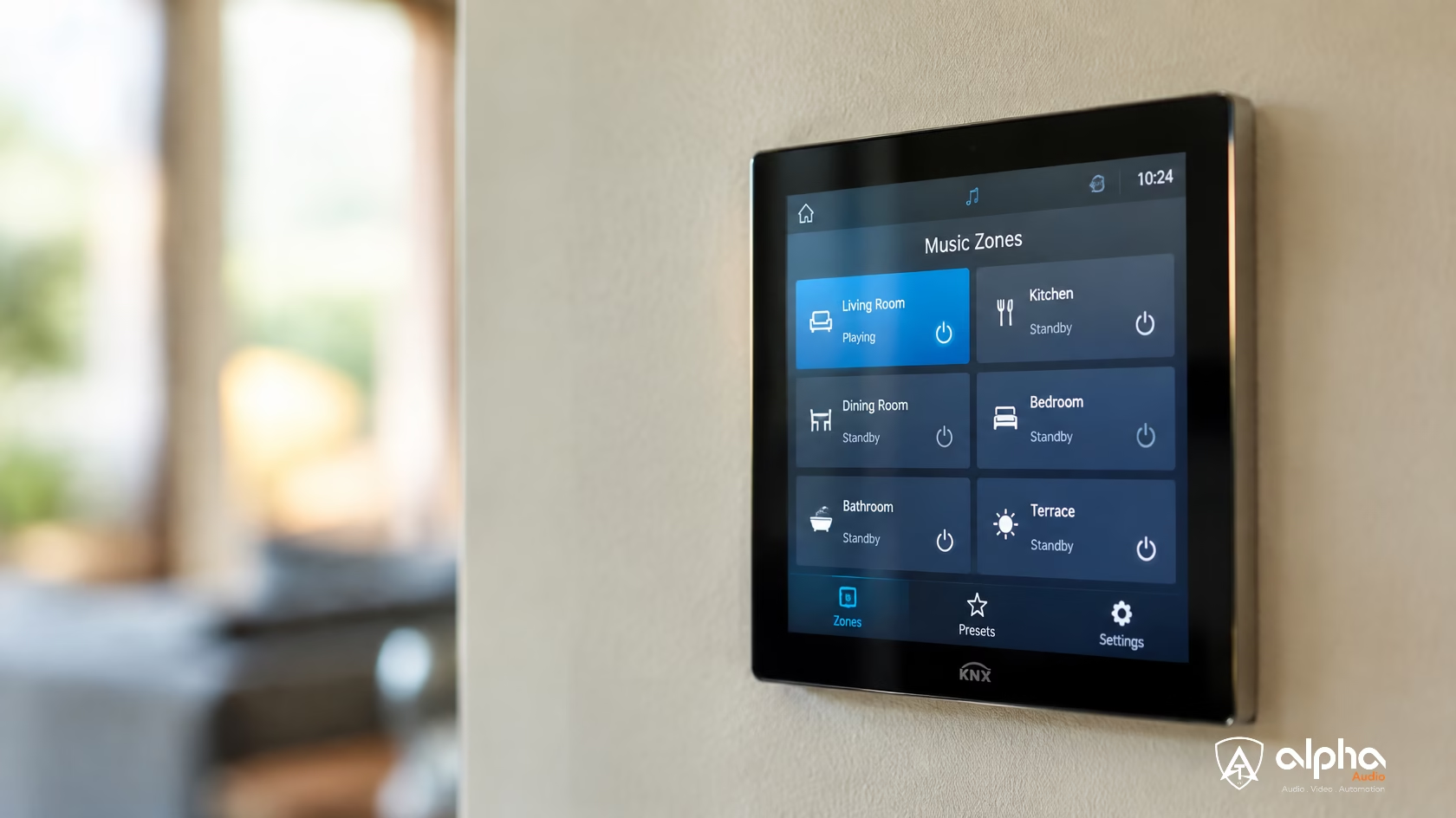
With multi-room audio, each zone, such as the lounge, kitchen, terrace and bedrooms, can play the same music or different music. Start a playlist in the morning kitchen, send it to the terrace for tea, and switch the bedroom to quiet recitation at night, all from one panel or phone.
When this is tied into a control platform such as KNX, music becomes part of your home’s scenes. “Dinner” can dim the lights, lower the curtains and start soft background music with a single touch. “Goodnight” can switch everything off, including the music, in every room at once.
This is also where hidden speakers earn their keep. A home with eight zones of audio and eight visible speaker boxes looks cluttered. A home with eight zones and no visible speakers looks like a calm, well-designed house that simply happens to sound wonderful.
Designing for Pakistani homes: a few local notes
Every market has its own quirks, and homes in Pakistan are no different. A few things worth planning for:
- Marble, tiles and glass.
These are beautiful and very reflective. They bounce sound around, so rooms often need soft elements such as rugs, curtains, fabric panels or acoustic ceiling treatments, chosen to match your design. - False ceilings.
Gypsum and decorative ceilings are common, so confirm the depth early. In-ceiling speakers need room behind them, and the right back-box and support make a big difference to sound quality. - Outdoor living.
Terraces and lawns are central to entertaining. Outdoor speakers should be weather-rated and built to handle heat, dust and monsoon rain. - Large, multi-level homes.
Big plots and multiple floors mean longer cable runs. Planning cable routes while walls are open saves a lot of trouble later. - Reliable power.
Audio and control equipment should sit on clean, protected power, ideally integrated with the home’s backup and surge protection plan. Ask your audio team to coordinate this with the electrical consultant.
For architects and interior designers: the one rule that changes everything
Here’s a secret audio engineers wish every designer knew: the best time to plan the sound is before the ceiling drawings are final.
Why?
Because once the ceiling is built, there is no second chance. Pipes, AC ducts, lights and beams are already fighting for space. Moving one speaker can mean breaking into a finished ceiling.
Plan early, and the audio team becomes your best friend instead of your biggest headache. Here is a simple eight-step plan.
Step 1: Call the audio specialist at concept stage
Do it while you are still sketching. A specialist can tell you how many speakers you need, how many zones, how deep the ceiling must be, and where the cables will run. Problems found now cost almost nothing to fix.
Step 2: Put speakers on the ceiling plan
Speakers, lights, AC diffusers, sprinklers and smoke detectors all want the same ceiling. Put them on one drawing and solve the clashes on paper, not on site.
Step 3: Check the ceiling depth
In-ceiling speakers need space behind them. Gypsum ceilings, stretch ceilings and coffered ceilings each need a different approach. Confirm the depth early so the right speaker and back-box can be chosen.
Step 4: Lay the cables before the walls close
Cables are easy to install while walls are open. After painting, it becomes costly, messy and sometimes impossible. This single step saves more money than any other.
Step 5: Write the speakers into the finishes schedule
Trimless speakers need plaster and paint planning. Fabric walls need the right framing. Joinery that hides speakers needs the right perforation or fabric so sound can pass through.
Step 6: Think about echo
Marble floors, glass walls and tall ceilings look amazing, but they bounce sound around. A good audio team will suggest quiet fixes like fabric panels, rugs, curtains and soft ceiling treatments that fit your design.
Step 7: Use one control system
Music works best when it shares one panel with lights, curtains and climate. Agree early on a platform such as KNX, so the client never needs five different remotes.
Step 8: Plan the handover
Decide who supplies, installs and commissions each part. After finishes are done, book time for tuning and for teaching the client how to use the system.
Your simple timeline
- Concept: Meet the audio specialist. Agree on zones and any cinema or media room.
- Design development: Place speakers on the ceiling plan. Confirm depths and joinery.
- First fix (walls still open): Install cables, back-boxes and supports.
- Finishes: Plan plaster, paint and fabric for trimless and painted speakers.
- Commissioning: Install, tune, set up scenes and train the client.
7 mistakes that ruin a hidden audio system
Remember the small mistake we promised earlier? Here it is, along with six of its cousins.
- Calling the audio team too late. This is the big one. Once the ceiling is closed, every option becomes more expensive.
- Choosing speakers by looks alone. A grille that is invisible but a driver that is weak gives you a beautiful ceiling and ordinary sound.
- Using too few speakers. Fewer speakers pushed louder create hot spots near them and thin sound elsewhere. More small speakers, placed well, sound smoother at lower volume.
- Forgetting cables. If the cables are not in before the walls close, expect dust, drilling and compromise.
- Ignoring the room. Hard surfaces cause echo. No speaker can fully fix a room that was never treated.
- Skipping calibration. Tuning is not optional. It is what turns a collection of speakers into a system.
- Using many apps and remotes. If the family needs a manual to play a song, they will stop using the system. Keep control simple and unified.
Can you have great sound without visible speakers?
Yes. In-wall, in-ceiling and architectural speakers can deliver high-quality sound when they are planned with the interior design from the start and tuned after installation. The key factors are speaker quality, placement and calibration.
Do in-ceiling speakers sound good?
They can sound excellent. Quality architectural in-ceiling speakers give even coverage across a room, which is ideal for background music, kitchens, corridors and the overhead channels of a Dolby Atmos cinema. For critical listening, many designers pair them with in-wall speakers.
Can you paint over speakers?
Yes. Many architectural speakers have paintable grilles, and trimless speakers are plastered over and painted so they disappear completely. It needs early planning with the finishing team.
What is the difference between in-wall and in-ceiling speakers?
At concept stage, before the ceiling drawings are final and before the walls close. Early planning lets cables, back-boxes and ceiling depths be sorted at almost no extra cost.
Do hidden speakers work with smart home systems?
Yes. They can be connected to multi-room audio and control platforms such as KNX, so music, lighting, curtains and climate are managed from one touch panel or app.
Can hidden speakers be added to an existing home?
Sometimes. It depends on ceiling access, wall construction and cable routes. Wireless and retrofit-friendly options exist, but the best results always come from planning during construction or renovation. An on-site survey will tell you what is realistic.
The best sound is the one you never see
Let’s go back to that opening night.
The guests are still guessing. Someone has now looked behind the sofa. Someone else swears the sound is coming from the plants. Ayesha, across the room, is enjoying a quiet cup of chai and the knowledge that she planned it all on a ceiling drawing months ago.
That is what invisible audio really is. Not a trick, and not a compromise. It is design and engineering finally working together, so that the music fills the room and nothing gets in the way of the architecture.
So if you are building, renovating or designing a luxury home in Pakistan, start with this one habit: plan the sound when you plan the ceiling. Everything else gets easier from there.
Planning a luxury home or project in Pakistan?
Talk to the Alpha Audio team about hidden speakers, multi-room audio, home cinema and KNX automation. Bring your ceiling plan, and we’ll help you turn it into a home that sounds as beautiful as it looks.
+92 308 4319219 | info@alphaaudio.com.pk | alphaaudio.com.pk
Visit us: Plaza No. 28, Phase 6 DHA, Lahore, Punjab
Audio Quotation
Video Quotation
Automation Quotation