

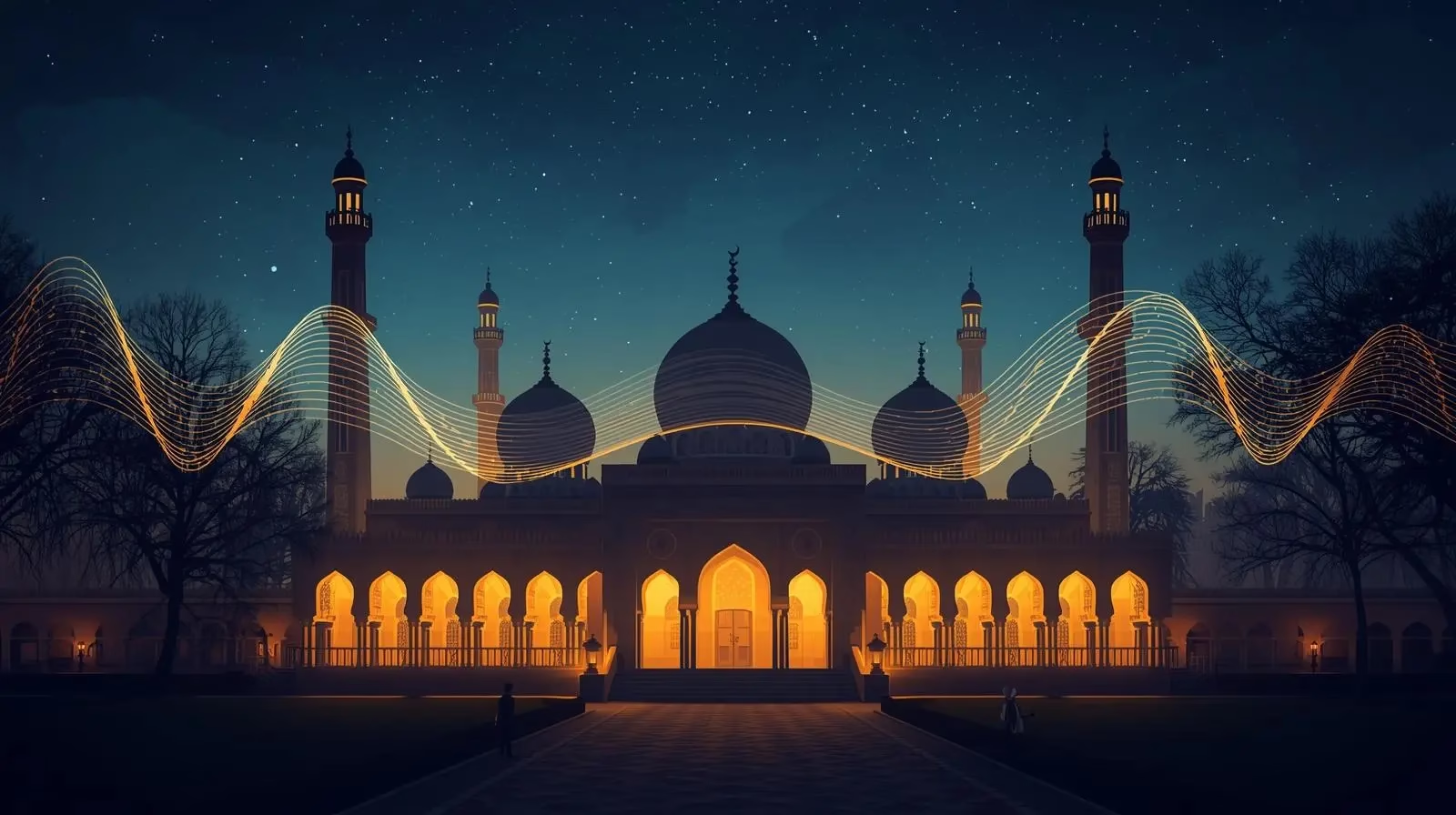
Every Ayah deserves to be heard clearly. Is your masjid’s sound system ready for Ramadan?
Ramadan is expected to begin around 8–9 February 2027, subject to moon sighting. That is only a few months away, and for mosque committees it is the right moment to ask an honest question: when the Imam begins Taraweeh, can the worshipper in the last row, on the upper floor or in the courtyard follow every word?
For most masjids the answer is “mostly”. Some corners are too loud, others too faint, and the dome adds an echo that blurs the recitation. Over a month of long night prayers, those small problems add up to tired ears, lost concentration and complaints to the committee.
This guide explains what actually makes Quran recitation clear in a mosque, why more volume is rarely the answer, and how professional masjid sound system solutions using RCF audio equipment are planned, installed and tuned. It is written for committees, administrators, architects and mosque managers who want to make a confident decision well before the first Taraweeh.
Why Clear Sound Matters During Ramadan
Before the first Taraweeh prayer, make sure every worshipper can hear the Imam with clarity.
No other month asks as much of a masjid’s audio system. Taraweeh can run for an hour or more every night, and the Imam’s recitation is the centre of the experience. Three things matter most.
Comfort over long sessions. A harsh or overly loud system causes listening fatigue. Worshippers should be able to stand through a full Taraweeh without wanting to cover their ears or shift away from a speaker.
Following the recitation without strain. Many worshippers, especially elders and those who are learning to follow the Hafiz, depend on hearing each word distinctly. If they have to guess, attention drifts.
Fewer distractions. Distortion, feedback squeals and sudden volume jumps pull people out of their prayer. A clean, stable system is part of the khushu a committee wants to protect.
Ramadan also brings bigger crowds, more people in the courtyard, and extra programmes such as Tafseer sessions, Dars, Itikaf announcements and Eid prayers. A system that was just about acceptable in a quiet month will be exposed when the hall is full.
Clarity Over Loudness: The Mistake Many Masjids Make
When worshippers say “we can’t hear”, the usual response is to turn the volume up or add more speakers. Often that makes things worse.
In a hard, reflective prayer hall, extra volume feeds the room itself. More sound energy bounces off marble, glass and the dome, and the reflections arrive late enough to smear the next syllable. The words become louder but less distinct.
This is why audio professionals measure speech intelligibility, not just loudness. The international standard IEC 60268-16 defines the Speech Transmission Index (STI), a scale from 0 to 1 that rates how well a room and sound system preserve speech. A value of at least 0.5 is generally considered desirable for most applications, and roughly 0.60–0.75 is described as good. Reverberation and background noise both pull the score down.
The practical lesson for a committee: do not ask “how do we make it louder?” Ask “how do we make it clearer, evenly, everywhere?”
Common Masjid Sound Problems That Affect Quran Recitation
Echoes, unclear recitation and uneven volume? Your masjid may need a better-designed audio solution, not simply louder speakers. These are the problems we see most often in mosques across Pakistan.
- Echo and reverberation from hard surfaces. Marble floors, tiled walls, glass and domes reflect sound for a long time. The longer the reverberation, the more the end of one word overlaps the start of the next.
- Unclear vocals from unsuitable microphones or settings. A microphone with the wrong pickup pattern, placed too far from the Imam’s mouth, forces the operator to push the gain up. That invites feedback and picks up room reflections along with the voice. Poorly set equalisation can make recitation sound boomy, thin or harsh.
- Uneven levels between front and back. One or two large speakers at the front make the first rows uncomfortably loud, while the back rows struggle. The committee then receives complaints from both ends of the hall.
- Weak coverage in secondary areas. Upper floors, women’s prayer areas, wudu areas, verandahs and courtyards are often added to a building later and served by whatever speaker was available. They end up with muffled, delayed or inconsistent sound.
- Ageing, mismatched equipment. Old amplifiers, speakers from different brands and worn cabling add noise and distortion. Equipment that is not designed for speech also tends to colour the Imam’s voice.
The Science of Mosque Acoustics
A mosque is acoustically one of the most demanding rooms to amplify. It combines large volume, high ceilings, domes and very reflective materials, and it has to carry a human voice reciting with deliberate pace and rich tone.
Domes and high ceilings can focus or scatter reflections, creating uneven sound and long decay. Marble and glazed tiles absorb almost nothing. Parallel walls can cause flutter echoes. Carpets and worshippers absorb some sound, which is why a hall can sound very different empty and full. Distance matters too: sound from a speaker at the front reaches the back of a large hall noticeably later, so a second set of speakers must be timed correctly or the listener hears two slightly different versions of the same word.
This is why a well-designed system uses many carefully aimed speakers at moderate levels, rather than a few loud ones. Directing sound at the worshippers, and away from walls and the dome as much as possible, reduces the energy that feeds the reverberation.
No responsible provider can promise that echo will vanish completely in every building. What good design can do is control the reflections, improve intelligibility and make the sound more even.
Preserving the Natural Voice of the Imam
Quran recitation depends on tone, rhythm and pronunciation. The goal of the sound system is not to make the Imam sound artificial or “processed”. It is to carry the voice faithfully.
- Microphone choice and placement. A suitable vocal microphone, correctly positioned, captures the voice with less room noise and allows lower gain before feedback.
- Careful gain structure. Clean level setting from microphone to amplifier avoids distortion at loud passages and hiss at quiet ones.
- Equalisation. Gentle tuning removes boominess and harshness that the building adds, so the voice stays warm yet clear.
- Speakers designed for speech. Loudspeakers with controlled dispersion and natural vocal reproduction keep the recitation intelligible at a comfortable level.
- DSP (digital signal processing). Modern processors allow feedback control, filtering, delay between speaker zones and consistent settings that do not drift from one Imam or operator to another.
How RCF Audio Solutions Improve the Masjid Listening Experience
RCF is an Italian professional audio manufacturer widely used in houses of worship, auditoriums and public venues. Alpha Audio designs masjid systems around RCF loudspeakers, amplifiers and processing, chosen to match each building rather than sold as a fixed package.
Speakers selected for natural vocal reproduction. Depending on the building, a system may use column speakers, ceiling speakers, line array speakers or weather-resistant speakers for courtyards and minarets. Column speakers, for example, can focus sound toward the congregation and limit the energy thrown at the ceiling and walls.
Matched microphones, amplification and processing. Digital amplifiers and DSP are selected to suit the speakers and the room, which keeps the signal path clean from the Imam’s microphone to the last row.
Better distribution through careful positioning. Many well-aimed speakers at moderate volume deliver more even coverage than a few loud ones. Delays are set so that sound from different positions arrives in step.
Tuning for the mosque’s architecture and layout. After installation, the system is measured and adjusted in the actual prayer hall, with equalisation, delay and limiting set for that building.
You can see the range on the RCF Audio Solutions pages, including RCF installation speakers and RCF amplifiers.
One Masjid, Multiple Listening Zones
A masjid is not one room. It is several listening areas, each with its own acoustics, and each needs to be planned.
- Main prayer hall. The priority is even coverage, controlled reverberation and a natural voice from the first row to the last.
- Upper floors and mezzanines. Sound reaching these areas should match the main hall in clarity and timing, not arrive late or muffled through the opening.
- Women’s prayer area. This section deserves the same quality as the main hall, with levels set for comfort, including for families with children.
- Courtyard and verandah. Ramadan crowds often overflow outdoors. Weather-resistant speakers with controlled coverage extend the recitation without disturbing the neighbourhood.
- Wudu area and entrances. Light, clear coverage helps latecomers join the prayer in time.
- Minaret and Azan. Azan projection needs separate planning for level, direction and community considerations.
With zoned amplification, each area can have its own level and delay while still being controlled as one coherent system by the operator.
Why Professional Acoustic Assessment Matters
Speech clarity is determined by a handful of factors that interact: room dimensions, surface materials, the shape of the dome and ceiling, speaker type and position, background noise, and the levels and delays set on the system. Change one and the others respond.
That is why guessing does not work, and why copying the system from another masjid rarely gives the same result. Two mosques with the same speakers can sound completely different.
A professional assessment typically covers:
- Site survey. Dimensions, floors, galleries, dome, materials, seating pattern and noise sources such as fans, generators and traffic.
- Measurement of the existing situation. Where complaints arise, how the current system behaves and how the room responds.
- Design and prediction. Selecting speaker types and positions, and modelling coverage before anything is mounted.
- Recommendations. Which parts of the existing system can stay, what must be replaced, and whether selective acoustic treatment (such as absorption panels in the right places) would help.
Alpha Audio’s process begins with this assessment. Its team uses simulation tools to predict how sound will spread in the prayer area, then proposes the RCF equipment and positions that suit the building.
A Complete Solution, Not Just Speakers
A sound system that works in February begins with decisions made months earlier. A complete masjid audio solution includes:
- Assessment and design of the venue, listening zones and budget.
- Equipment selection of suitable RCF speakers, microphones, amplifiers and processors.
- Professional installation, including mounting, neat cabling, amplifier racks and safe wiring, done with minimum disruption to daily prayers.
- Calibration and tuning in the actual hall, with equalisation, delay and level settings.
- Operator guidance so that the Imam, muezzin and volunteers know how to use the system correctly, including microphone distance and basic level control.
- Maintenance and support, including regular inspections, tuning adjustments and replacement parts, so that performance holds through the year, not just in Ramadan.
Alpha Audio: Your Masjid Sound System Provider in Pakistan
Alpha Audio is the official RCF distributor in Pakistan, with more than three decades in the professional audio market and a head office in DHA Phase 6, Lahore. The team provides tailored audio design, installation and technical support for masjids across Pakistan, including major cities such as Lahore, Karachi, Islamabad, Faisalabad and Sialkot.
Selected masjid and campus projects listed on the Alpha Audio website include:
- Jamat-e-Islami Main Campus Jamia Mosque, Mansoora
- Tablighi Markaz, Islamabad
- Masjid Abul Qasim
- Mosque at Risalpur
- ASF-HQ
- Jamat-ul-Dawa Markaz, Sialkot
[ADD: one or two short project summaries with genuine photos, for example hall size, speaker type used, challenge and outcome. Use the alt text from the SEO pack.]
To see the full range of services, visit the Masjid Audio System Solutions page.
Prepare Your Masjid for Ramadan: A Simple Timeline
Good sound is much easier to deliver when there is time to plan. With Ramadan expected in early February 2027, a sensible schedule looks like this:
- Now to November: Gather complaints from worshippers, note the problem areas and request a site assessment.
- December: Approve the design and budget, and confirm equipment.
- Early to mid January: Install and tune the system, avoiding the pressure of the final week.
- Late January: Train the Imam, muezzin and volunteers, and run a test with a real congregation or a sample recitation.
- Before Ramadan: Confirm that backup microphones, cables and batteries are on hand.
Even if a complete upgrade is not possible this year, an assessment can identify low-cost improvements such as re-aiming speakers, replacing a microphone, correcting equaliser settings or adding coverage in one weak area.
Frequently Asked Questions
Which sound system is suitable for a masjid?
The right system depends on the mosque’s size, shape and materials. As a rule, a masjid needs speakers designed for speech and well-distributed coverage, a suitable microphone, a matched amplifier and processing for tuning. Professional brands such as RCF, installed by an experienced team, are commonly chosen for this purpose. A site assessment is the most reliable way to decide.
How can a mosque improve Quran recitation clarity?
Start by looking at distribution and acoustics rather than volume. Use more speakers at moderate levels, aim them at the worshippers, choose a good microphone and position it correctly, set equalisation and delay properly, and consider selective acoustic treatment where reflections are severe. A professional assessment will show which of these matters most in your building.
Why does my masjid have echo even with expensive speakers?
In many cases, yes. An assessment will show whether to keep, re-position or replace parts of the system. Starting early gives time for installation and tuning without disturbing daily prayers.
How do I make the women’s section and upper floor sound as clear as the main hall?
They need their own planned speaker coverage, with levels and delay set for the area. Relying on sound that leaks through from the main hall usually produces muffled or late audio.
How much does a masjid sound system cost in Pakistan?
Cost depends on the size of the building, the number of zones, the equipment selected and the amount of acoustic work needed. A site visit and written quotation give a more accurate figure than any general estimate.
Do you provide maintenance after installation?
Alpha Audio offers inspections, tuning adjustments, replacement parts and technical support after installation.
Make Your Masjid Ramadan-Ready with Alpha Audio
This Ramadan, give every worshipper the opportunity to hear the Imam’s Quran recitation with greater clarity and comfort.
Alpha Audio provides professional masjid sound system solutions using RCF audio products, tailored to each mosque’s architecture, acoustics and coverage requirements. Whether you are upgrading an existing sound system or planning a new installation, our team can help you find the right audio solution for your masjid.
Contact Alpha Audio for a masjid sound system consultation.
- Website: https://alphaaudio.com.pk/solutions/rcf-masjid-audio-system/
- Quotation and contact: https://alphaaudio.com.pk/contact-us/
- Phone: +92 308 4319219
- Email: info@alphaaudio.com.pk
+92 308 4319219 | info@alphaaudio.com.pk | alphaaudio.com.pk
Visit us: Plaza No. 28, Phase 6 DHA, Lahore, Punjab
Audio Quotation
Video Quotation
Automation Quotation