


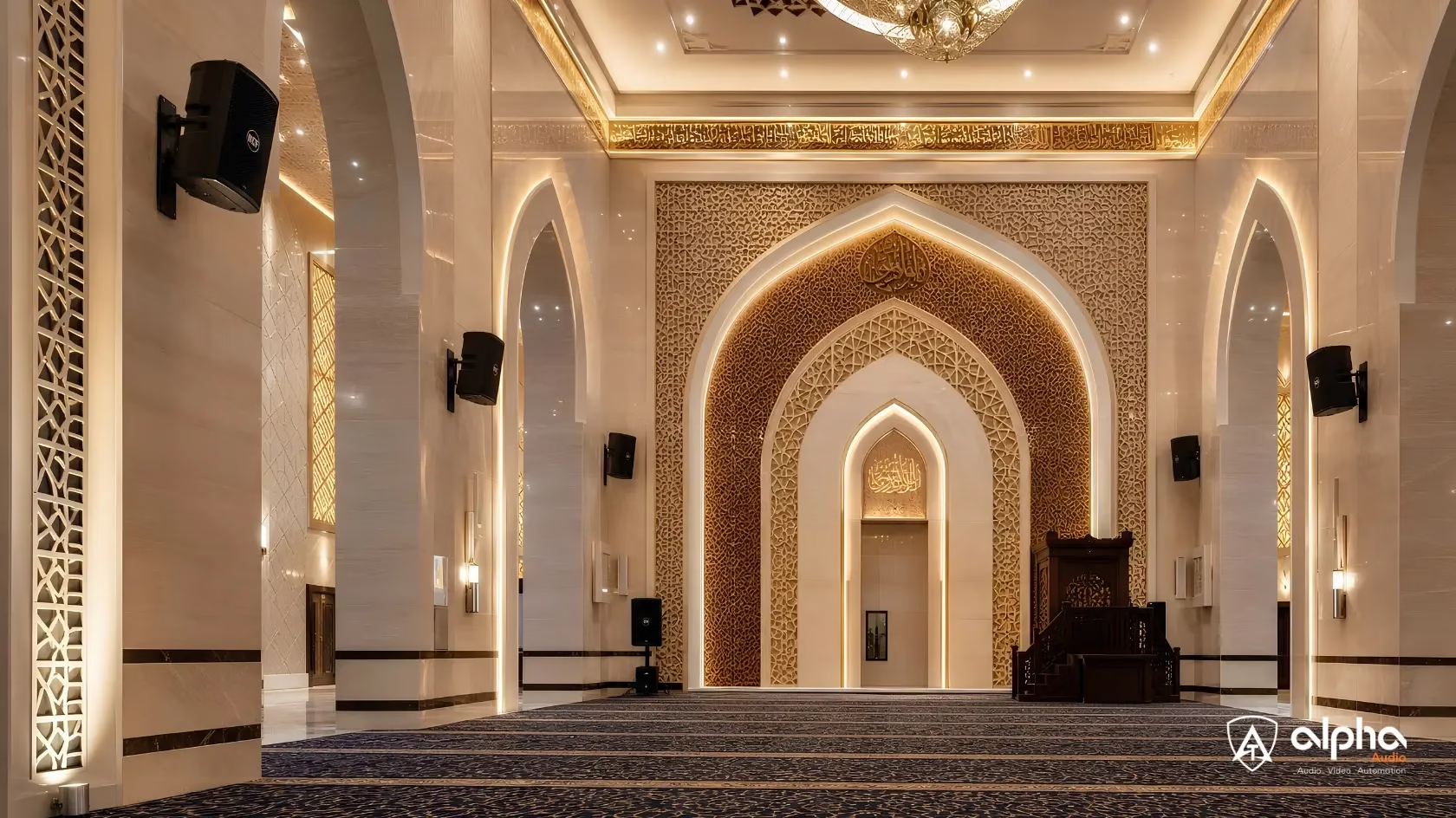
A clear voice changes how people experience prayer. Every worshipper deserves to hear the Imam, the Qari, and the Azaan without strain. Yet in many masjids across Pakistan, the sound is muffled, echoing, or too quiet in the back rows. A reliable masjid sound system fixes this, and the right time to fix it is before Ramadan arrives.
Ramadan 2027 is expected to begin in early February, subject to moon sighting. That means the best window for upgrades is the next few weeks. Masjids that wait until the last days of Shaban face rushed installations and limited choices.
At Alpha Audio, we are Pakistan’s premium professional audio solution provider and the exclusive distributor of RCF in the country. We design, supply, install, and support masjid audio systems from small neighborhood mosques to large grand masjids. This guide shares the exact checklist we follow, the problems we commonly find, and the results our clients can expect in Lahore, Karachi, Islamabad, Faisalabad, Multan, and beyond.
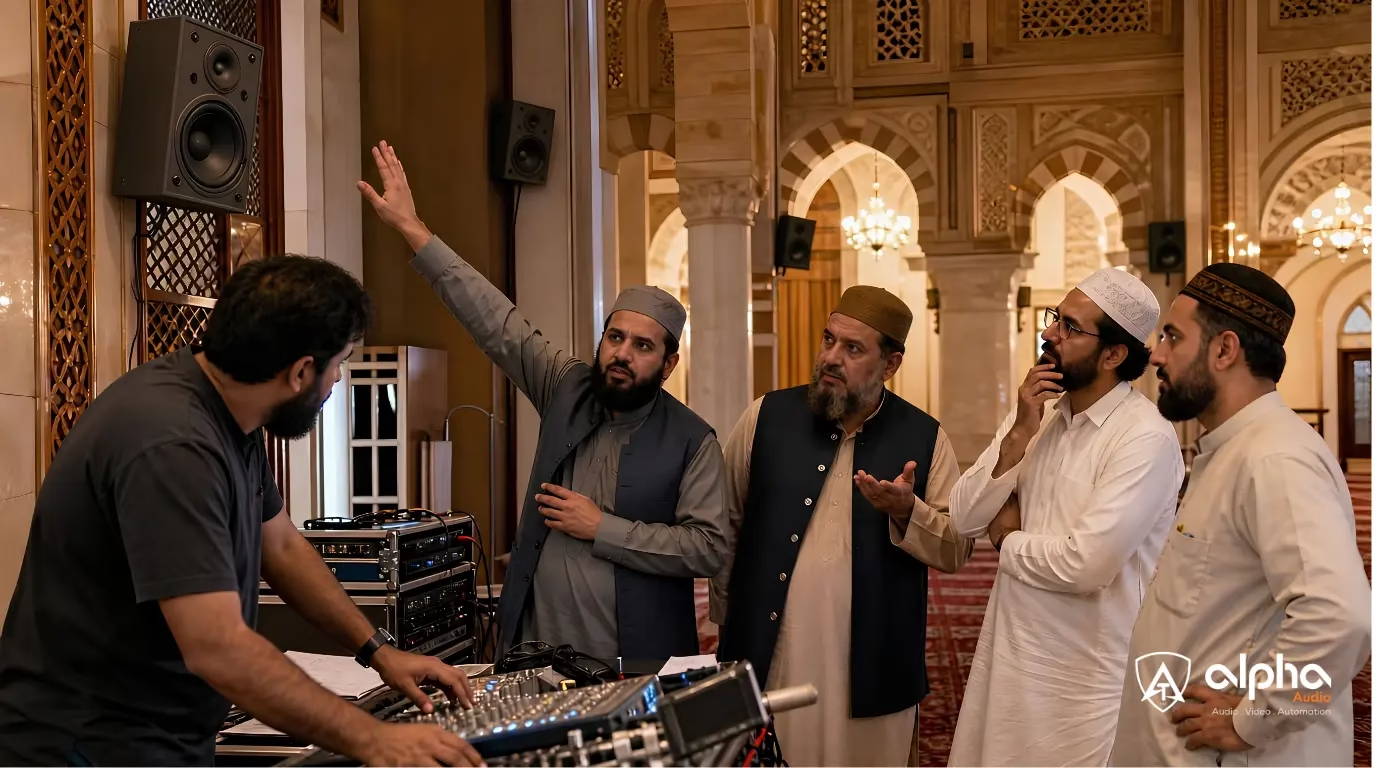
Why Your Masjid Sound System Needs Attention Before Ramadan
Ramadan puts more pressure on a masjid sound system than any other time of year. Think about what happens in a single month:
- Attendance rises sharply, often doubling or tripling at Taraweeh.
- Taraweeh runs for hours each night, so equipment works for long stretches.
- Qiyam-ul-Layl, Tahajjud, and Fajr add early morning use.
- Iftar gatherings and lectures add extra programs.
- Qirat requires clean, natural sound, not harsh or distorted audio.
A system that works adequately for five daily prayers can fail under this load. Amplifiers overheat. Old microphones drop out. Speakers distort at higher volume. Worse, a failure in the middle of Taraweeh is stressful for the Imam and disappointing for the congregation.
Preparing early is simple and affordable compared with an emergency repair. It also protects your investment, because small faults found early rarely become big ones.
Signs Your Masjid Sound System Needs an Upgrade
Not every masjid needs a full replacement. Many only need targeted improvements. Here are the most common issues we find during site visits, and what they usually mean.
1. Echo and Reverb in the Prayer Hall
Large halls with marble floors, domes, and hard walls reflect sound. The result is echo, which makes words blur together. If worshippers say the Khutbah is hard to follow even when it is loud, echo is usually the cause. The fix is rarely just more volume. It needs correct speaker placement, directional speakers, and sometimes acoustic treatment.
2. Uneven Volume Across the Hall
If the front rows are too loud while the back rows struggle to hear, the speaker layout is wrong. A good design delivers even coverage from the first row to the last, including balconies and women’s sections.
3. Muffled or Harsh Sound
Muffled speech points to aging speakers, poor equalization, or mismatched equipment. Harsh, piercing sound often comes from cheap horn speakers or an incorrectly tuned system. Both reduce clarity and tire the ears during long Taraweeh sessions.
4. Feedback and Whistling
That sharp squeal happens when the microphone picks up the speaker output. It usually signals poor speaker positioning, an untuned system, or low-quality microphones. A properly designed system with feedback control removes this problem.
5. Humming, Buzzing, and Noise
Background hum usually comes from bad earthing, damaged cables, or low-quality connectors. It is annoying, and it can also damage equipment over time.
6. Microphone Dropouts
Wireless microphones that cut out, crackle, or run out of battery mid-recitation are a common complaint. Old or low-grade wireless systems are the usual culprit. Interference from nearby devices can also play a part.
7. Overheating Amplifiers or Frequent Failures
If your amplifier runs very hot, shuts down, or needs repeated repair, it is either undersized for your hall or near the end of its life. Ramadan will push it harder.
8. Weak or Distorted Outdoor and Minaret Sound
The Azaan should carry clearly to the surrounding community without distortion. If minaret speakers sound broken, crackly, or too weak, weather damage or outdated horn units are likely reasons.
9. A Mixed Set of Mismatched Equipment
Many masjids slowly add equipment from different brands over years. The result is a system where nothing works together properly. Matching components designed to work together give far better results.
If you recognize two or more of these issues, a professional assessment before Ramadan is a smart move.
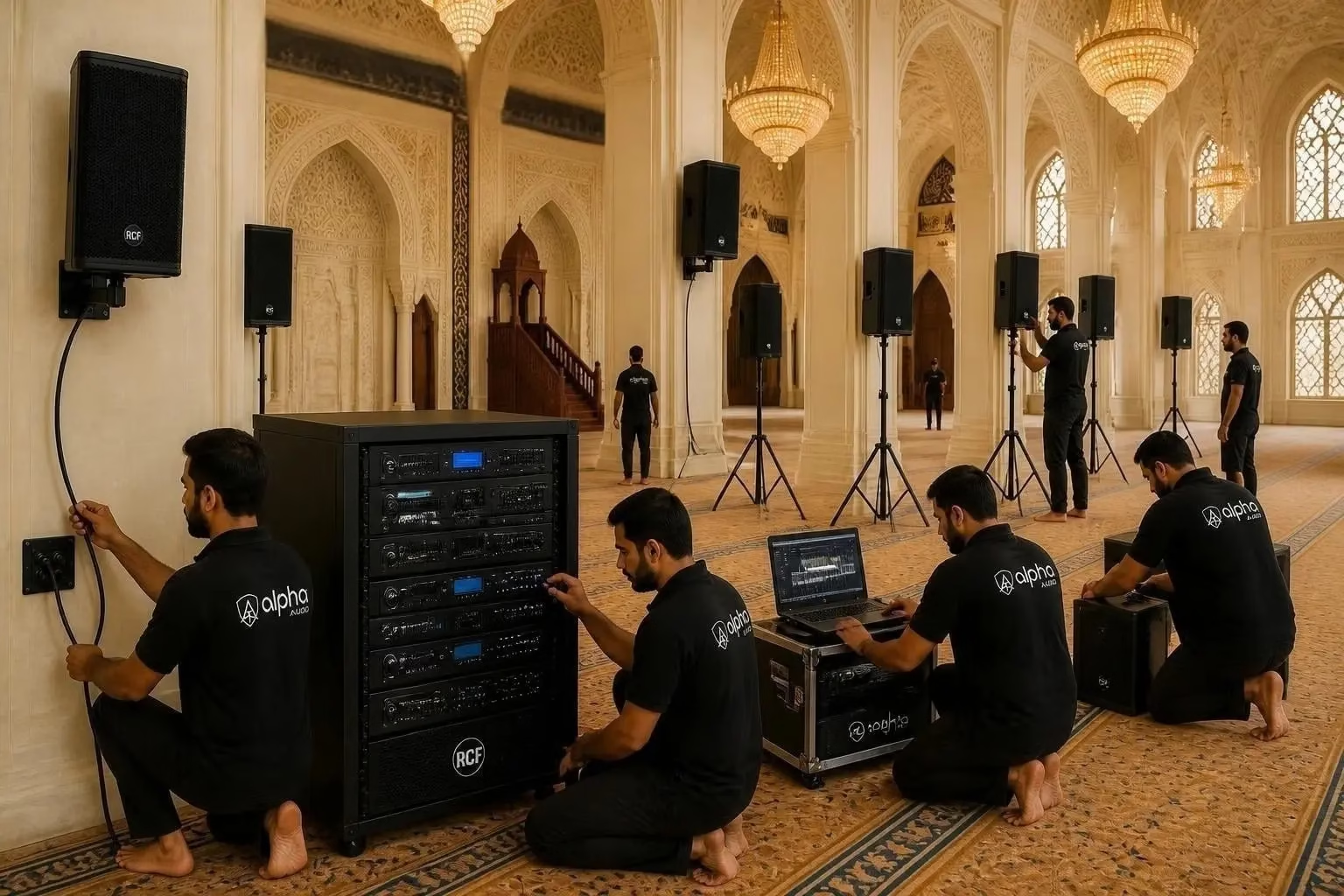
The Complete Masjid Sound System Checklist Before Ramadan
Use this checklist to review your masjid audio. You can do the basic checks yourself. For measurements and tuning, a professional team gives far more accurate results.
Step 1: Walk the Hall and Listen
Stand in different places: the front row, the middle, the back, the balcony, the women’s section, and the outer courtyard. Ask a volunteer to speak or recite through the microphone. Note where clarity drops, where echo is worst, and where sound is too loud or too quiet. Write these spots down. This simple walk-through tells you more than most people expect.
Step 2: Inspect the Speakers
Look at every speaker. Check for torn cones, rust, loose mounts, damaged grilles, and water marks. Make sure each speaker is secure, because speakers hanging from weak fixtures are a safety risk. Confirm every speaker actually works. A silent speaker in one corner can create dead zones that people mistake for design flaws.
Step 3: Test the Amplifiers
Check that amplifiers have proper ventilation and are not covered in dust. Listen for hum or distortion at normal volume. Make sure the amplifier power matches your speaker load. An overworked amplifier is one of the most common causes of Ramadan failures.
Step 4: Check Microphones and Wireless Systems
Replace worn-out batteries and test every microphone, including backups. Walk around the hall while someone speaks to find dropout zones. Look at the cables, connectors, and mic stands. For the Imam, a reliable wireless handheld or headset microphone with stable signal is essential.
Step 5: Review the Mixer and Audio Processing
The mixer controls the balance of every source. Modern digital mixers and processors let you save settings for Azaan, Khutbah, Taraweeh, and lectures. This protects against accidental changes. If your mixer is old, noisy, or confusing, upgrading it makes daily operation easier for the masjid staff.
Step 6: Examine Cables, Connectors, and Earthing
Loose or damaged cables cause crackling, noise, and sudden dropouts. Inspect all visible cable runs and connectors. Check that earthing is correct. Poor earthing creates hum and risks electric shock. This is a safety issue as much as an audio one.
Step 7: Assess the Room Acoustics
Sound behaves differently in every building. Large domes, tall ceilings, bare walls, and hard floors all increase reverb. A professional acoustic assessment shows whether you need acoustic panels, different speaker types, or a different layout. In many halls, the right speaker choice and placement solve most of the problem without major construction.
Step 8: Test the Outdoor and Minaret System
Listen to the Azaan from the street and from nearby houses. Check horn speakers and cables for weather damage. Confirm the timers or switching work, if used. Sound should be clear and loud enough to serve the neighborhood without becoming harsh or causing complaints.
Step 9: Check the Power Supply and Protection
Pakistan’s voltage fluctuations and load shedding can damage audio equipment. Make sure you use proper surge protection and stable power distribution. If your masjid uses a generator or UPS, confirm that it can handle the audio load.
Step 10: Prepare Backups and a Fault Plan
Keep spare microphones, batteries, and key cables on hand. Know who to call if something fails. A named technician or service provider with a quick response time is far better than searching for help in the middle of Taraweeh.
Step 11: Train the Operators
The best system fails if the person running it does not understand it. Train the masjid caretaker, Imam, or volunteers on basic operation, correct microphone use, and simple troubleshooting. A short training session prevents many problems.
Step 12: Run a Full Test Before the First Taraweeh
Do a complete rehearsal a week before Ramadan. Test Azaan, recitation, Khutbah-style speech, and the minaret system at the volume you plan to use. Fix any issue while you still have time.
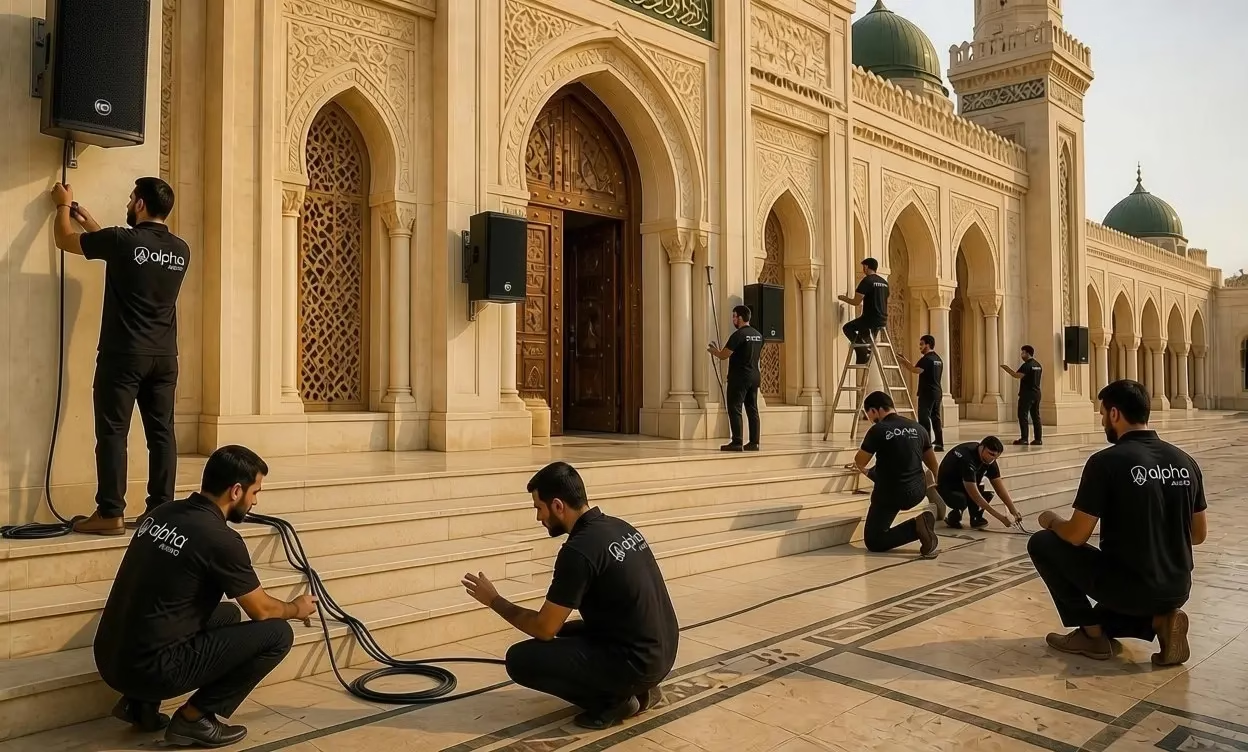
Why Alpha Audio Uses RCF for Masjid Sound Systems
Choosing equipment matters as much as the installation. We use RCF, the respected Italian professional audio brand, because it consistently delivers what masjids need most: clarity, reliability, and coverage.
Here is why RCF suits masjid sound systems:
- Speech clarity: RCF speakers are known for clear, intelligible sound, which is the top priority for Khutbah and Qirat.
- Controlled coverage: Many RCF speakers are designed to direct sound toward the congregation instead of spilling onto walls and ceilings, which reduces echo.
- Durability: Professional-grade build quality handles long hours of use during Ramadan.
- A complete range: RCF offers speakers, amplifiers, mixers, processors, and microphones, so the system works together as one.
- Scalable options: The same brand covers small masjids, medium halls, and large grand mosques.
Because Alpha Audio is the only distributor of RCF in Pakistan, our clients get genuine products, proper warranty, and direct technical support. Buying from unofficial sellers risks fake products, no warranty, and no service. For a masjid, that risk is not worth taking. You can learn more about the brand on the official RCF website.
Our Process Before We Install a Masjid Audio Solution
Good results come from good preparation. Every Alpha Audio project follows a clear process. This is what you can expect from us.
1. Initial Consultation
We listen first. We ask about the size of the masjid, the number of worshippers, your budget, and the problems you face. We also ask about future plans, such as an expansion or a new floor.
2. Site Survey
Our team visits the masjid. We measure the hall, study the ceiling height and materials, check the existing equipment, and test the sound. We also review the electrical setup and the outdoor areas.
3. Acoustic and System Design
Using the survey, we design the speaker layout and select the right RCF equipment. The design aims for even coverage, strong speech clarity, and controlled echo. We plan cable routes and equipment locations so the installation looks neat and stays safe.
4. Clear Proposal and Budget
We present the design, equipment list, and cost in simple terms. You see exactly what you are paying for. We can also suggest phases if the budget is limited, so you can upgrade the most important areas first.
5. Professional Installation
Our technicians install speakers, amplifiers, microphones, and cabling with proper mounting, earthing, and cable management. We work around prayer times to reduce disruption to the congregation.
6. Tuning and Testing
After installation, we tune the system using professional methods. We adjust the settings for the specific acoustics of your hall, test coverage in every section, and remove feedback and noise.
7. Training and Handover
We train the masjid staff on daily operation. We give simple instructions and make sure someone is confident to run the system.
8. After-Sales Support
Our work does not end at handover. We offer support, maintenance, and service, so your masjid sound system keeps working properly through Ramadan and every year after.
Results You Can Expect After a Professional Upgrade
Every masjid is different, so results depend on the building and the starting condition. In general, a properly designed and installed RCF-based system gives these improvements:
- Clearer speech: Worshippers understand the Imam’s recitation and the Khutbah more easily.
- Even sound: Volume is more consistent from the front row to the back row, including side areas and balconies.
- Less echo: Directed sound and correct tuning reduce reverb.
- No more feedback: Squealing and whistling disappear after proper tuning.
- Reliable performance: Equipment handles long Taraweeh sessions without overheating or failing.
- Natural Qirat: Recitation sounds warm and clear instead of harsh.
- Easier operation: Simple controls and saved presets make life easier for the masjid team.
- A better worship experience: People concentrate on prayer instead of straining to hear.
These benefits are felt immediately, and they are the reason many masjid committees return to us for upgrades and expansions.

Masjid Audio Solutions in Pakistan’s Major Cities
Alpha Audio serves masjids across Pakistan. Each city has its own needs, and we plan accordingly.
Masjid Sound System in Lahore
Lahore has a mix of historic mosques, large community masjids, and fast-growing new neighborhoods. Many older buildings have high ceilings and reflective surfaces that create heavy echo. Our Lahore solutions focus on controlled directional speakers and careful tuning. For newer masjids in areas like DHA, Bahria Town, and Johar Town, we design systems that fit modern layouts, including multiple floors and women’s sections.
Masjid Sound System in Karachi
Karachi’s coastal humidity and heat place extra demand on equipment. Salt in the air can speed up corrosion. For Karachi masjids, we select weather-appropriate outdoor equipment and stress proper protection. Large congregations in areas across the city also need high-capacity systems that stay clear at high volume.
Masjid Sound System in Islamabad and Rawalpindi
The twin cities include large modern masjids with big halls and high domes. Our work here often involves wide coverage, balcony areas, and clean integration with architecture. We pay attention to neat cabling and discreet speaker placement, because many projects here care about appearance as well as sound.
Masjid Sound System in Faisalabad
Faisalabad has many busy community masjids with large Friday congregations. Reliable power protection and durable equipment are priorities, along with clear sound for both indoor and outdoor areas. We provide scalable systems that grow as the masjid expands.
Masjid Sound System in Multan
Multan’s intense summer heat is a real challenge for amplifiers and outdoor speakers. We plan ventilation and select durable equipment to handle high temperatures. Historic and shrine-adjacent areas may also need careful, respectful installation.
Masjid Audio Solutions in Other Cities
We also support masjids in Peshawar, Quetta, Sialkot, Gujranwala, Hyderabad, Sargodha, Bahawalpur, and many more cities. If your masjid is outside the major cities, contact us. We can plan site visits and ongoing support so you receive the same quality service.
Choosing the Right Masjid Sound System by Size
Small Neighborhood Masjids
A small masjid does not need a complex system. It needs a clean, reliable setup: quality speakers, a suitable amplifier, a dependable wireless microphone, and a good outdoor speaker for the Azaan. The focus is on value and simplicity.
Medium-Sized Masjids
Medium halls benefit from distributed speakers or column speakers, a digital mixer, and multiple microphone inputs. This allows balanced sound for Imam, Qari, and lecturers, and gives more control over echo.
Large and Grand Masjids
Large masjids need a professionally engineered design. This includes multiple speaker zones, signal processing, redundant equipment, advanced microphones, and careful acoustic planning. The system must cover huge areas evenly while remaining clear and reliable throughout Ramadan.
No matter the size, the principle is the same. The system should be matched to the building and its use.
Your Ramadan Preparation Timeline
Planning ahead avoids stress. Here is a simple timeline to follow.
- 6 to 8 weeks before Ramadan: Book a site survey and assessment. Identify problems and budget.
- 4 to 6 weeks before: Approve the design and place equipment orders.
- 3 to 4 weeks before: Complete installation and cabling work.
- 2 weeks before: Tune the system and train the operators.
- 1 week before: Do a full rehearsal and final fixes.
- During Ramadan: Monitor the system and call support quickly if needed.
If your masjid is already close to Ramadan, do not worry. Contact us, and we will tell you what can realistically be improved in the time left.
Frequently Asked Questions About Masjid Sound Systems
When should we upgrade our masjid sound system before Ramadan?
The best time is six to eight weeks before Ramadan. This leaves room for a survey, design, installation, and tuning without rushing.
How much does a masjid sound system cost in Pakistan?
The cost depends on the hall size, acoustics, and equipment quality. A small masjid needs a far smaller setup than a large grand masjid. Contact Alpha Audio for a site survey and a clear quote based on your actual needs.
Why is RCF good for masjids?
RCF equipment is designed for clear speech, controlled coverage, and long, reliable operation. These are the qualities a masjid needs for Khutbah, Qirat, and Azaan.
Can you fix echo without rebuilding the masjid?
In many cases, yes. Correct speaker selection, placement, and tuning can reduce echo significantly. For difficult halls, acoustic panels can help further. A site survey shows the best option.
Do you provide service after installation?
Yes. Alpha Audio provides support, maintenance, and service so your system stays reliable through Ramadan and beyond.
Do you work outside major cities?
Yes. We serve masjids across Pakistan, including smaller cities and towns.
Get Your Masjid Ready With Alpha Audio
Ramadan is a month of focus, reflection, and community. Your masjid sound system should support that experience, not distract from it. A short assessment today can prevent a stressful problem in the middle of Taraweeh.
Alpha Audio is Pakistan’s exclusive RCF distributor and a trusted professional audio solution provider for masjids of every size. From the first site survey to final tuning and long-term support, our team handles the entire process.
+92 308 4319219 | info@alphaaudio.com.pk | alphaaudio.com.pk
Visit us: Plaza No. 28, Phase 6 DHA, Lahore, Punjab
Audio Quotation
Video Quotation
Automation Quotation