


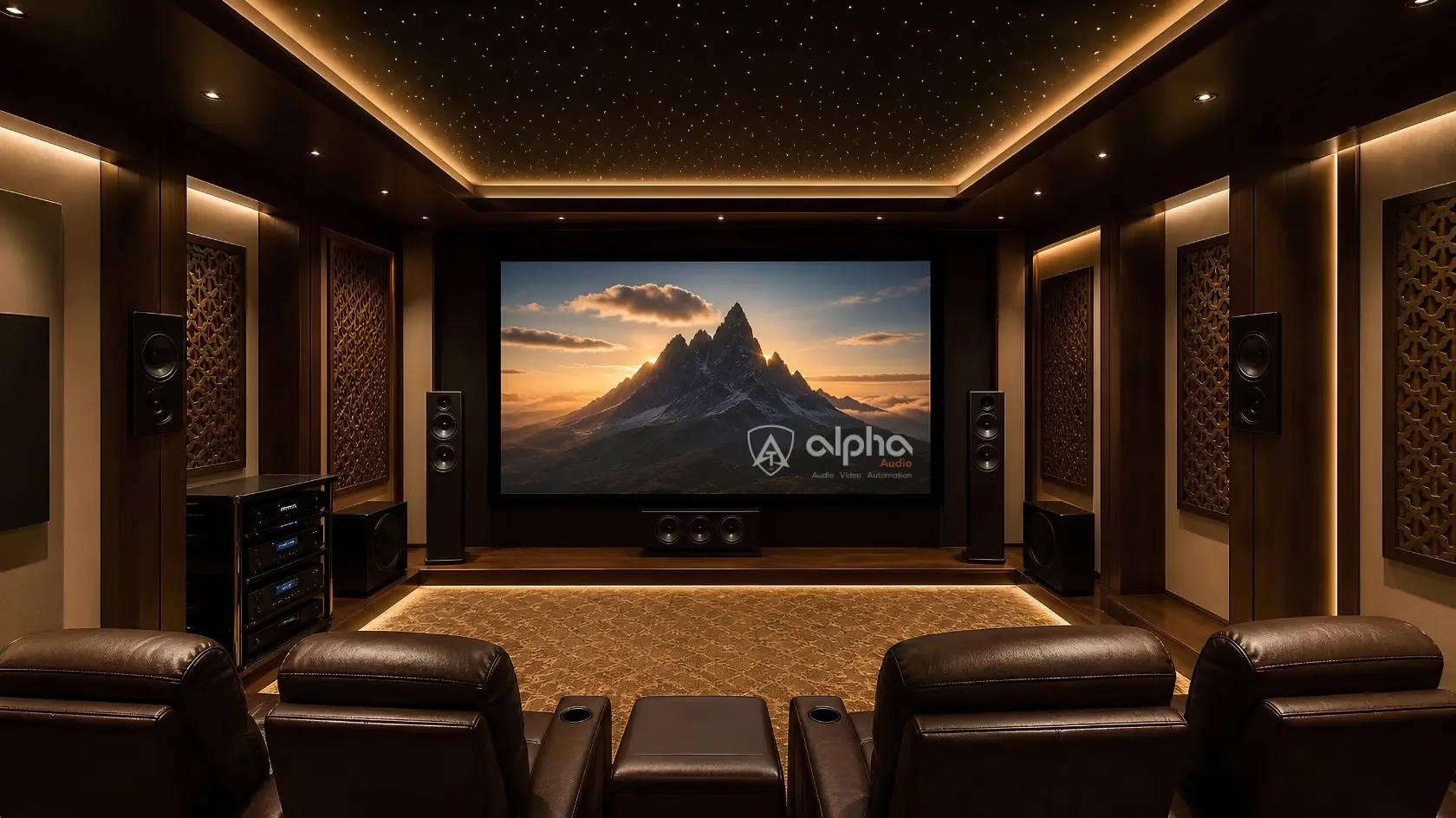
Close your eyes for a second and think about the last time a movie, a concert, or even a video game made you feel like you were actually inside the scene rain falling above your head, a car passing behind your back, a whisper moving from your left ear to your right. That feeling has a name in the audio industry: an immersive sound system.
For decades, sound technology moved forward in small, predictable steps. Then, almost overnight, it leapt forward into something far more powerful than anything home theater owners, cinema operators, or concert designers had experienced before. In this blog, we’re going to walk through that entire journey in chronological order so you understand exactly what an immersive sound system is, how it evolved, why it’s a step above Dolby Atmos and traditional surround sound, and how this cutting-edge technology is now making its way into Pakistan, led by Alpha Audio.
1. The Origins: Mono and Stereo Sound
To appreciate how far we’ve come, we need to start at the beginning.
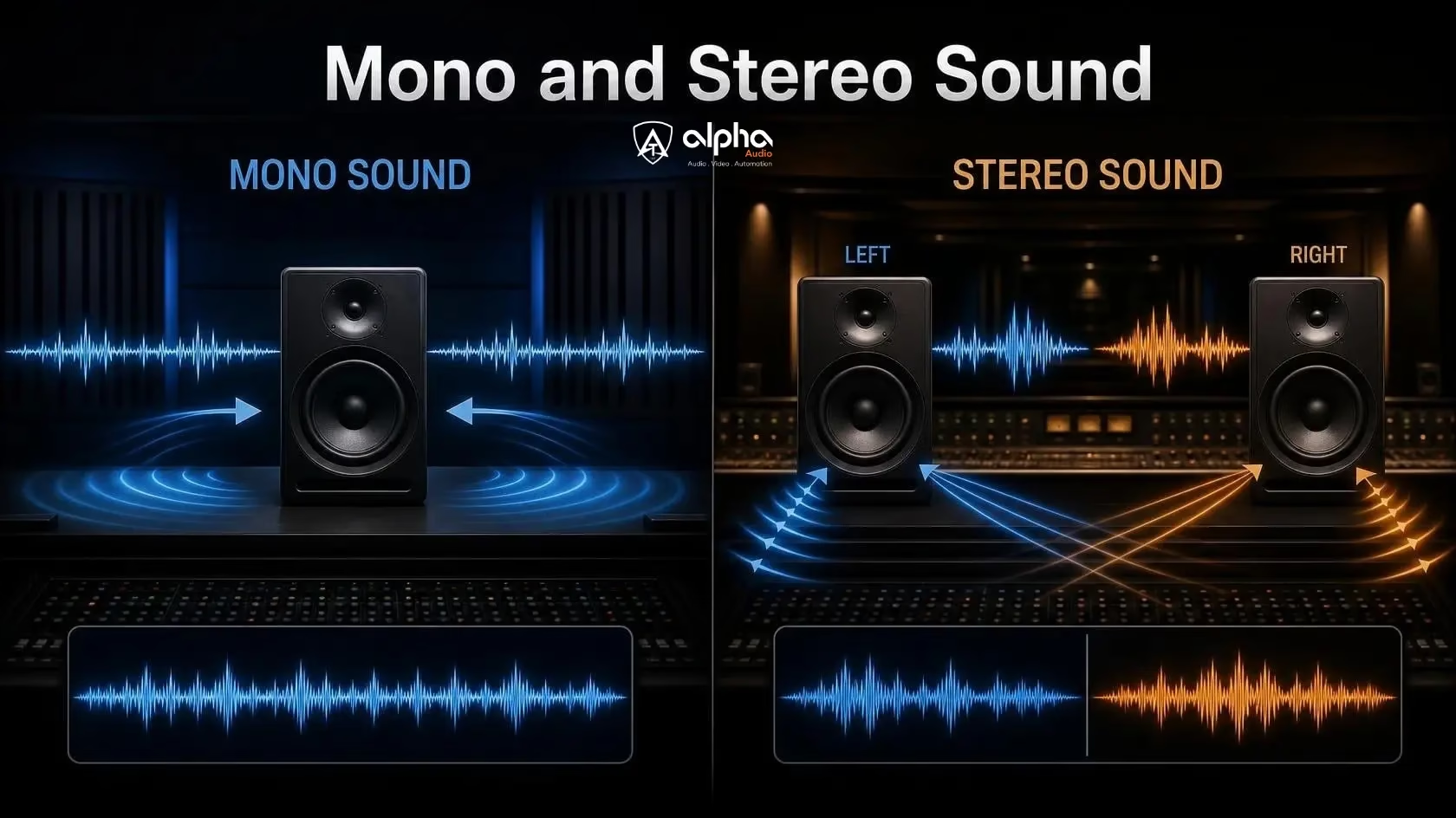
In the early 20th century, audio was recorded and played back in mono a single channel of sound coming from a single source. Whether you were listening to a radio broadcast or an early film soundtrack, every instrument, voice, and sound effect was blended into one flat signal. There was no sense of direction, depth, or space. It worked, but it was one-dimensional.
By the 1930s and more widely in the 1950s and 60s, stereo sound entered the picture. Stereo used two channels left and right to create a basic sense of width. For the first time, listeners could tell that a guitar was slightly to the left and a vocal was centered. It was a breakthrough, but it was still confined to a flat, horizontal plane in front of the listener.
Stereo dominated music and film for decades. But as cinema became more spectacle-driven explosions, chase scenes, dogfights audiences and filmmakers wanted more than left and right. They wanted to feel surrounded.
2. The Rise of Surround Sound (5.1 and 7.1)
The 1970s and 80s brought the next major shift:
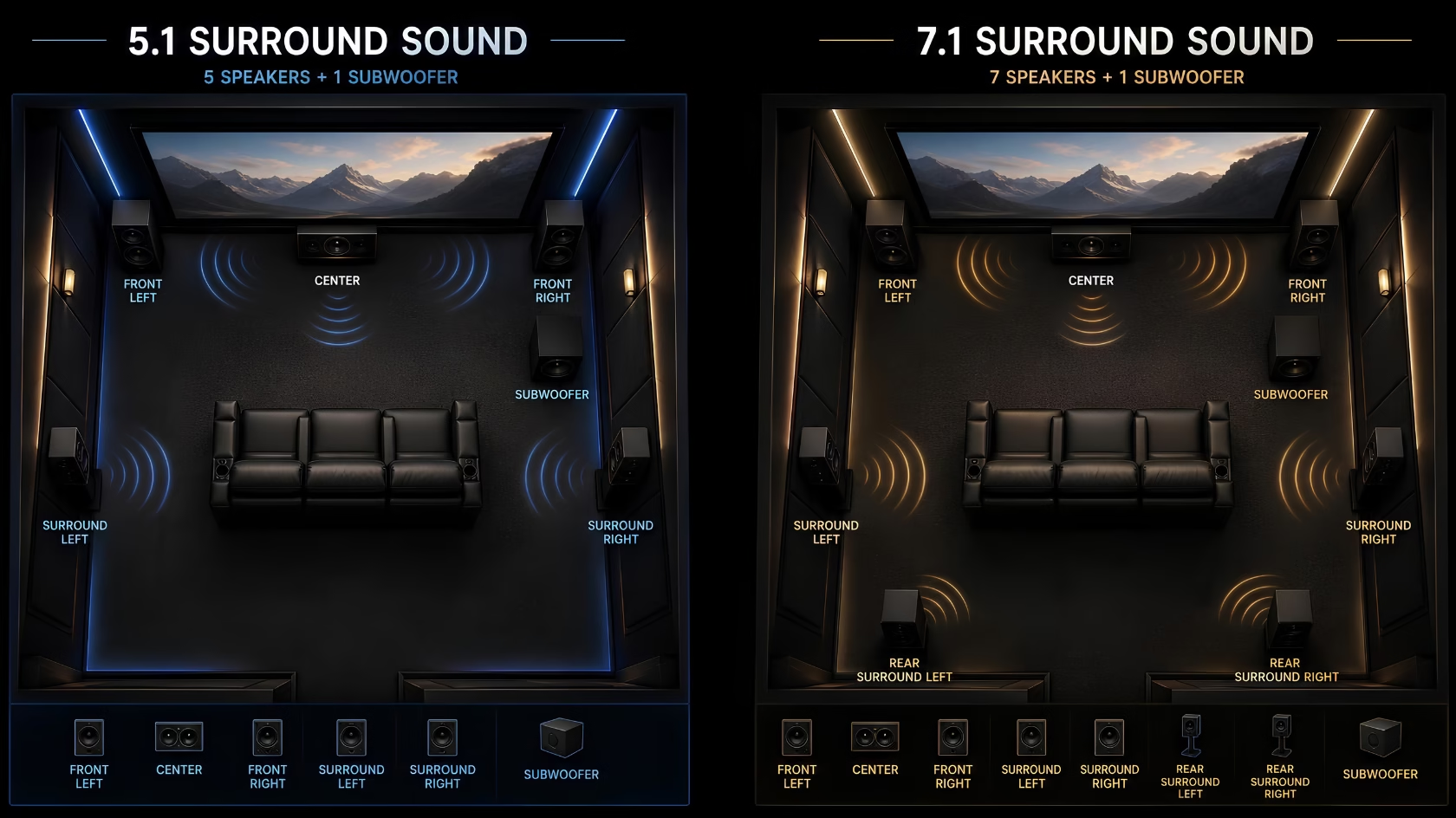
surround sound. Formats like Dolby Stereo, and later Dolby Digital 5.1 and DTS, introduced multiple speaker channels placed strategically around the listener front left, front right, center, rear left, rear right, and a subwoofer for bass (the “.1”).
This was revolutionary. For the first time, a helicopter could sound like it was flying past you, not just in front of you. Home theaters adopted 5.1 setups, and later 7.1 systems added even more rear and side channels for finer directional detail.
However, surround sound had a fundamental limitation: it was channel-based. Every sound had to be mixed and locked to a specific speaker. If you added more speakers or changed your room layout, the mix didn’t automatically adjust. Sound also stayed largely on a horizontal plane there was little to no vertical dimension. You could hear things around you, but almost nothing meaningfully happened above you.
3. The Dolby Atmos Revolution
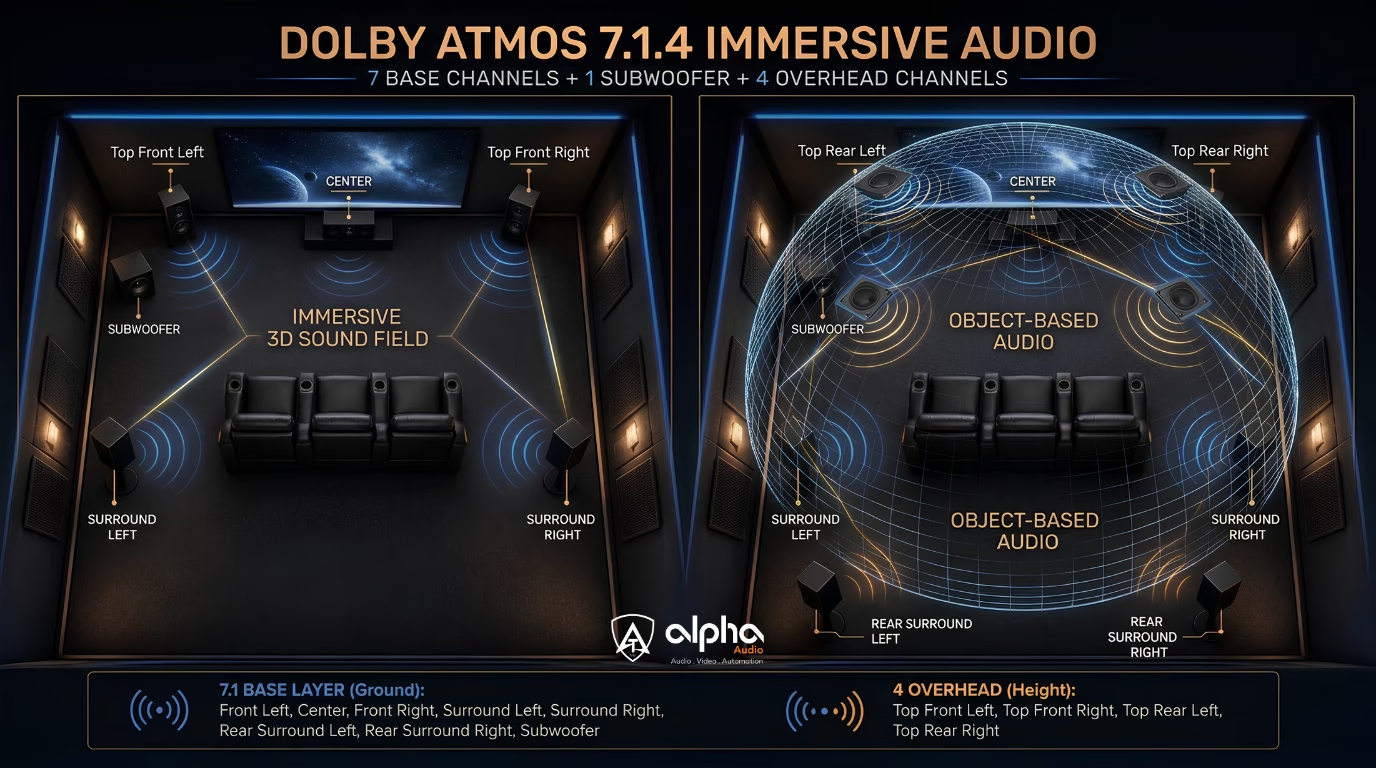
In 2012, Dolby Laboratories introduced Dolby Atmos, first debuting in the film Brave. This was a genuine leap forward. Instead of only using fixed channels, Dolby Atmos introduced object-based audio meaning individual sounds (called “audio objects”) could be placed and moved freely in a 3D space, including overhead, using ceiling or upward-firing speakers.
Sound engineers could now place up to dozens of audio objects precisely in a room, and the Dolby Atmos renderer would automatically map that sound to whatever speaker configuration a cinema or living room actually had whether that was 7.1.2, 9.1.4, or a massive multi-speaker cinema array. This flexibility made Atmos scalable, and it quickly became the gold standard in cinemas, home theaters, soundbars, and even streaming platforms and headphones.
For most people, Dolby Atmos represented the peak of what audio could do. And for a long time, it was.
4. Where Dolby Atmos Falls Short
But as impressive as Dolby Atmos is, it still has boundaries that engineers and audiophiles have been pushing against:
- Sweet-spot dependency: Dolby Atmos is optimized around specific listening positions. Move away from the “sweet spot,” and the sense of immersion weakens noticeably.
- Limited object count and speaker mapping: Even though Atmos supports many audio objects, it still relies on rendering those objects onto a finite set of physical speakers, which means the placement is an approximation, not a true reconstruction of the sound field.
- Room dependency: Atmos performance is heavily influenced by room acoustics, ceiling height, and speaker placement, and it doesn’t dynamically adapt to real-time changes in the room or audience.
- Primarily designed for pre-mixed content: Atmos shines with content specifically mixed for it, but it doesn’t fully solve the challenge of creating a true, uniform 3D soundstage across an entire room for live events, large venues, or large audiences with multiple listening zones.
This is exactly the gap that a true immersive sound system is designed to close.
5. What Is an Immersive Sound System?
An immersive sound system is the next generation beyond object-based formats like Dolby Atmos and DTS:X. Rather than simply routing pre-defined audio objects to a limited speaker layout, immersive sound systems use dense arrays of speakers, advanced digital signal processing (DSP), and real-time spatial audio algorithms to recreate an entire, continuous soundfield as if the original sound sources were physically present in the room.
Instead of a handful of “sweet spots,” an immersive sound system is engineered so that every seat in the room experiences accurate, three-dimensional sound not an approximation of it.
Technologies that fall under this umbrella include:
- Wave Field Synthesis (WFS) recreates entire sound wavefronts using large speaker arrays, so sound behaves physically correctly no matter where you sit.
- Beam-steering and beamforming speaker systems direct sound precisely to specific zones or individuals in a room.
- High-density object-based rendering systems (like L-ISA, d&b Soundscape, and similar large-format immersive audio engines) used in concerts, theaters, and large-format cinemas to position sound with pinpoint accuracy across large audiences.
- Multi-zone spatial audio processing — allowing different sound experiences in different parts of the same space simultaneously.
In short: if Dolby Atmos taught the audio industry to think in 3D, immersive sound systems are what happens when that idea is taken to its full, uncompromising conclusion.
6. How Immersive Sound Systems Work
At a technical level, immersive sound systems rely on a few core pillars:
- Dense Speaker Arrays Rather than a handful of speakers per channel, immersive systems often use dozens of speakers distributed across walls, ceilings, and floors. This density is what allows sound to be reconstructed accurately from nearly any listening position.
- Real-Time Spatial Processing Powerful DSP engines calculate, in real time, exactly how each speaker needs to reproduce a portion of the sound wave so that a listener perceives a sound object at a specific point in 3D space even as that “object” moves.
- Object-Based and Wavefront-Based Rendering Some immersive systems still use object-based metadata (like Atmos), but combine it with wavefront reconstruction principles so that the physical behavior of sound in the room is scientifically accurate, not just approximated.
- Acoustic Modeling and Calibration Before an immersive sound system is installed, engineers typically run detailed acoustic modeling (using tools like EASE or EASE Focus) to simulate sound pressure levels, reflections, and coverage across the entire venue ensuring performance is consistent everywhere, not just in a few chairs.
- Scalability Across Venue Types Immersive sound architecture can scale from a home cinema room to a 500-seat auditorium, a nightclub, a corporate boardroom, or a concert hall all using the same underlying spatial audio principles.
Standard Surround Sound vs. Dolby Atmos
A side-by-side look at how object-based spatial audio compares to traditional channel-based surround, across setup, cost, and listening experience.
| Feature | Standard Surround Sound | Dolby Atmos |
|---|---|---|
| Audio structure | Channel-based | Object-based |
| Height / overhead sound | No | Yes |
| Typical configuration | 5.1 / 7.1 | 5.1.2 / 5.1.4 / 7.1.4 / 9.1.4 |
| Immersion level | Moderate | High, 3D spatial |
| Installation complexity | Simple to moderate | Moderate to advanced |
| Cost | Lower | Higher |
| Best for | Homes, restaurants, general use | Cinemas, home theaters, premium auditoriums |
| Compatibility | Universal | Requires Atmos-enabled AV receiver / content |
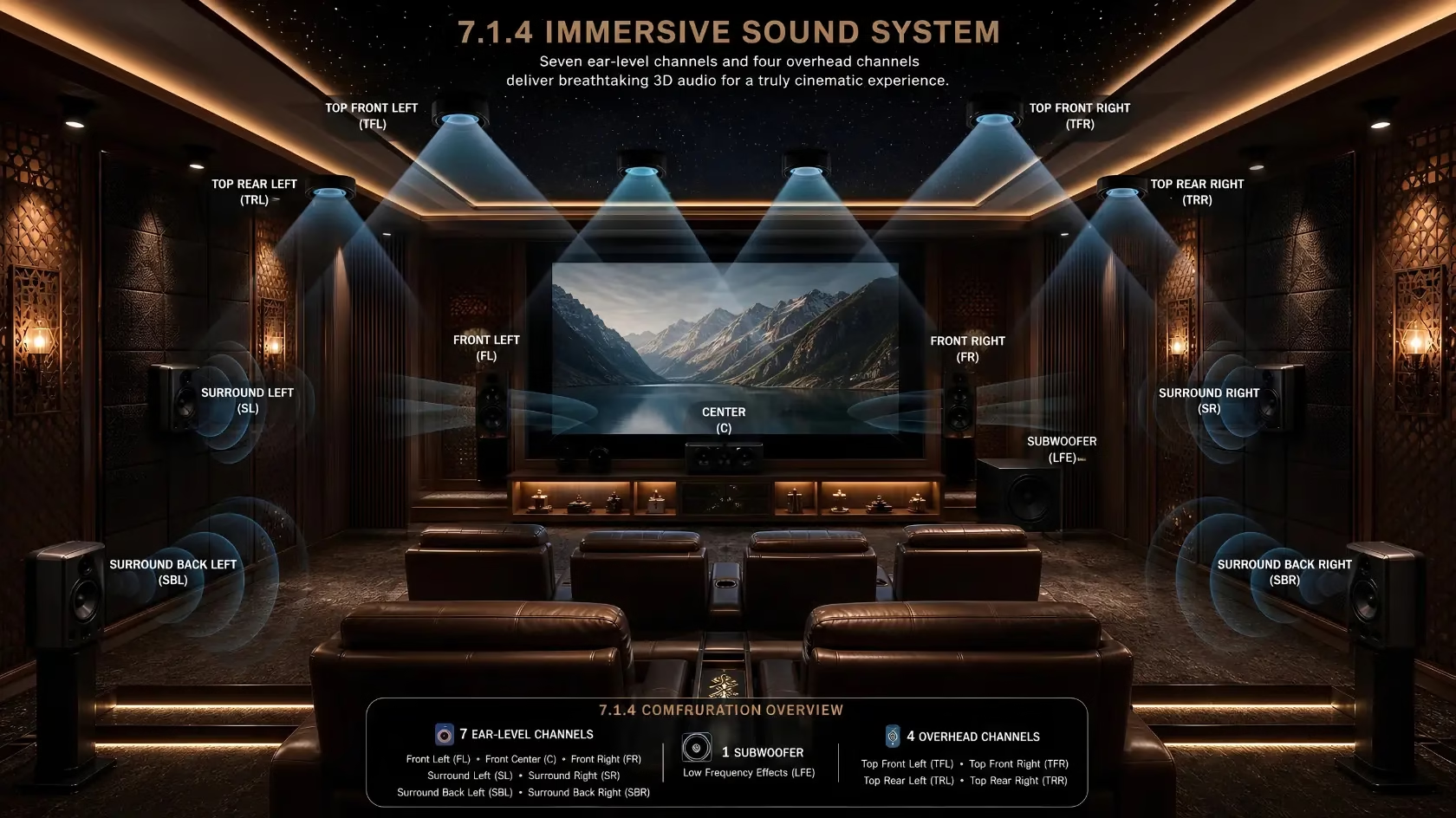
8. Real-World Applications of Immersive Sound Systems
Immersive sound technology isn’t confined to Hollywood studios. It’s already being deployed across multiple industries:
- Cinemas and mini-theaters: reference-grade screening rooms for premium audiences, government institutions, and private screening halls.
- Concert halls and nightclubs: where large-format immersive audio engines allow every section of the crowd to experience powerful, precisely placed sound.
- Corporate boardrooms and auditoriums: for crystal-clear, uniform audio during presentations, conferences, and hybrid meetings.
- Museums and themed attractions: using spatial audio to bring exhibits and installations to life.
- High-end residential home theaters: for homeowners who want cinema-grade, all-seat immersive performance rather than a single optimized listening chair.
- Live events and festivals: where immersive audio processors allow sound designers to move audio around and above a crowd in real time.
9. Why Immersive Sound Is the Future of Audio
Every major shift in sound technology mono to stereo, stereo to surround, surround to object-based audio was driven by the same goal: closing the gap between recorded sound and real-life listening. Immersive sound systems represent the most significant step yet toward eliminating that gap entirely.
As content creators, filmmakers, and musicians increasingly produce material specifically for 3D and spatial audio formats, the venues, homes, and businesses that adopt immersive sound infrastructure now will be the ones offering audiences a genuinely next-generation experience not a slightly-improved version of what came before.
10. Alpha Audio: Bringing Immersive Sound Systems to Pakistan
While immersive sound technology has been transforming cinemas, concert venues, and premium home theaters around the world, access to this level of audio engineering in Pakistan has historically been limited. That’s changing.
Alpha Audio, already known in Pakistan for delivering high-performance Dolby Atmos installations including a reference-grade Dolby Atmos mini-cinema built for Pakistan Television’s headquarters in Islamabad using professional RCF systems and detailed EASE Focus acoustic modeling is now advancing further, bringing true immersive sound system technology into the country.
This means Pakistani cinemas, event venues, corporate spaces, nightclubs, auditoriums, and high-end homeowners no longer have to look abroad to experience the next generation of spatial audio. With deep technical expertise in acoustic design, electroacoustic modeling, and large-format speaker system engineering, Alpha Audio is positioning itself at the forefront of this shift helping local venues move beyond conventional surround sound and even beyond standard Dolby Atmos setups, into fully immersive, room-wide 3D audio experiences.
For businesses, cinema owners, and audio enthusiasts in Pakistan, this marks an important turning point: world-class immersive sound technology, engineered and installed locally.
Frequently Asked Questions
Is an immersive sound system the same as Dolby Atmos?
No. Dolby Atmos is one form of object-based immersive audio, but true immersive sound systems go further, using denser speaker arrays and real-time spatial processing to deliver consistent 3D sound across an entire room, not just a sweet spot.
Can I install an immersive sound system in my home?
Yes. While large-scale immersive systems are common in cinemas and concert venues, scaled-down immersive audio setups can be engineered for premium home theaters as well.
Is immersive sound only for movies?
No. It’s used in music, gaming, live events, corporate presentations, museums, and themed entertainment as well.
Why is immersive sound considered better than surround sound?
Because it removes the channel-based limitations of surround sound, adds height and depth, and ensures consistent audio quality regardless of where the listener is sitting in the room.
Who is bringing immersive sound systems to Pakistan?
Alpha Audio, a company with an established track record in high-performance Dolby Atmos and professional audio installations, is introducing immersive sound system technology to the Pakistani market.
Final Thoughts
From mono to stereo, stereo to surround, and surround to Dolby Atmos — every generation of audio technology has pushed us closer to one goal: making recorded sound feel real. Immersive sound systems are the most advanced step in that journey so far, offering a level of spatial accuracy, consistency, and depth that surpasses even Dolby Atmos.
As this technology becomes more accessible around the world, its arrival in Pakistan — led by Alpha Audio — gives local cinemas, businesses, and homeowners the opportunity to experience audio the way it was truly meant to be heard: not just around you, but completely immersed within it.
+92 308 4319219 | info@alphaaudio.com.pk | alphaaudio.com.pk
Visit us: Plaza No. 28, Phase 6 DHA, Lahore, Punjab
Audio Quotation
Video Quotation
Automation Quotation