
Walk into any high-end cinema, corporate boardroom, or luxury home theater today, and you’ll likely hear a debate that’s been running for years among AV professionals and homeowners alike:
Dolby Atmos vs standard surround sound, which one is actually worth the investment?
It’s not just a question for audiophiles anymore. As homes, offices, restaurants, and auditoriums across Pakistan upgrade their audio experiences, understanding the real difference between these two technologies and pairing them with the right speaker hardware has become essential before spending a single rupee.
In this guide, we’ll break down how Dolby Atmos differs from traditional surround sound, when each makes sense, and why the speakers you choose matter just as much as the format itself. We’ll also look at how Alpha Audio, using premium RCF sound systems, has been delivering world-class audio experiences across corporate offices, professional cinemas, in-office screening rooms, conference auditoriums, restaurants, and premium homes throughout Pakistan.
What Is Standard Surround Sound?
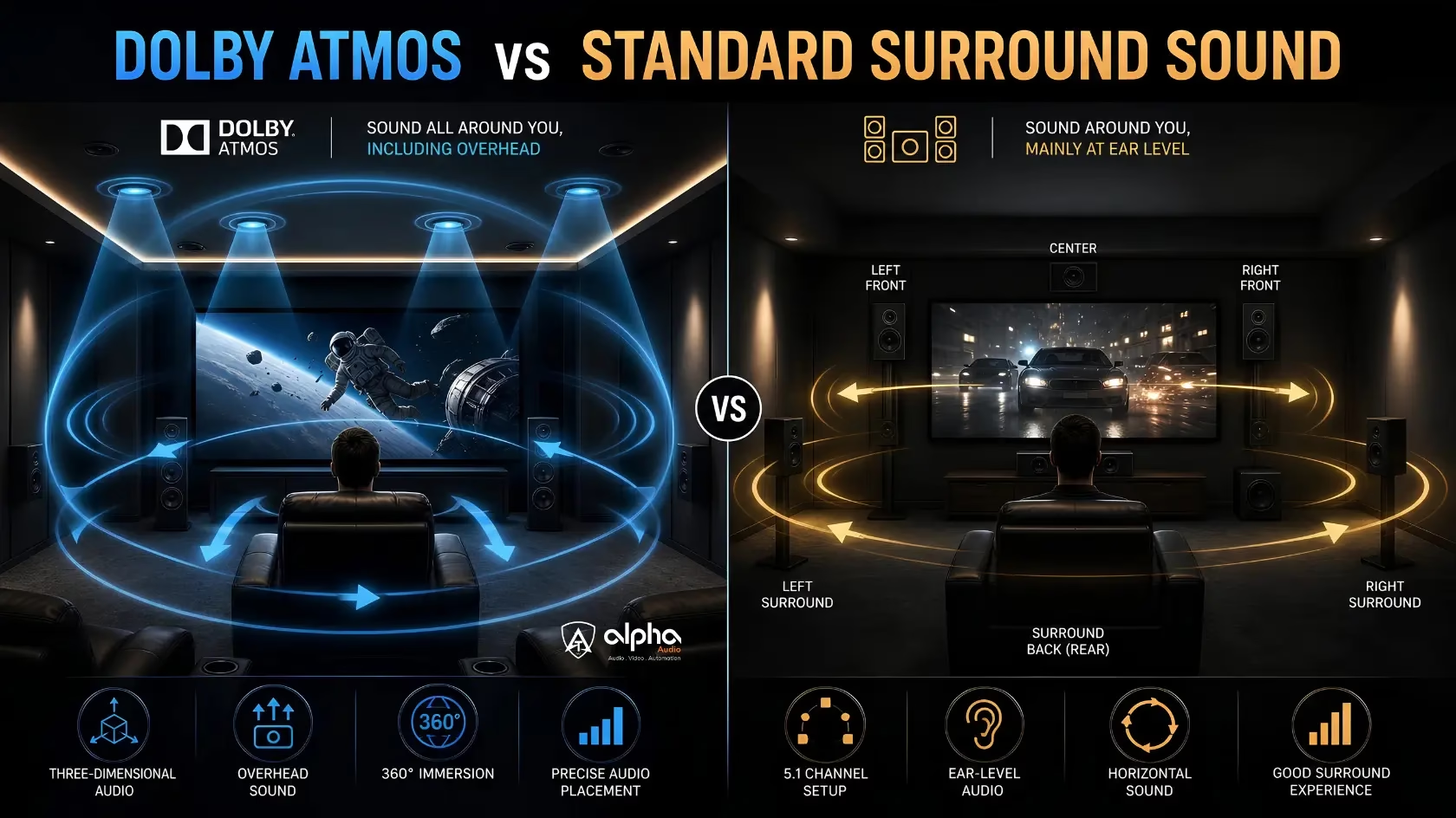
Standard surround sound refers to channel-based audio formats like 5.1 or 7.1. In these systems, audio is mixed and assigned to a fixed number of channels typically five or seven speakers plus a subwoofer positioned around the listener at ear level (front left, front right, center, rear left, rear right, and so on).
Because sound is locked to specific channels, the audio engineer has to make trade-offs during the mix. Since every sound must be distributed across a limited number of channels, audio mixing often requires compromises for example, prioritizing music in a scene can come at the expense of dialogue clarity.
Surround sound has been the industry standard for decades and remains a cost-effective, reliable choice for home theaters, restaurants, and commercial spaces where a solid, immersive listening experience is needed without the added complexity of height channels.
A 5.1 setup, for example, uses five speakers (front left, front right, center, rear left, rear right) plus a subwoofer for low-frequency effects. A 7.1 setup adds two additional rear or side speakers for a wider, more enveloping soundstage. Both configurations have been refined over decades of cinema and home entertainment use, which means they’re widely supported by almost every streaming platform, Blu-ray disc, gaming console, and AV receiver on the market — a major advantage for anyone who values simplicity and universal compatibility over cutting-edge immersion.
For businesses and homeowners who don’t need overhead audio effects — think restaurants playing background music, retail stores, or family rooms used mainly for everyday TV viewing standard surround sound, when installed correctly with quality components, still delivers a genuinely satisfying, full-bodied listening experience.
What Is Dolby Atmos?
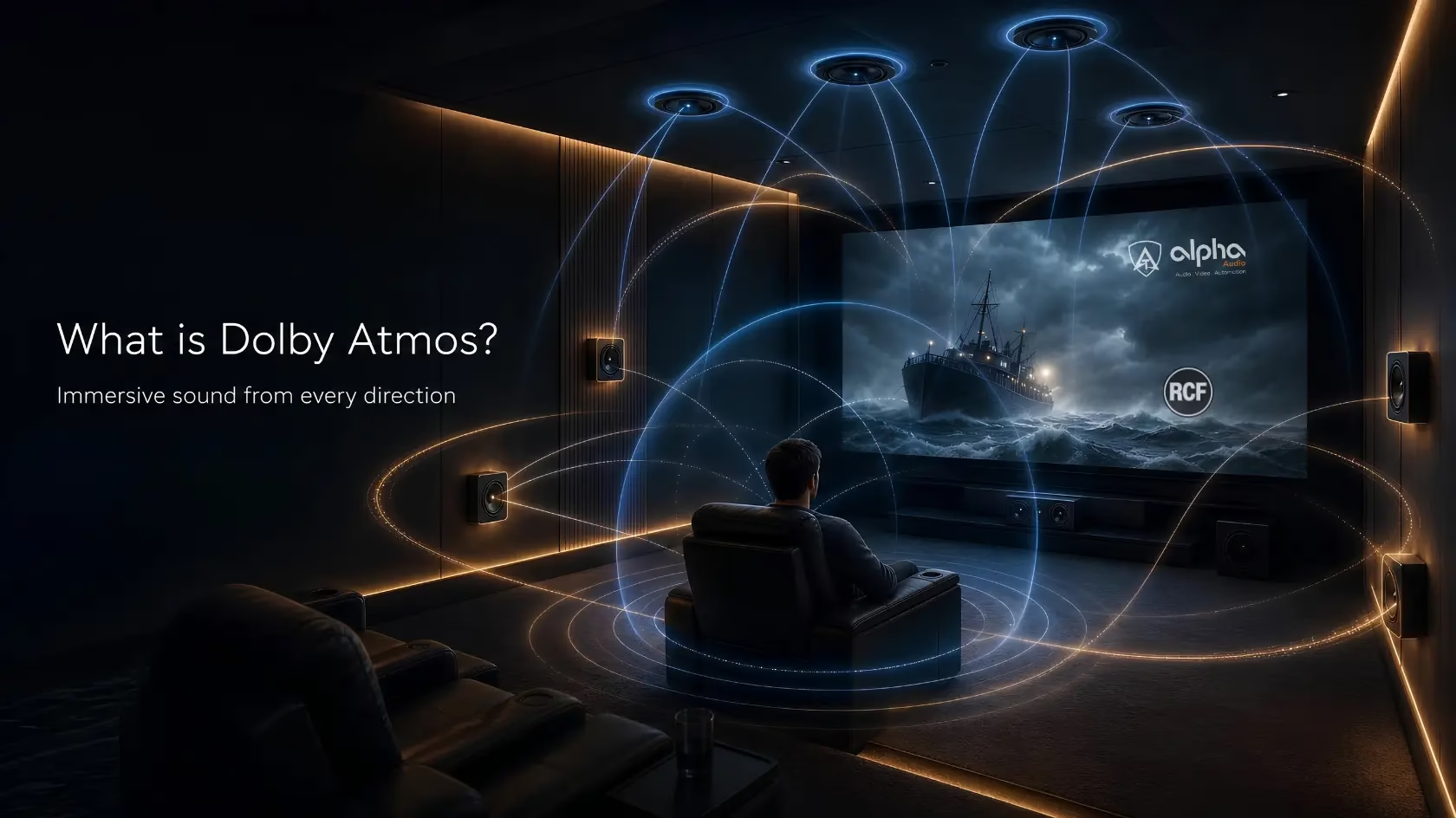
Dolby Atmos takes surround sound a step further by introducing object-based audio instead of channel-based audio, combined with additional height speakers to create a more realistic, three-dimensional listening experience.
Rather than locking sounds to a fixed channel, Dolby Atmos treats each sound a raindrop, a helicopter, a whisper as an individual “object” that can be placed precisely anywhere in a 3D space, including overhead. Launched in 2012, Dolby Atmos is built on the Dolby Digital Plus codec and adds a vertical dimension to audio, moving from a channel-based to an object-based system that can support up to 128 simultaneous audio tracks.
This is why Dolby Atmos setups typically include height or upward-firing speakers, layered on top of a traditional 5.1 or 7.1 base commonly labeled as 5.1.2, 5.1.4, or 7.1.4 configurations. The numbers after the second decimal point indicate how many height or overhead-effect speakers are in the system.
Because Dolby Atmos assigns a precise location to every sound object using metadata rather than fixed channels, the mix automatically adapts to whatever speaker configuration is present whether that’s a 34-speaker commercial cinema or a modest 5.1.2 home setup. This scalability is one of the format’s biggest advantages: the same Atmos-mixed film sounds appropriately immersive whether you’re in a multiplex or a living room, as long as the underlying speakers are capable of reproducing that range and detail.
Dolby Atmos originally debuted in commercial cinemas before making its way into home theater receivers, soundbars, gaming consoles, and even headphones through virtual height processing. However, virtual Atmos (simulated through processing on soundbars or standard speaker layouts) is noticeably less immersive than a true Atmos setup with dedicated height speaker something worth keeping in mind if you’re comparing budget soundbars against a properly engineered speaker system.
Standard Surround Sound vs. Dolby Atmos
A side-by-side look at how object-based spatial audio compares to traditional channel-based surround, across setup, cost, and listening experience.
| Feature | Standard Surround Sound | Dolby Atmos |
|---|---|---|
| Audio structure | Channel-based | Object-based |
| Height / overhead sound | No | Yes |
| Typical configuration | 5.1 / 7.1 | 5.1.2 / 5.1.4 / 7.1.4 / 9.1.4 |
| Immersion level | Moderate | High, 3D spatial |
| Installation complexity | Simple to moderate | Moderate to advanced |
| Cost | Lower | Higher |
| Best for | Homes, restaurants, general use | Cinemas, home theaters, premium auditoriums |
| Compatibility | Universal | Requires Atmos-enabled AV receiver / content |
Cost Considerations: What Actually Drives the Price Difference
When people ask whether Dolby Atmos is “worth it,” what they’re often really asking is whether the price difference is justified. A few factors typically drive the cost gap between a standard surround system and a full Dolby Atmos setup:
- Number of speakers required:
Atmos configurations need two to four additional height or upward-firing speakers beyond a standard 5.1 or 7.1 layout, plus the wiring and mounting work that comes with them. - AV receiver or processor:
Not every receiver supports Atmos decoding. Upgrading to an Atmos-capable receiver is often the single biggest line item in the budget. - Ceiling and structural work:
True in-ceiling height speakers require access to the ceiling cavity, which can mean additional carpentry, wiring conduits, and acoustic treatment, especially in existing buildings rather than new construction. - Content licensing and source compatibility:
While most modern streaming platforms support Atmos on premium tiers, older content libraries and lower-tier subscriptions may only deliver standard surround audio, meaning part of the investment depends on what you’ll actually be watching. - Room acoustics and calibration:
Larger or acoustically complex rooms (auditoriums, cinema halls) require professional acoustic modeling regardless of format, but Atmos setups typically demand more precise calibration to properly blend height channels with the base layer.
In commercial settings like auditoriums and cinemas, this cost difference is usually a smaller percentage of the overall project, since professional acoustic design, cabling infrastructure, and amplification are already significant investments. In residential settings, the gap can be more noticeable, which is why many homeowners start with a well-designed 5.1 or 7.1 system and add height channels later as a future upgrade.
A Quick Self-Assessment Before You Decide
Ask yourself these questions before committing to either format:
- What’s the primary use of the space?
Movie-focused home theaters and commercial cinemas benefit far more from Atmos than a restaurant or a general-purpose living room. - What’s the ceiling height and structure?
Standard ceilings under 8 feet can still support in-ceiling Atmos speakers, but very low or oddly shaped ceilings may limit placement options. - What’s the realistic budget, including installation?
Factor in not just speakers, but wiring, receiver/processor upgrades, and acoustic treatment. - Will the room be professionally calibrated?
Atmos setups see the biggest performance gains when properly calibrated by an experienced AV integrator a DIY install rarely unlocks the format’s full potential. - Is this a one-time investment or a phased upgrade?
Many clients start with a strong standard surround foundation and add Atmos height channels in a later phase once budget allows.
Why the Speaker Brand Matters As Much As the Format
Dolby Atmos and surround sound are essentially blueprints instructions for how sound should move through a room. The speakers are what physically deliver that experience. A premium format paired with mediocre speakers wastes the investment; a well-designed standard surround system paired with premium RCF speakers can outperform a poorly executed Atmos setup.
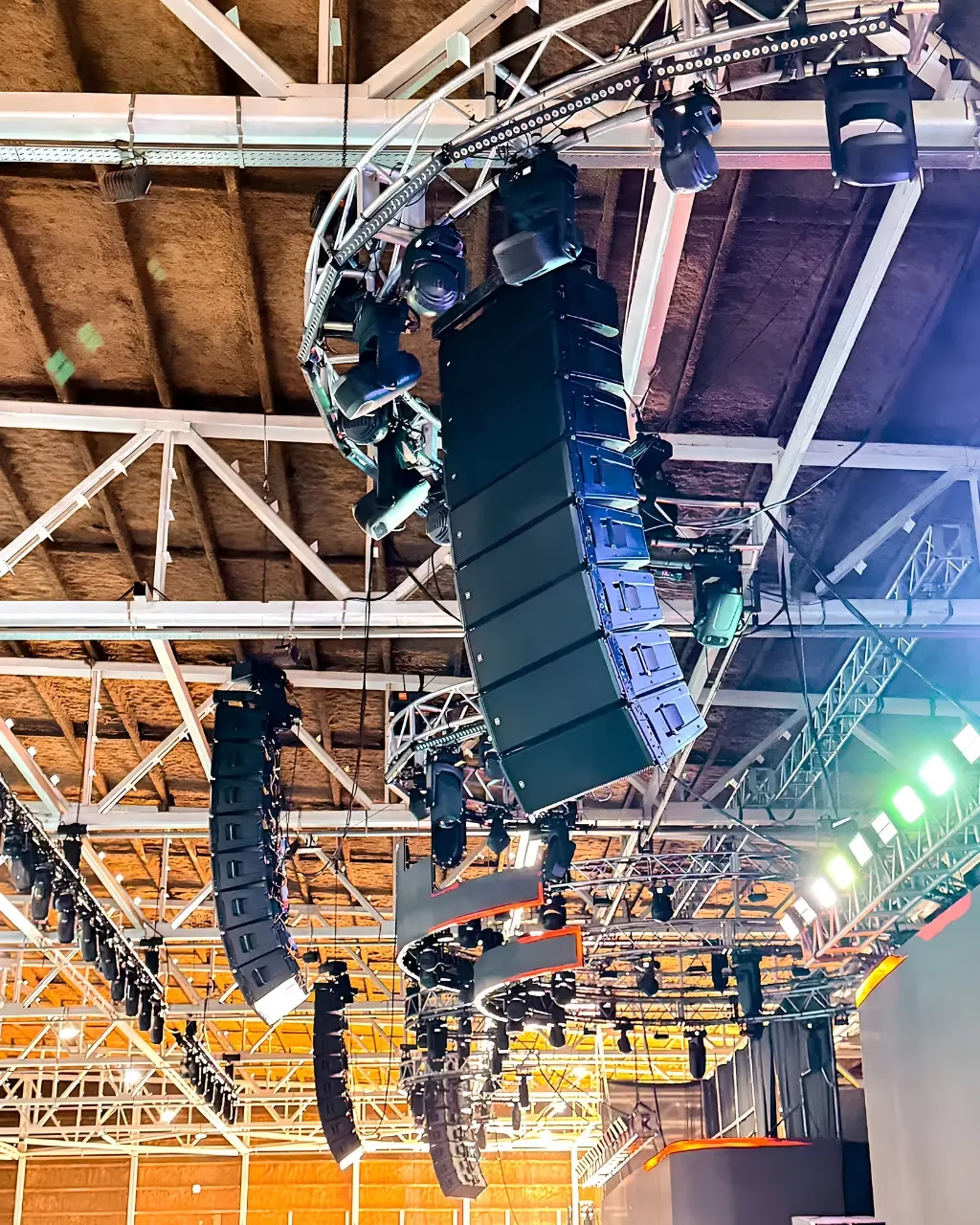
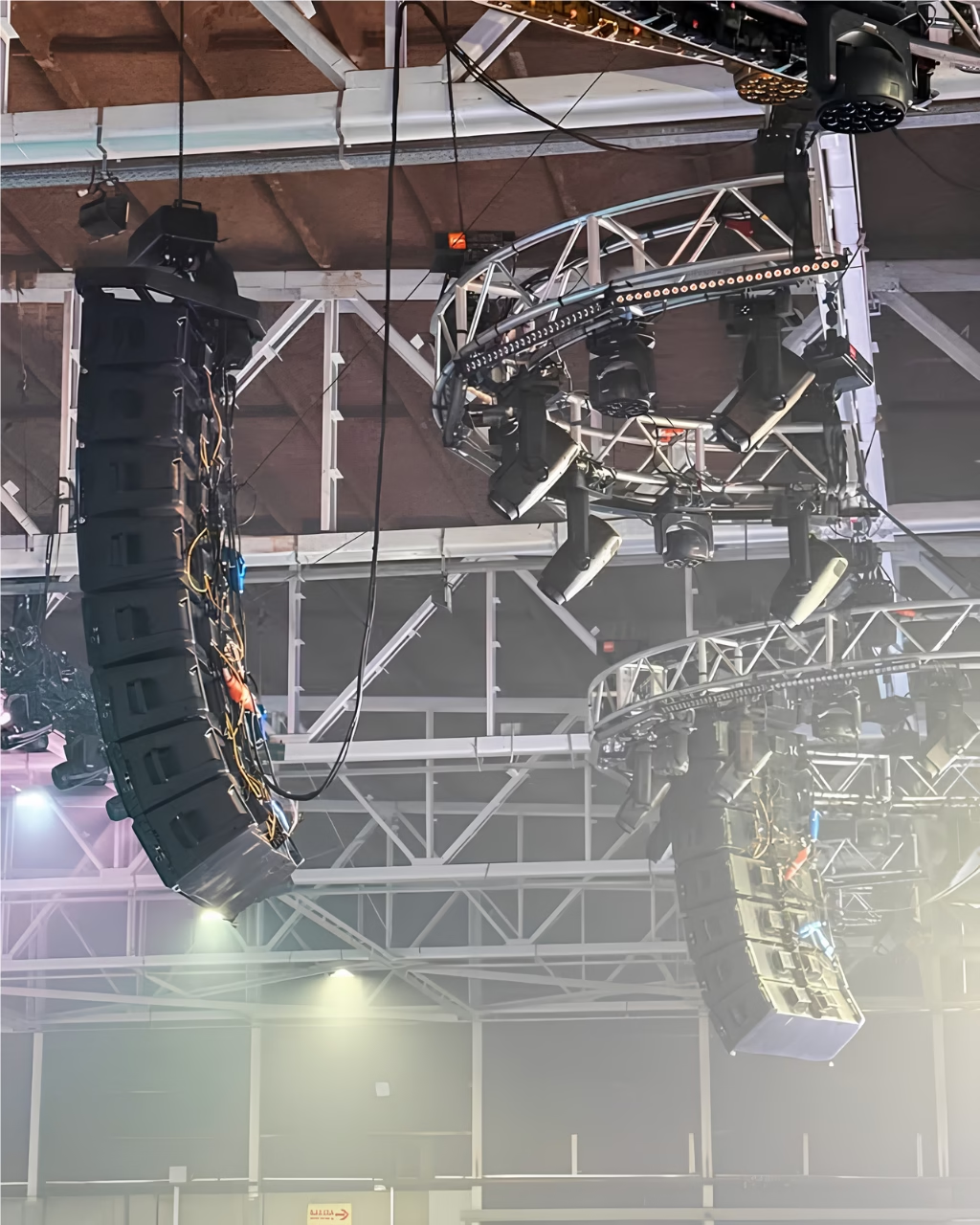
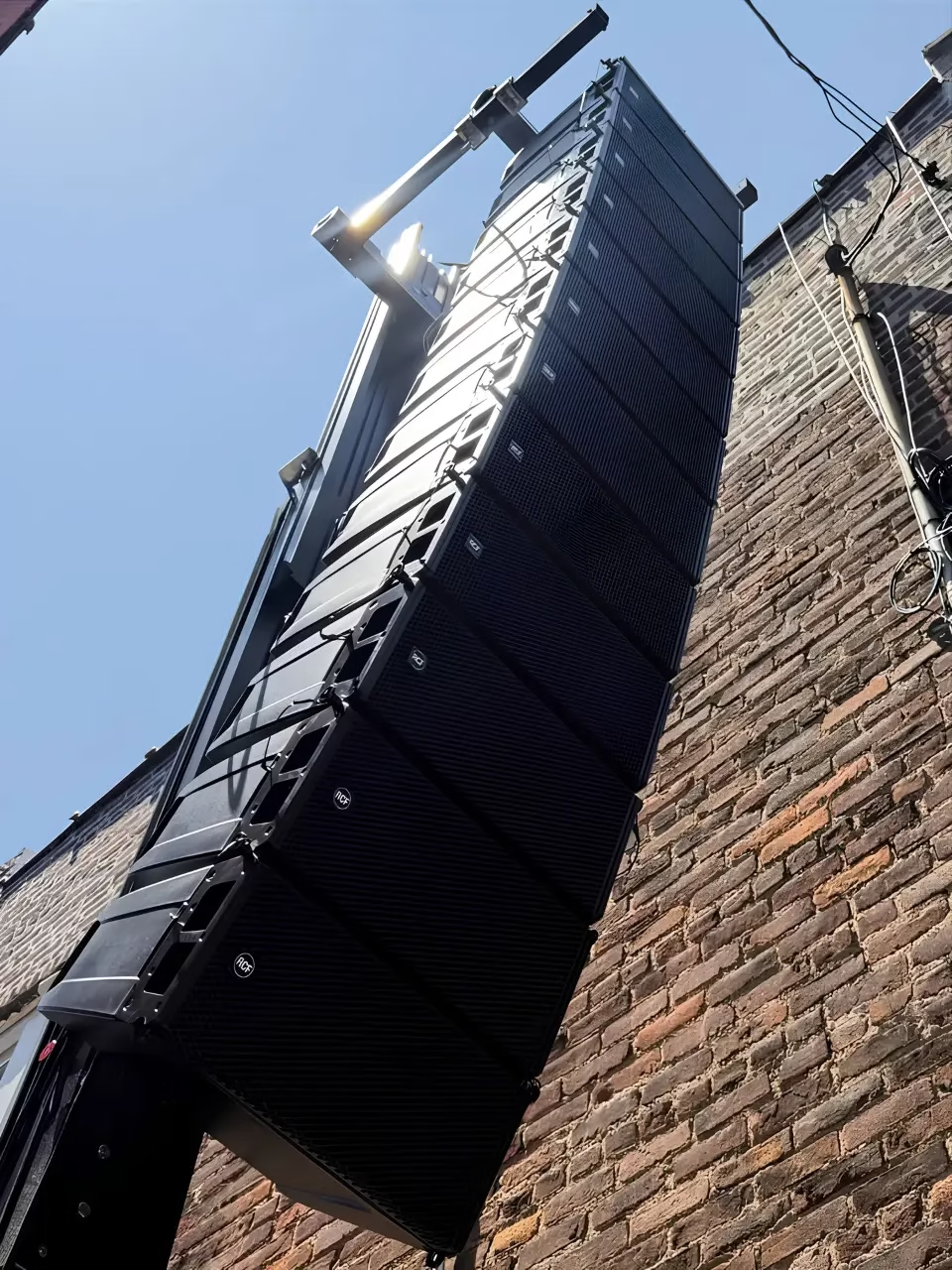
This is why Alpha Audio, Pakistan’s trusted name in professional and premium audio solutions, builds every project regardless of format around RCF sound systems, globally recognized for their clarity, power handling, and consistency across small rooms and massive venues alike.
Alpha Audio + RCF: Premium Sound Across Every Space
Alpha Audio has successfully deployed premium RCF speaker systems across a wide range of environments in Pakistan, proving that world-class audio isn’t limited to concert stages it belongs in everyday professional and personal spaces too.
1. Corporate Offices
Modern offices need audio systems that support video conferencing, internal announcements, and presentation rooms without distortion or echo. Alpha Audio integrates RCF ceiling and wall-mounted speakers into corporate environments for crisp, professional-grade sound throughout.
2. Professional Cinemas
For commercial cinema halls, sound is non-negotiable. Alpha Audio’s RCF cinema sound systems deliver theater-grade acoustics with the power and headroom needed for full-length feature films, whether the format is standard surround or Atmos-based.
3. Office Cinemas & Private Screening Rooms
In-office screening rooms and executive media rooms require compact yet powerful systems. RCF’s premium speaker range allows Alpha Audio to design space-efficient, cinema-quality setups for corporate screening needs.
4. Conference Room Auditoriums
Clear, intelligible speech is critical in auditoriums and conference halls. Alpha Audio configures RCF auditorium sound systems for even coverage across large seating areas ensuring every attendee hears presentations, keynotes, and panel discussions with total clarity.
5. Ceiling Speakers for Restaurants
Ambient background music in restaurants needs to be even, unobtrusive, and high-fidelity. Alpha Audio installs RCF ceiling speaker systems that blend seamlessly into restaurant interiors while delivering rich, balanced sound across dining areas.
6. Premium Home Theaters
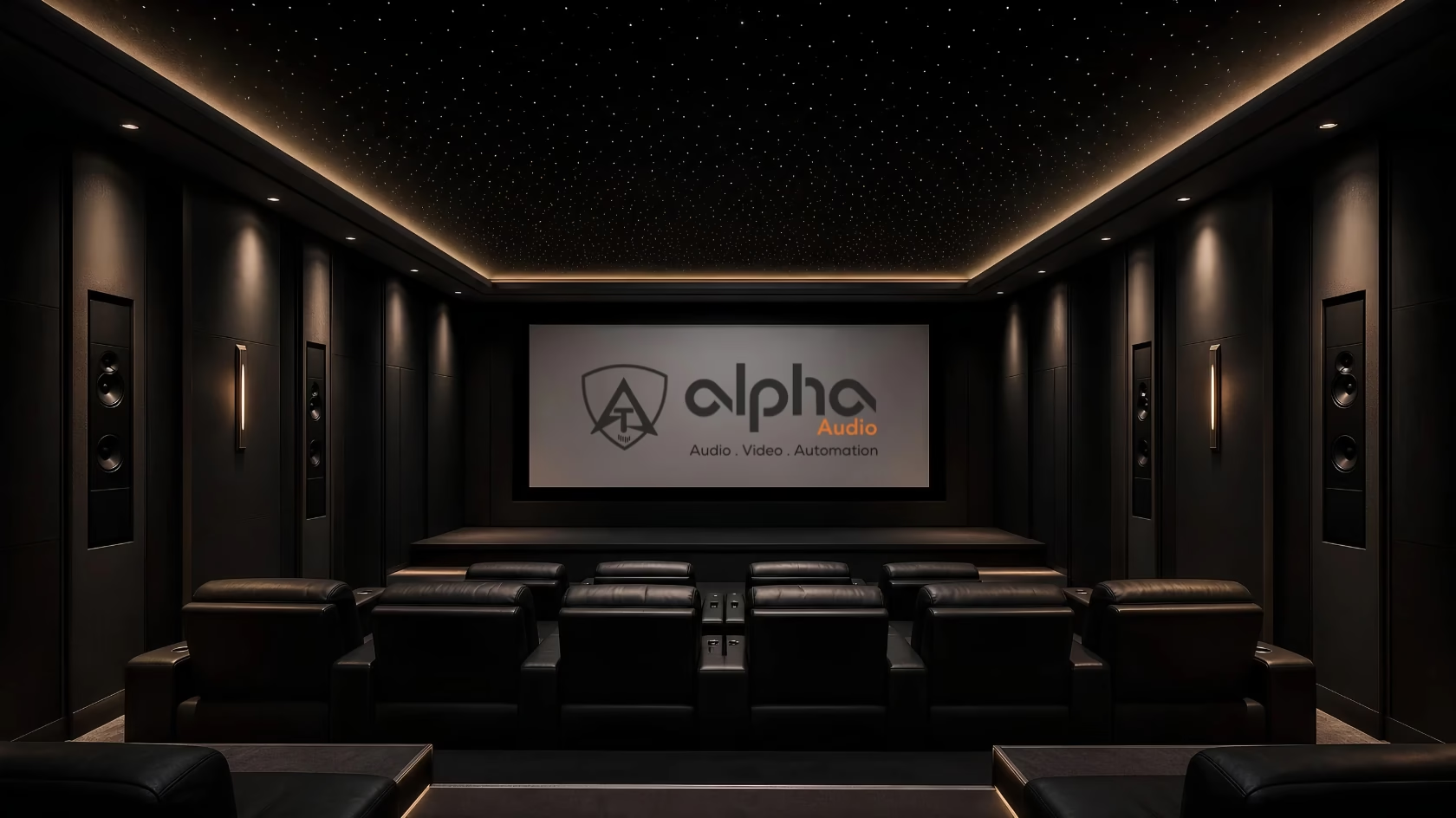
For homeowners investing in a true cinematic experience, Alpha Audio designs custom home theater systems combining Dolby Atmos configurations with RCF’s premium speaker lineup for immersive, movie-theater-quality sound at home.
Frequently Asked Questions
Is Dolby Atmos worth it for a small home theater room?
Yes, even a compact room can benefit from a 5.1.2 Atmos configuration, which adds just two height speakers to a standard 5.1 base. The height channels create a noticeably more immersive experience for movies without requiring a large room or a full 7.1.4 setup.
Can I upgrade my existing surround sound system to Dolby Atmos later?
In many cases, yes. If your current receiver is Atmos-compatible or can be upgraded, you can often add height speakers or an Atmos-enabled soundbar to an existing 5.1 or 7.1 setup rather than replacing the entire system. A professional AV integrator like Alpha Audio can assess your current setup and recommend the most cost-effective upgrade path.
Does Dolby Atmos make a difference for music, not just movies?
Dolby Atmos Music exists and is supported on some streaming platforms, but the improvement is generally more subtle for music than for film, since most music isn’t mixed to take advantage of overhead channels the way movie soundtracks are. For dedicated music listening, a well-tuned standard stereo or surround system often remains the more practical investment.
What's more important: the audio format or the speaker brand?
Both matter, but speaker quality has a more consistent, noticeable impact across all types of content. A premium speaker brand like RCF, properly installed and calibrated, will outperform budget speakers running Dolby Atmos every time. Ideally, you want both a suitable format for your use case and premium speakers to deliver it.
Do restaurants and offices need Dolby Atmos?
Generally, no. Restaurants, retail stores, and most corporate office spaces are better served by a well-designed standard surround or distributed ceiling speaker system, since the priority is even, unobtrusive coverage rather than cinematic 3D immersion.
Final Verdict: Dolby Atmos or Standard Surround Sound?
If budget and simplicity are your priority, standard surround sound remains a smart, reliable investment especially for restaurants, retail spaces, and everyday home setups. If you’re building a premium home theater, corporate auditorium, or professional cinema where audio quality is central to the experience, Dolby Atmos is worth the additional investment.
But regardless of which format you choose, the single most important decision is who installs it and what speakers power it. That’s where Alpha Audio’s RCF-powered sound systems consistently set the benchmark for premium audio across Pakistan from boardrooms to big screens to backyard home theaters.
Whether you're outfitting a corporate office, building a professional cinema, or designing your dream home theater, Alpha Audio brings premium RCF sound systems tailored to your space .
+92 308 4319219 | info@alphaaudio.com.pk | alphaaudio.com.pk
Visit us: Plaza No. 28, Phase 6 DHA, Lahore, Punjab
Audio Quotation
Video Quotation
Automation Quotation